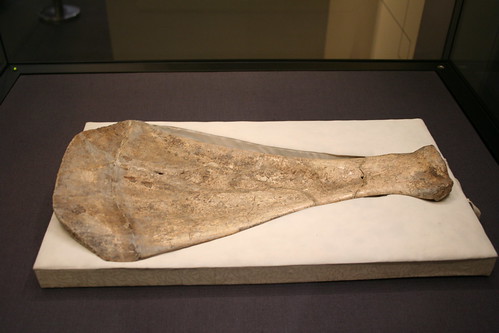
One of the largest oracle bones ever found will be feature in a rare exhibition of the bones at the National Library of China in Beijing.
Long before satellite imaging and Doppler radar came along, using a cow bone was once seen as a dependable way to predict the weather.
More than 3,000 years ago, kings in China relied on such animal bones to foretell future events. Through the ages, fragments of these oracle bones have survived, offering archaeologists early glimpses into the countrys history, as well as its writing system.
Storing about a quarter of the discovered oracle bones is the National Library of China in Beijing. To celebrate the 100th anniversary of its founding, the library is giving the public a rare look at some of its most treasured items, including its oracle bone collection.
One of the largest oracle bones ever excavated will be included in the display. Looking like a paddle made out of stone, the bone is 43.5 by 24 cm in size, and comes from the shoulder blade of an ox.
Like many oracle bones, it dates back to the Shang Dynasty. From 1600 to 1046 BC, the dynasty of ancient kings ruled the northeastern region of what is now modern day China. During that period, the shoulder blade bones of oxen and the shells of turtles were often used as mediums to carry out divinations. To do so, the bones were heated, causing them to crack. These cracks could then be interpreted to foresee the outcome of events related to the weather, sickness, agriculture and more.
The large ox bone on display at the exhibit shows a total of 218 Chinese characters inscribed on both its front and backside. In terms of oracles bones made from shoulder bones, the museum claims it to be the largest and most complete so far discovered.
The bone is dated to the period the Wu Yi and Wen Ding kings (1147-1102 BC). As for its prophecy, the bone had recorded the coming of 11 days of nonstop rain.
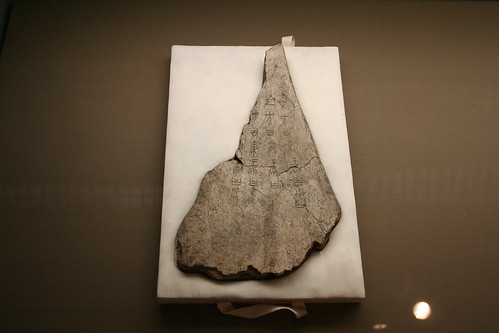
Six other oracle bones are also on display at the librarys exhibition. The information they reveal range from military affairs to a sacrifice meant for a Shang dynasty king and queen. Etched across their surfaces and still visible are early forms of Chinese writing, which bares little resemblance to their more modern forebears.
In total, the library has collected 35,651 oracle bone pieces, making it the worlds largest repository for them. Dozens of religious texts written more than 1,000 years ago, along with historical maps, rare books and writings from Chinas different ethnic groups can also be seen at the exhibit.
But the exhibition wont last long, with its final day on October 7th. Library officials cant say when theyll display these historical artifacts again, only that its rare for it to happen.
Oracle bone enthusiasts, however, can view the librarys entire collection online here. (Website is in Chinese).