Baghdad
Iraq
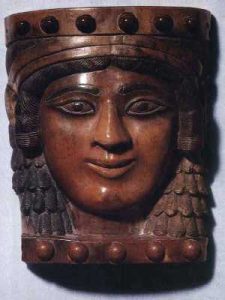
A female head in ivory, dubbed the ‘Mona Lisa’ of Nimrud, one of many important ivory pieces discovered during excavations of the ancient city. The flat back indicates that it was once attached to another surface.
The Nimrud Ivories were found in the private houses of high officials, in the royal palaces and in the arsenal at Fort Shalmaneser; a testament to their special importance to the ancient Assyrians. The excavations at Calah (the ancient Biblical name for Nimrud) revealed several iconic pieces of ancient ivory that are now internationally-recognized masterpieces of ancient art.