
The legendary Ninth Legion – Legio IX Hispana (The “Spanish Legion”) – was one of the oldest and most feared units in the Roman army by the early 2nd century AD. Raised by Pompey in 65 BC, it had fought victorious campaigns across the Empire, from Gaul to Africa, Sicily to and Spain and Germania to Britain. No one knows for sure why, but sometime after 108/9 AD, the legion all but disappeared from the records. The popular version of events – propagated by numerous books, television programmes and films – is that the Ninth, at the time numbering some…
-
-
For thousands of years, scientists from around the world have tried to understand how the Egyptians designed and built the Great Pyramid of Giza – the last remaining of the seven wonders of the ancient world. Now, an architect and researcher at the Norwegian University of Science and Technology (NTNU) says he has the answer to this ancient puzzle. According to Ole Bryn, the Great Pyramid’s building grid was developed based on the prime number seven – and the core of Khufu’s 146.6 meters high monument is likely a step pyramid. Khufu’s Great Pyramid, located on the Giza Plateau, was…
-
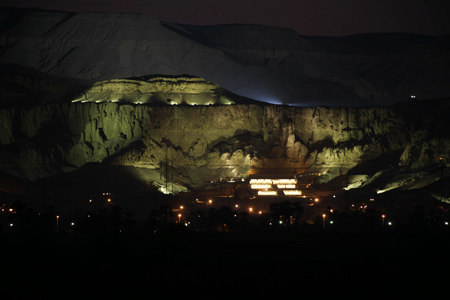
Egyptian Minister of Culture, Farouk Hosni, announced that with a total of 922 units the installation of the new lighting system on Luxors west bank has been completed, allowing for people to visit the tombs in the evening. Dr. Zahi Hawass, Secretary General of the Supreme Council of Antiquities (SCA), said that the aim of this project is to preserve the tombs and temples located on Luxors west bank. The thousands of tourists that daily visit the heritage site will now be distributed throughout the day, from 7:00 am to 8:00 pm. This, he continued, will reduce the level of…
-
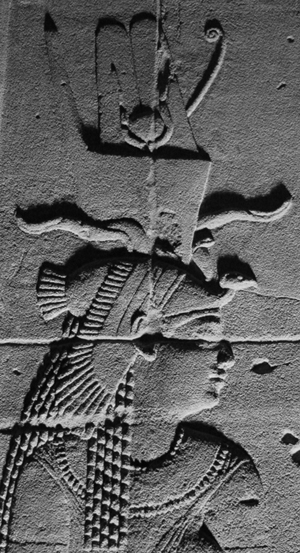
A unique queen’s crown with ancient symbols combined with a new method of studying status in Egyptian reliefs forms the basis for a re-interpretation of historical developments in Egypt in the period following the death of Alexander the Great. In the thesis ‘The Crown of Arsinoë II’, Maria Nilsson shows that Cleopatra VII was not the only Ptolemaic female pharaoh – Queen Arsinoë II came first, 200 years earlier. Nilsson argues that Arsinoë (316-270 BC) should be included in the official pharaonic king list as Ptolemy II’s co-regent; her royal authority should be considered equivalent to Hatshepsut, Tawosret and Amenirdis…
-
Last week I visited the ‘Tutankhamun: His Tomb and His Treasures’ exhibition in Manchester with Mary-Ann Craig (video), and well… saw wonderful things, and everywhere, the glint of gold. The moment I marvelled at the recreation of the set-up used to remove Tutankhamun’s sarcophagi from his tomb, any doubts still left about the power of replicas disappeared, and I would strongly suggest you visit the touring exhibition before it leaves the UK. Yet, if you want an expert opinion the matter (as well as a great introduction to your visit), watch our Heritage Key video with Robert Partridge, editor of…
-
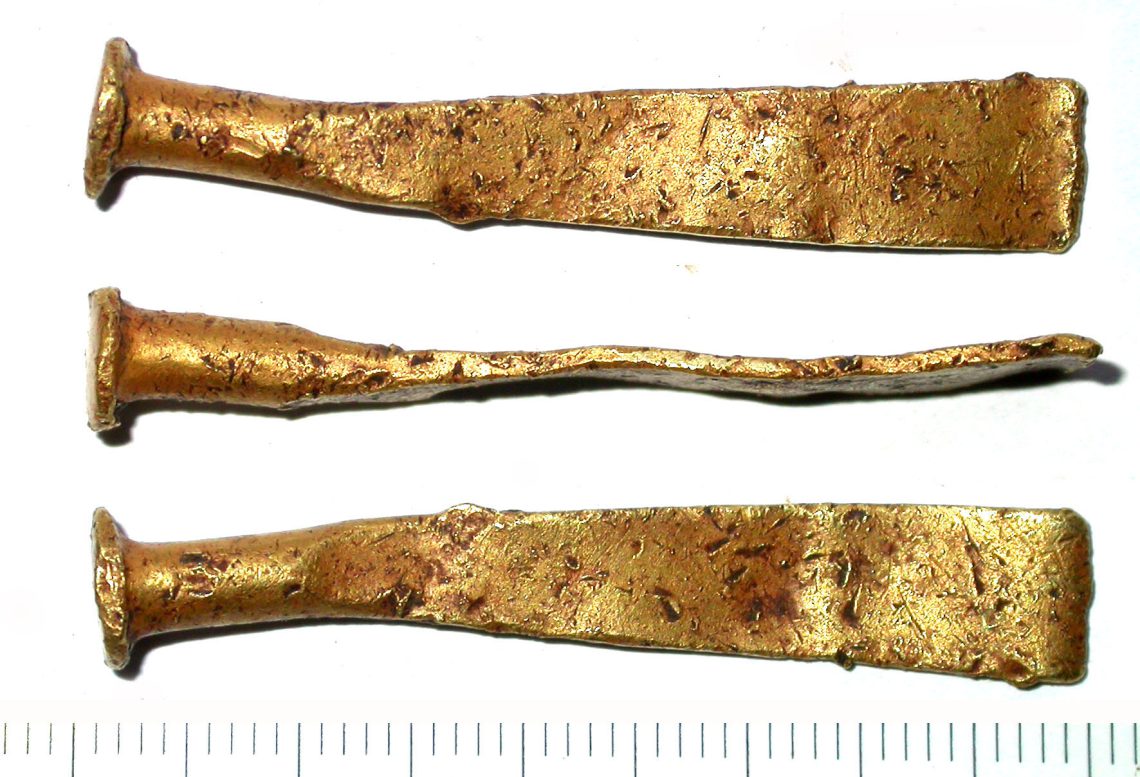
During excavation work in 2008 to build a new luxury hotel on the grounds of Syon Park in west London on the bank of the Thames workers encountered buried objects. The Museum of London Archaeology (MOLA) department now confirms that these are Roman artefacts dating from the 1st century AD. Thousands of artefacts have been collected during the field work including a late bronze age gold bracelet, which has no context in the Roman settlement. Additionally notes the Museum: “Human skeletons found, could have been the remains of former occupants of the settlement, although the placing of the skeletons in…
-
Ever since the remains of a seemingly unknown breed of horse were excavated at the ancient city of Pompeii, scientists have been puzzled over this find. Now, the riddle is solved: what was thought to be a horse, is actually an ass. After DNA tests were done on a skeleton discovered amongst the ruins of an ancient Roman house in Pompeii in 2004, Italian scientists concluded they had discovered a new breed. Yet, after taking a closer look at the data, researchers from Cambridge and Munster say that in this study, a mistake was made. Their arguments the donkey DNA…
-
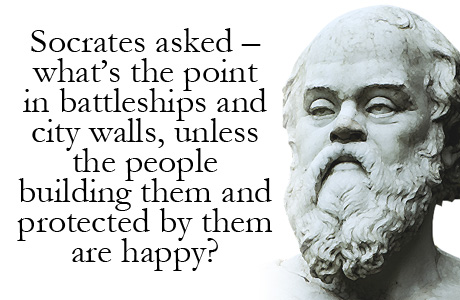
We think the way we do because Socrates thought the way he did, writes Bettany Hughes at the start of The Hemlock Cup, her brand new biography of ancient Greeces greatest philosopher. Two-and-a-half millennia of history might separate us from the age when Socrates roamed the streets of ancient Athens, formulating and articulating his philosophies to the people. But many of his words and ideas ring just as true in the 21st century as they did back then. (For a run-down of ten great Socrates quotes to reflect upon, check out Owen’s blog here). From his beliefs on philosophical ethics…
-
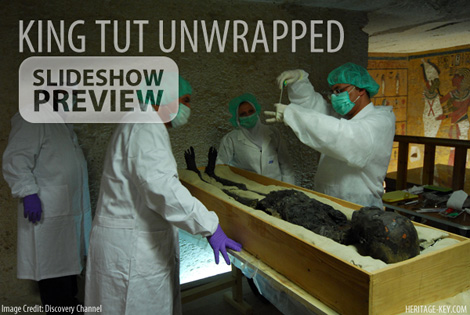
When I wrote that it was most likely we’d see more conlusive information on King Tut’s pedigree on TV first, I obviously was wrong, partly. Spoiler alert:yes, King Tut died at age 19 of (in order) a failing immune system, a leg fracture and malaria, but for the the fine details, and juicy imagery, you’ll need to tune in to Discovery Channel’s ‘King Tut Unwrapped’. The network – which sponsored Egypt’s ‘mummy lab’ – promises us an unprecedented forensic investigation into the life and times of King Tut that reveals the identity of Tut’s parents and grandparents, details on his…
-
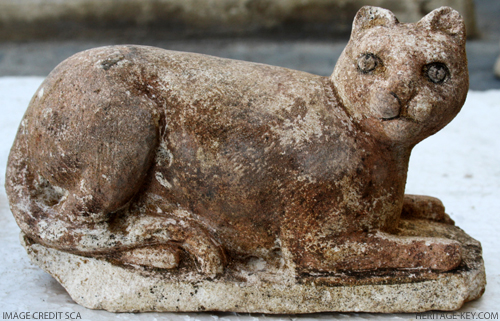
The remains of a temple of Queen Berenike – wife of King Ptolemy III – have been discovered by archaeologists in Alexandria, Egypt. Dr. Zahi Hawass said the remains discovered are 60 meters by 15 meters, and extend under Ismail Fahmy street. About 600 Ptolemaic statues – amongst which are beautiful depictions of the cat goddess Bastet – were also unearthed. Dr. Mohamed Abdel Maqsoud, Head of Antiquities of Lower Egypt, said that the mission excavating at Kom el Dikka on property of the Alexandria Security Forces included 18 skilled excavators and restorers. The large collection of Bastet statues indicates…