• china

    Mad, Bad and Dangerous Women of the Han: The Shocking Story of Lady Dai

    In 1972, the intact tomb of a noble lady of the Han dynasty was discovered at Mawangdui in the eastern outskirts of Changsha, China.  Although eclipsed by the discovery of the life-sized terracotta warriors of Qin Shi Huang-di two years later, the Mawangdui tomb is still considered one of the most important archaeological discoveries of the 20th century and provided important insight into the lifestyle of the rich and famous of early Western Han society.  The tomb was filled with food offerings and household items that Xin Zhui, the wife of the Chancellor or “Marquis” of the state of Changsha,…
  • china

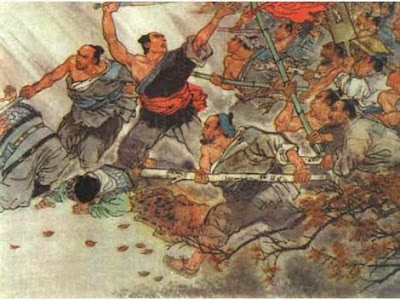
    Battle Strategies of the Qin

    Qin Shi Huang was apprehensive about the prospect of death so, according to Shiji, he tried hard to find an elixir that would make him immortal. Hedging his bets, he simultaneously commissioned the building of his mausoleum. The tomb complex was designed as a miniature of the capital city, Xianyang, of the Qin Dynasty, and the terracotta army signified a garrison force to protect this underground empire. The underground palace symbolized the Xianyang Palace in which the First Emperor lived, and the inner city and outer city of the tomb complex were also imitation of the capital. The terracotta army,…

  • china

    From Anyang to Qin Shi Huang: is This the Golden Age of Archaeology in China?

    With the recent developments in the excavation of Qin Shi Huang’s mausoleum, and the discovery of more terracotta warriors, not to mention the ground-breaking discoveries of the tomb of Cao Cao, and the 100,000-year-old fossil, it’s an exciting time for archaeologists in China. The past decade has certainly been a good one for Chinese archaeology. So good in fact, that one might say it’s been a golden age. To Zhao Zhijun, a Chinese archaeologist working in Beijing, this is no overstatement. “We know the best archaeological methods, our research is open now, we have plenty of funding, and we have…

  • china

    Top 10 Interesting Facts About the Terracotta Warriors

    They’re sometimes known as the eighth wonder of the world, and are an immense symbol of China’s national pride and power. But how deep does your knowledge of the incredible Terracotta Warriors actually go? Here are some top facts to get you started. 1. We’ve only uncovered a small fraction of the total ‘army’ of figures: experts currently place the entire number of soldiers at 8,000 – with 130 chariots, 530 horses and 150 cavalry horses helping to ward of any dangers in the afterlife. So far only just over 1,000 soldiers are on display at the emperor’s famous mausoleum,…

  • china

    Qin Shi Huang’s Terracotta Army

    Modern Discovery of an Ancient Army The enigmatic terracotta warriors were unearthed alongside their emperor in Xi’an, in the central province of Shaanxi, in 1974. They were found accidentally when peasants digging a well broke into a pit containing 6000 life-size terracotta figures. Further excavations revealed the terracotta army – footsoldiers, archers, cavalrymen and officers of all ranks. Current estimates of the three pits containing the Terracotta Army are over 8,000 soldiers, 130 chariots with 520 horses and 150 cavalry horses with many still buried in the pits. Discoveries in other pits have continued at the site with horse bones…