Empire Fuel
The Roman interest in conquering Egypt around two millennia ago was far more than the love interest of Julius Caesar and Mark Antony in Cleopatra VII (Cleopatra). Egypt’s location as the gateway to the Middle East and Asia, together with its extremely productive agricultural sector and educated populace, satisfied some of the most pressing issues facing the Roman Empire in around 30BC.
During the resulting 680 years or so of Roman rule before Egyptians once again ruled themselves, the country become predominantly Christian and lose most of its ‘old’ religious temples. It also enjoyed economic growth and played an important role in the eventual demise of the Roman Empire. In addition, it saw the redrawing of the class system and the country’s internal districts.
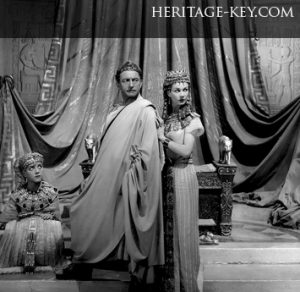 Egypt joined the Roman Empire after the battle of Actium and the death of Cleopatra in 30BC, ending the Ptolomies rule (332-30BC). Rome expected Egypt to assist its economic expansion. The fertile lands along the Nile could produce a rich surplus of grain and other foodstuffs, which became essential for feeding the populace of Rome. The port of Alexandria exported Egyptian goods such as papyrus, glass and other luxury items.
The Romans initially brought Upper Egypt under their control via military might and established a protectorate over the southern frontier district which the Ptolemies had abandoned. There then followed a period where the Romans made an unsuccessful expedition to conquer Arabia – the Romans did not gain control of Egypt’s Red Sea coast until the reign of Claudius – and neglected canals were cleared for irrigation, stimulating a revival of agriculture.
A Class Above the Rest
By the time the Romans took control, Egypt already had a cosmopolitan population. The Romans regarded Greeks in Egypt as Egyptians, contrary to the views of native Egyptians and Greeks. The Jews had their own communities in Egypt separate from both Greeks and the native populace. To cope with such an inter-racial mix, the Romans evolved a social hierarchy that revolved around ethnicity and place of residence. Under this system, a Greek citizen of one of the Greek cities had the highest status, the metropolites (who were almost certain to be of Greek, Jewish or other Hellenic origin) was next in the pecking order and a rural Egyptian was in the lowest class. The superior Romans weren’t included in this caste system.
From the reign of Nero (54-68), Egypt enjoyed a century of prosperity. However, there was much religious conflict between the Greeks and the Jews, particularly in Alexandria. In the third century there were a series of military and civilian revolts. Despite Christians being persecuted, their religion continued to spread. Some historians suggest that originally the Christians in Egypt were predominantly influenced by gnosticism until Demetrius of Alexandria harmonised these beliefs with the rest of Christianity. The ancient religion of Egypt put up surprisingly little resistance to the spread of Christianity, possibly reflecting the long period of collaboration with the Greeks and Romans. By 200 Alexandria had become one of the great Christian centres.
Life Under Rome
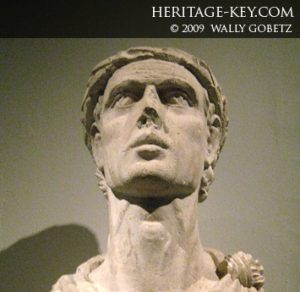 The reforms of the early fourth century laid the foundations for another 250 years of comparative prosperity in Egypt. Constantine I ended the persecution of Christians in 312. During the fourth century paganism was suppressed but lingered underground for many decades with the final edict against paganism issued in 390. Many Egyptian Jews also became Christians, but those refusing to do so formed the only sizable religious minority in a Christian country.
The founding of Constantinople, the new capital for the Roman Empire, occurred in Constantine’s reign. In the course of the fourth century the Empire was divided in two and Egypt became a member of the Eastern segment, ruled from Constantinople. During the fifth and sixth centuries the Eastern Roman Empire (or Byzantine Empire) became predominantly Christian. The fall of the Western Roman Empire in the fifth century further isolated the Egyptian Romans from Rome’s culture and hastened the growth of Christianity.
The Persian conquest of Egypt in around 619 allowed Monophysitism to resurface in the country and when imperial rule was restored by Emperor Heraclius in 629 the Monophysites were persecuted and their patriarch expelled. By 650 the Arabs had conquered Egypt and Syria from the Byzantines, ending 975 years of Græco-Roman rule over Egypt.
Egypt remains part of the Arab world today, and also retains its complex mix of cultures and nationalities. As in Roman times, there remains some tension between European (or Western) and Arab cultures within its borders.