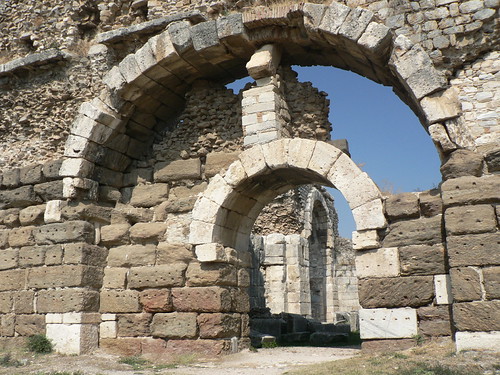
Attribution: whereispavel Nuffar Iraq Key Dates The site of Nippur was first settled around 5000 BC. Several temples were built there in the middle of the 3rd millenium BC, by which point it had become the centre of worship of the Sumerian storm god Enlil. Nippur fell into decline around the 3rd century AD, and was abandoned by 800 AD. It was first excavated, briefly in 1851. A fuller project lasted from 1889-1900. The most recent programme began in 1948, and remains ongoing, although fieldwork has been broken-off since 1990 and the Gulf War. Key People The first person to…
-
-
Attribution: Vegan Family Moray Scotland Key Dates A Celtic settlement existed at Birnie from around 1000 BC to 200 AD. The Romans are known to have visitied the site from after 70 AD until as late as around 200 AD. Two large coin hordes were discovered at the site by archaeologists in 1998 and 2001 respectively. The dig remained ongoing in 2009, with at least one more year of fieldwork planned. Key People The excavation of Birnie is led by Dr Fraser Hunter of the National Museum of Scotland. Birnie is an archaeological site in the north-east of Scotland, near in…
-
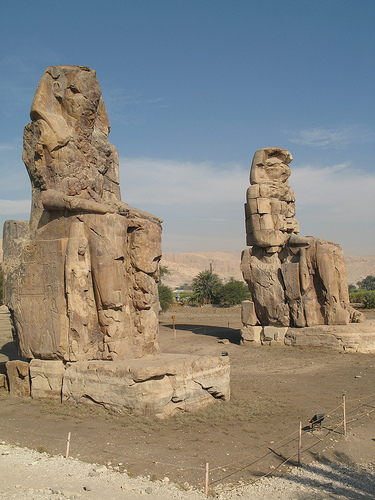
Attribution: Masterplaan Thebes Egypt Key Dates The temple was built in the reign of Amenhotep III, which lasted from around 1391 to 1353 BC. Since 1998, it has been on the World Monument Fund’s list of the planet’s 100 most endangered monuments. Excavation at the site began in 2004, and is expected to be ongoing until around 2027. Key People The temple was built as a funerary monument for Amenhotep III, the most powerful, rich and influential pharaoh in Egyptian history. Research at the site is being headed by German-Armenian Egyptologist Dr Hourig Sourouzian. Dr Hourig Sourouzian Amenhotep III The…
-
Orkney Scotland Key Dates Although the centre of the circle has never been excavated by archaeologists and scientifically dated, the monument is generally thought to have been erected between 2500 BC and 2000 BC. A Neolithic stone circle in Orkney, Scotland, The Ring of Brodgar (or Brogar) stands on a small isthmus between the Lochs of Stenness and Harray. The henge is 104 metres in diameter, making it the third largest in the British Isles, and originally comprised 60 stones, of which only 27 remain standing. The stones are set within a circular ditch up to three metres deep and…
-
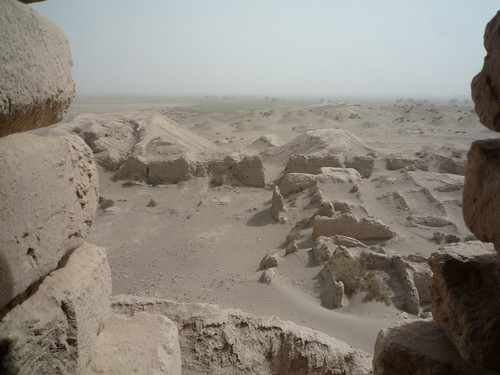
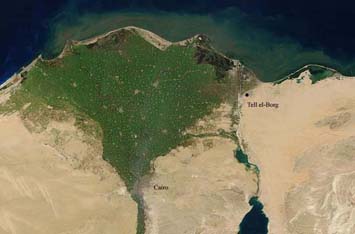
Sinai Desert Egypt Located in the North Sinai desert, just east of the Suez Canal, this site contains two ancient Egyptian fortresses. One of them dates to the Amarna Period (18th dynasty) and was used continuously throughout this time-frame. This fort was 120 meters east-west by 80 meters north-south. It contained a dry-moat that may not have been completed. Its purpose would have been to serve as a barrier to attackers trying to destroy the fort. There would have been more than 250 men serving in its garrison, including a chariot unit. Wine and other supplies were sent by the…
-
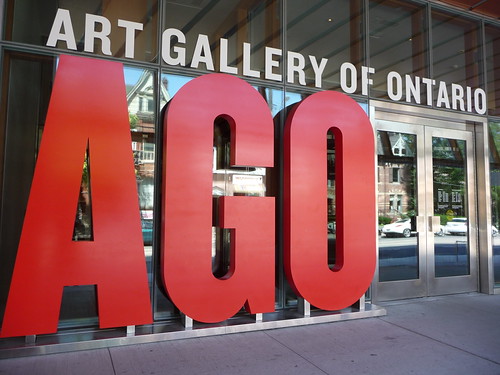
Attribution: John Kannenberg Ontario Canada Key Dates Founded in 1900. Founded in 1900 by a group of private citizens as the Art Museum of Toronto, the Art Gallery of Ontario is one of the largest art museums in North America, with a physical facility of 486,000 square feet. Currently under construction, the AGO’s new facility will boast 583,000 square feet, and will re-open in 2008 with an innovative architectural design by world-renowned architect Frank Gehry. Collection The AGO currently has more than 68,000 works in its collection, spanning from 100 AD to the present. Highlights include: More than 40% of…
-
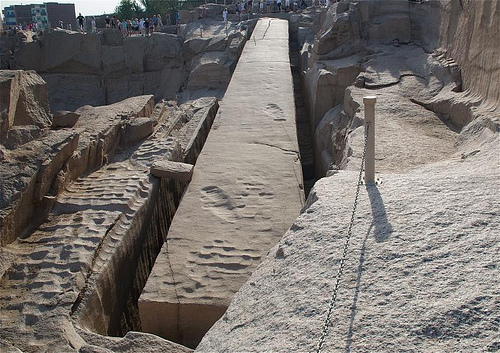
Attribution: GabeD Aswan Egypt Key Dates Work is believed to have begun on the Unfinished Obelisk around 1492 BC. Key People No one can be certain who commissioned the Unfinished Obelisk, but it’s widely believed it was built to mark the 16th anniversary of Queen Hatshepsut coming to the throne. Thutmose III is another possibility. Hatshepsut Thutmose III The Unfinished Obelisk is an enormous chunk of carved granite that lies in situ – still attached to the bedrock – at a quarry near Aswan, in Southern Egypt. It was commissioned as a spectacular monument by an Egyptian ruler in the…
-
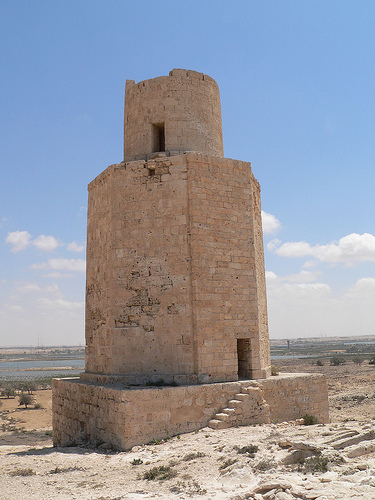
Attribution: Troels Myrup Abousir Egypt Key Dates The town was inhabited during the Predynastic era. Napoleon’s scholars recorded the town’s monuments in 1801. Key People Cleopatra, the famous queen of Egypt whose tomb is rumoured to be housed in Taposiris. Ptolemy II, who built a prominent tower at the site. Cleopatra Ptolemy II Philadelphus The ancient town and temple of Taposiris Magna is located on the banks of Lake Mariut, just west of Alexandria. In modern times the town was swallowed up by the metropolitan area of the city, and is now officially within the Alexandrian suburb of Abousir. In…
-
Attribution: jaywaykay Cairo Egypt Key Dates The museum was established in 1835. It moved to Boulaq in 1858. However the Boulaq building was destroyed in 1878. The museum moved to its current location in 1902. The Royal Mummy Room was closed in 1981, yet reopened in 1985. Key People President Anwar Sadat closed the Royal Mummy Room in 1981. The treasures of King Tutankhamun are held in the museum. Tutankhamun The Egyptian Museum of Antiquities, to give it its full name, is home to some 120,000 of the most treasured Egyptian artifacts in the country. The museum was founded in…
-
Attribution: astique Luxor Egypt Key Dates The tombs here were constructed between 1550 and 1070 BC. Key People The pharaohs of the 18th, 19th and 20th Dynasties of Ancient Egypt’s New Kingdom were buried here, along with some of their wives, children and courtiers. Standing on the west bank of the Nile, across from ancient Thebes (now Luxor), the Valley of the Kings is one of Egypts most sensitive archaeological sites. Further discoveries in 2005 and 2008 have put the total number of tombs in the necropolis at 63 and these range from simple, single pits to lavish complexes, the largest of…