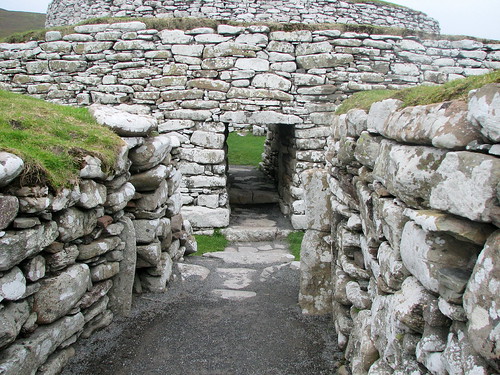
Attribution: leguan001 Key Dates The farmhouse dates from around 1000BC. About 100 years later (100BC) the stone blockhouse was built. By the time the Norse arrived, around 800AD, the broch was abandoned. Haphazard restoration work was carried out around 1850, before professional excavation by archaeologists in the 1950s. Shetland United Kingdom This 3000 year old structure is a big, readily accissible broch (an iron age dry-stoned walled dwelling) that’s in remarkably good shape. It can be found on a small islet in Clickimin Loch by Lerwick on the isle of Shetland in Scotland. It started out life as a small…
-
-
Attribution: Dirk Michael Boche Key Dates September 21, 937 – First church constructed 1207 – Destruction of the cathedral by fire 1209 – Start of the construction of the current cathedral Magedeburg Germany Key People Otto I, who ordered the construction Queen Eadgyth (‘Edith of England’) who was buried in the Cathedral The ‘Magdeburger Dom’ as it is known in German (full: ‘Dom zu Magdeburg St Mauritus und Katharina’) is located in the city of Magdeburg, Saxony-Anhalt, Germany. It is home to the grave of Emperor Otto I the Great, Holy Roman Emperor, and the remains of his wife Queen Aedgyth (‘Edith of…
-
Attribution: Air Frame Photography Key Dates ca 375 AD – construction 1396 – Richard II transformed part of the castle into a palace Portchester United Kingdom Portchester Castle is the best-preserved of the Roman ‘Saxon Shore’ forts. It coveres an area of nearly ten acres and was originally built in the late 3rd century. Its walls still stand to their full 6 metre height. Originally constructed as a Roman fort, it saw continued use over the next sixteen centuries: it housed a Saxon settlement, became a Norman castle, was transformed into a palace by Richard II and housed troops during the Civil war, and…
-
Attribution: Patrick Yeung Key Dates Please fill in Macau China Sir Robert Ho Tung Library is a public library in Macau, China. It is located in St. Augustine’s Square in the Historic Centre of Macau, a UNESCO world heritage site. The building was constructed before 1894 and was owned by Dona Carolina Cunha. Later the mansion was purchased by Hong Kong businessman Sir Robert Ho Tung in 1918 as a retreat and he lived there between 1941 and 1945. He passed away in 1955 and the building was presented to the Government for conversion to a public library in accordance…
-
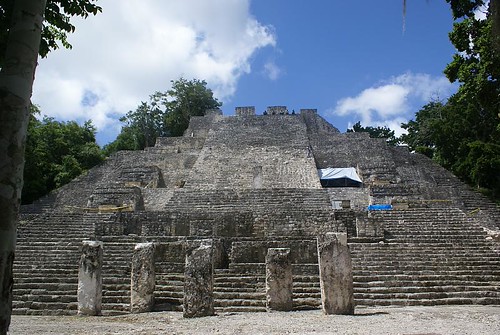
Attribution: José Manuel Reyes F. Key Dates Thriving between 400 and 900 AD, the Mayan city of Calakmul was rediscovered from the air in 1931. Campeche Mexico Key People The city was rediscovered by biologist Cyrus L. Lundell who was working for the Mexican Exploitation Chicle Company. He reported his findings to Sylvanus Morley of the Carnegie Institute. The largest Mayan city ever to be discovered, Calakmul may once have accommodated a population of 50,000 and held sway over terroritories as far as 150km distant from it. It stands in the Calakmul Biosphere Reserve, deep in the jungle of the…
-
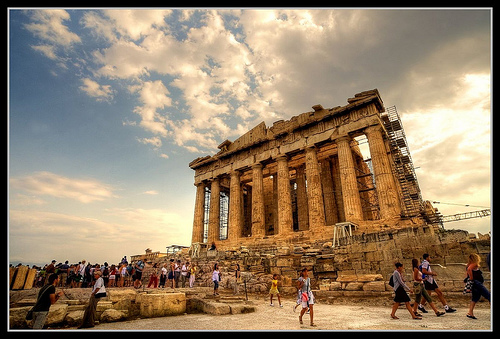
Attribution: Lluís Sala Athens Greece Key Dates The first Parthenon on the site dated back to 570 BC. The existing Parthenon was built between 447 and 438 BC to replace Parthenon II. In the 5th century it was transformed into a church, before becoming a mosque under Turkish rule in the 1460s. The building was attacked and almost destroyed in 1687 during Morozini’s siege of the Acropolis. Lord Elgin caused more damage when he looted it in the 19th century, subsequently selling much of its contents to the British Museum. The Parthenon underwent restoration from 1896-1900 and from 1922-1933. A…
-
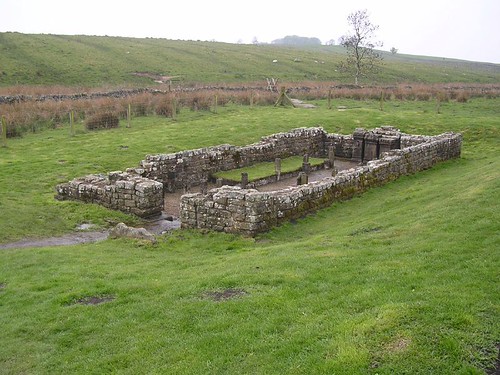
Attribution: The Armatura Press Newcastle United Kingdom Key People Mithras A Mithraeum is a place of worship for the followers of the mystery religion of Mithraism. The Mithraeum was either an adapted natural cave or cavern or an artificial building imitating a cavern. Mithraea were dark and windowless, even if they were not actually located in a cave. The Carrawburgh Mithraeum lies south-west of the Roman fort at Carrawburgh, Brocolitia. The site of the temple was first discovered in 1949 and was excavated in 1950 by Sir Ian Richmond and Mr J.P.Gillam. The first mithraeum to be built on the site…
-
Rome Italy Key Dates The site is thought to have been in use from as early as the first century BC. It was disused after 260 AD. Key People The site was used during the time of Augustus, but was abandoned in 260 during the reign of Gallienus. Monte Testaccio, also known locally as Monte dei Cocci, is an artificial mound in Rome composed almost entirely of fragments of broken amphorae dating from as early as the first century BC to 260 AD. Some of the amphorae were labelled with tituli picti – trade marks and writing in black and…
-
Attribution: matman73072 London United Kingdom Key Dates Southwark was first founded as part of Roman London sometime during the 1st century AD, then abandoned after Roman withdrawal from Britain in 410. It was re-founded as a “burh” during the Anglo-Saxon period, in approximately 886. The Anglo-Saxon London Bridge was built between Southwark and the City of London by at least 1000. Southwark’s defenses repelled Viking attacks in 1014, then later the Norman army in 1066. It features heavily in the Domesday Book of 1086, by which point we can see a thriving community emerging at Southwark. Key People Southwark was…
-
Attribution: Lazy B Millet Turkey Key Dates Miletus was first occupied at around 3500 to 3000 BC. Minoans occupied the area from around 1900 BC. The first settlers from Crete arrived in Miletus at around 1400 BC. The Greeks freed Miletus of Persian rule in 479 BC and famously rebuilt. Alexander the Great seized Miletus in 334 BC. It was annexed by the Romans in 133 BC. The Apostle Paul led his Third Missionary Journey through the city in 57 AD. Miletus’ first excavations commenced in 1873. Key People Hippodamus; the famous Greek architect who built Miletus as the world’s…