Origin of the Species
Ancient Egypt was the first culture to domesticate cats, between 4,000 to 3,500 years ago, and has long been associated with the animal. Some have suggested that cats were introduced to Egypt from Iran. However, archaeologists have found the remains of a cat in a burial mound in Mostagedda (near Asyut) which dates to around 6,000 years ago, so it is much more likely that cats are indigenous to Egypt. Of the two breeds known to have existed – the African wildcat (felis silvestris lybica) and the jungle cat (felis chaus) – it is said that felis silvestris lybica was more commonly domesticated, since it had the more suitable temperament. Over time, domesticated cats became smaller in both body and brain size and more colourful, and it is said that most of the world’s domesticated felines are of Egyptian ancestry.
First Rule: Become Indispensible
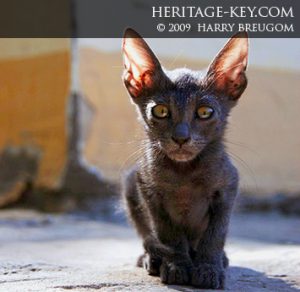
Initially, cats were prized for killing mice and other vermin in grain storages, but they were not linked to any deities. Further endearing themselves to the ancient Egyptians, cats also hunted cobras, vipers and rats – all of which were considered harmful to humans. Once the ancient Egyptians discovered the beneficial effect of cats’ dietary habits, they began to encourage their presence. Cats were welcomed into the family home, where they would hunt vermin and snakes in exchange for protection from predators by their masters. Eventually, cats became such a favoured companion that they were even taken on hunting excursions instead of dogs, and it is thought that they may have been trained to retrieve fowl and fish.
Over time, the useful and protective qualities of cats so endeared them to humans that they came to be associated with deities. The first goddess represented by the cat is Mafdet, who slaughtered a serpent with her own paws. Additionally, Sekhmet was represented as a lioness, as were Mut, Aker, Neith, amongst others. Even the great sun god Ra takes on the form of a cat in the Egyptian Book of the Dead. However, in general the goddess most associated with cats is Bastet. Before Greek influence (prior to 1,000 BCE), Bastet was in fact a sun goddess and depicted as a lion, however after Greek contact she became a lunar goddess associated with the domestic cat. Based in Bubastis, Bastet was an immensely popular goddess. Linked to fertility, she was seen as the protector of children.
Cruel to be Kind
Hundreds of thousands of mummified cats have been found at Bastet’s temple in Bubastis, as well as at other ‘pet cemeteries’ across Egypt in places such as Saqqara, Thebes and Giza. Some of the cats lived an opulent life in Bubastis as Bastet’s embodiment, but x-rays of many of the cat mummies reveal that they were deliberately killed. Many cats had their necks broken whilst still young which suggests that, rather than the cats being preserved as mummies after their natural life as pets, they were raised specifically to be mummified as offerings. This professional practise of raising cats was supported by the Egyptian authorities as a means of raising taxable income, as well as providing employment for the embalmers, keepers and labourers who were all needed to keep the system of animal mummification operative.
Hostage Situation
Owing to the usefulness of cats and their subsequent association with gods, there were penalties in place for those who harmed cats (aside, of course, from the professional rearing of cats to be mummified) and when the reverence of Bastet was at its height, any killing of a cat, even accidental, was punishable by death. Further, the exportation of cats was illegal and it is said that armies were even despatched to retrieve smuggled cats. Herodotus, the Greek historian, records the Egyptians’ love of cats several times. He claims that the Persians used the ancient Egyptians’ love of cats as a tactic of war by releasing them into the battlefield, thus leaving the horrified Egyptians no choice but to surrender or harm the cats. Accordingly, they chose to surrender.
Owing to the significance and reverence of cats, the images of cats were naturally a prominent part of ancient Egyptian art. Paintings of cats have even been found dating back as far as 1,540 BCE. Also, cats appeared decoratively on many items from protective amulets to rings, pendants and bracelets, as well as on mirrors, bowls and, of course, statues.
The prevalence of cat imagery is not surprising, given that cats seemed to have crept their way into almost every element of life, and death, in ancient Egypt.