Tutankhamun, or King Tut as he’s affectionately known, was the boy king who ruled Egypt during the New Kingdom’s 18th dynasty, from 1333 to 1324 BC. In life he wasn’t the most important or memorable of Egypt’s pharoahs, but in death he’s become the one pharoah everyone’s heard of. His death at the age of 19 has been the topic of much discussion (You can watch last week’s video on the mystery of King Tut’s death here) and he was buried in the Valley of the Kings, on the west bank of the Nile near Luxor (ancient Thebes). His tomb…
-
-
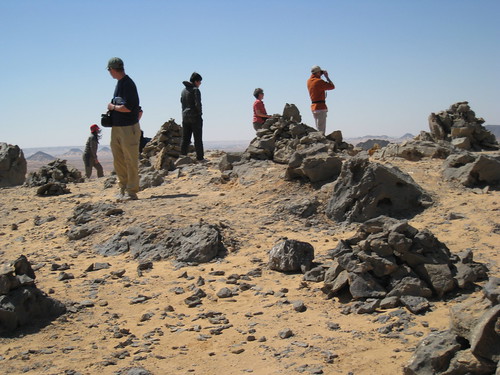
A Maltese explorer claims he may have solved one of Egypt’s oldest mysteries. Mark Borda and Egyptian accomplice Mahmoud Marai, an adventure holiday planner, have discovered a large rock in the Western Desert, some 450 miles west of the Nile Valley – inscribed with a king’s cartouche, royal images and hieroglyphs. Ancient Egyptians are thought never to have strayed past Dakhla Oasis, located around 200 miles from the river. Mr Borda will not disclose the location of his find to protect it from prying eyes. He immediately sent details of the text to compatriot and Egyptologist Aloisia De Trafford, based…
-
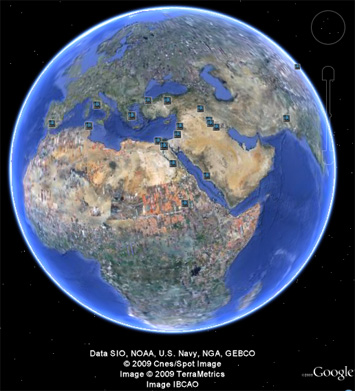
After Heritage Key’s recent video interview with John Julius Norwich on his new book “The Great Cities in History” (which you should definately watch here) I wrote an article looking at the greatest ancient cities that Lord Norwich selected. With cities across the globe and ranging from the Greeks and Romans, to the Egyptians and Muslims, as far as the Indus Valley and Chinese to the Mayan Civilisation. The city is very much an ancient concept, but one which our society relies upon today in order to maintain a place of power, culture and trade. The earliest cities were based…
-
The first century BC Roman poet Catallus has been making the headlines this week more than 2,000 years after he penned his erotic body of work known as the Carmina. One poem from the Carmina, Catallus 16, begins with the explicit line Pedicabo ego vos et irrumabo – literally translated by The Guardian (who go on to question the BBC’s reluctance to offer a translation and send the reader to check out the full text on wikipedia instead) as “I will bugger you and stuff your gobs.” These Latin words were written in an email by a London business man,…
-
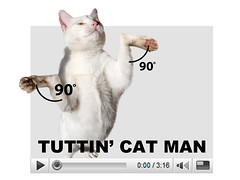
Get up from your chair, take a step back and watch this video by the AGO attentively, as you’re going to learn how to ‘tut’. Inspired by ancient Egyptian art work ‘tutting’ isn’t that far off from walking like an Egyptian, but on a different tune. In a video posted to their website to promote the ‘King Tut:The Golden King and the Great Pharaohs‘ exhibition, the the Art Gallery of Ontario is teaching the internet crowd how to dance like an Egyptian. The instructional clip features Mark Cabuena demonstrating a basic ‘tutting’ routine that is easy – yeah, right –…
-
Thanksgiving is one of the most ‘famous’ American holidays known to us in Europe, and when it’s mentioned a turkey instantly springs to mind. The turkeys sacrificed to the stomach-gods during this ‘harvest festival’ might be native, but many of the other habits were brought over from the Continent. Take the cornucopia – the ‘horn of plenty’ – for example, a common symbol food and abundance all over the world, dating back to the 5th Century BC and for which we need to thank the Greeks. The cornucopia is one of the typical symbols for a harvest festival. A horn…
-
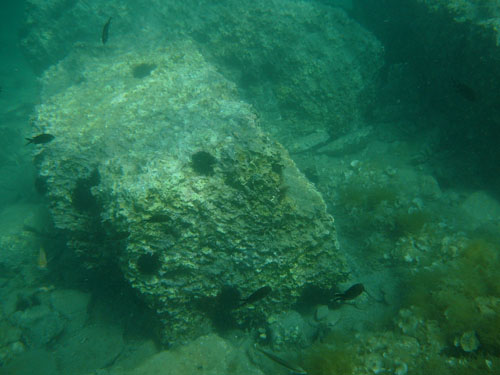
Underwater archaeology may still be in its relative infancy, but that hasn’t stopped it making some of the world’s biggest recent discoveries. From Cleopatra to ancient plonk, there’s plenty more under the sea than a load of old shipwrecks – though they can be pretty spectacular too. Even Egyptological legend Zahi Hawass is getting a piece of the action, scouring the Nile for ancient treasure. So we thought we’d strike while the iron’s wet and bring you a top ten of the world’s underwater archaeology sites. If you think we’re talking rot, or if there’s anywhere we’ve missed, don’t hesitate…
-
In the small town of Casola di Napoli, about three miles south of the archaeological site of Pompeii, sheer chance has brought to light an archaeological discovery as well as some unanswered questions. A lorry driver was manoeuvring his van when he managed to cause some subsidence in part of a car park between two residential buildings. A hole opened in the ground revealing a stone arch and some walls. Experts believe the structure revealed is a Roman domus built maybe 2,000 year ago when the area just east of Stabiae would have been largely agricultural and dotted with country…
-
Being a bit of a gaming geek, I’ll admit I was a tad bit excited to finally get my hands on the first expansion pack for The Sims 3 – World Adventures! As I’ve written before, this new game features forays into France, China and, my personal favourite – Egypt. Having played about in Heritage Key’s own fantastic virtual world experience, King Tut Virtual, I was looking forward to seeing how the new release from Electronic Arts would fare up. If you’re not familiar with The Sims games, then I’ll give you a quick run down. You play a character…
-
might be one of Egypt’s oldest archaeological sites, but it’s certainly one of the hottest right now. And the omnipresent Zahi Hawass has been enlightening fans on the latest breakthroughs and theories circulating the ancient necropolis. The first of these centres on the giant Step Pyramid of Djoser, Egypt’s first pyramid. Eleven burial shafts have been excavated, homes to each of the Old Kingdom pharaoh’s daughters. As such it was the only Old Kingdom pyramid built for the king’s family. Yet there’s another shaft, soon to be studied, which Dr Hawass (coming to London soon!) feels may be the final…