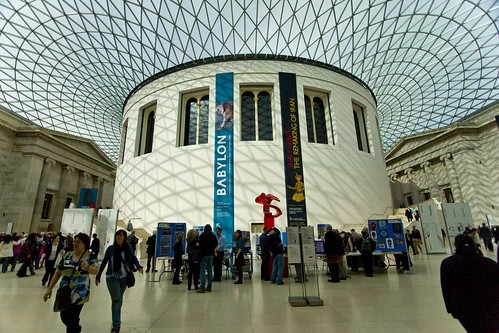
Britain Loves Wikipedia is a scavenger hunt and free content photography contest that will be held in museums and cultural institutions across the UK, with the aim of increasing the number of pictures available to illustrate Wikipedia articles and inspire new articles. The event will kick off with a launch event at the Victoria and Albert Museum on Sunday 31 January 2010, followed by a series of events each weekend at locations around the UK. Museums looking for more visitors and exposure are still welcome to sign up. The event runs throughout February 2010, with members of the (Wikipedia) public…
-
-
Following on from Herb Schmitz’s visit to the stunning Roman ruins of Leptis Magna (you can watch Heritage Key’s video interview with Herb on his visit to Libya here), one of the most prominent members of Heritage Key’s Flickr group has also recently visited the North African site and shot some videos of the various ruins. Rafa Vjajes is a Spanish photographer who often visits heritage and cultural sites around the world, and you can find many of his photographs in Heritage Key’s Flickr pool and see his stunning shot of the Roman Theatre at Sabratha which I featured as…
-
It looks as if picket lines will be up for awhile yet at the Ottawa showing of Afghanistan: Hidden Treasures from the National Museum, Kabul. The blockbuster exhibition has been at the Canadian Museum of Civilization since October 23. There has been a strike on at the museum for that entire time. Nearly 400 workers, including educational staff and tour guides, have been manning picket lines. News is just breaking that the latest attempt to reach a negotiated settlement has failed. The union now believes that a negotiated settlement is impossible. PSAC advised the Minister of Labour after the vote…
-
Think skyscrapers and you’ll no doubt imagine shimmering towers of glass and steel, reaching ever closer to the heavens, whilst slowly turning most cities into a homogenised equaliser of stickle-bricks. But it’s always been this way, hasn’t it? At least, it has been for the residents of Shibam, a Yemeni town of about 7,000 people rising out of the arid Arabian desert. At first glance you’d be forgiven for thinking Shibam was some Brooklyn suburb, but look closer and you’ll find cracks, paintjobs and plasterwork that mark its mud-brick buildings out as the oldest of their type in the world.…
-
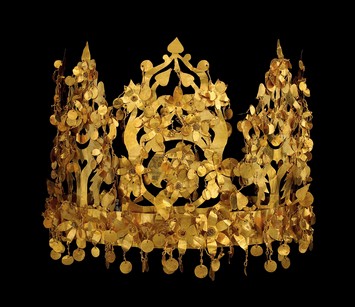
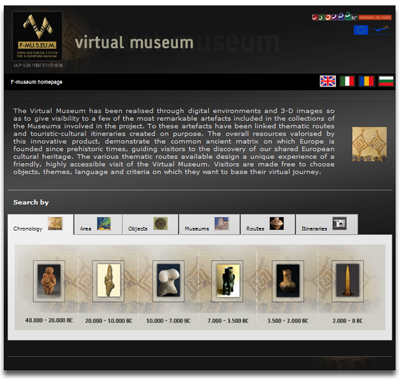
Museums from Italy, Germany, Austria, Hungary, Romania, Bulgaria and Greece have joined hands – and virtual artefacts – to create the first ‘Virtual Museum of European Roots’. They have put their most treasured objects online in 3D for visitors to explore in several thematic routes, as they are guided through European prehistoric culture and heritage. For museum professionals, there are e-courses, training them in the skills needed for establishing and managing a virtual museum. The ‘Berliner Goldhut‘ (Berlin Golden Hat, in the Neues Museum), thought to be a lunar and solar calendar, is part of a larger group of Golden…
-
I got a jump on the Queen of England the other day, and visited the newly-opened wing of the Ashmolean Museum of Art & Archaeology in Oxford a full week before she officially opens it Dec. 2. My parents live in Oxford, and I was visiting them unexpectedly (death in my husband’s family). They had tried to visit the Museum at the weekend, but queues that snaked round the block drove them back, so my father and I took a secondwalk over there on a quieter Wed. afternoonto see what all the fuss was about. First off, I should confess…
-
Two Swedish museums have this month returned the remains of Maori people, believed to have been removed from New Zealand in the 19th century. The remains from five different people included a skull, a skeleton, two arm fragments and a mummified hand. A traditional Maori ceremony was held at the Museum of World Culture in Gothenburg to hand over the remains. Representatives from the Museum of New Zealand Te Papa Tongarewa, the countrys national museum, and New Zealand’s Ambassador to Sweden Barbara Bridge attended. The ceremony was all about talking to the spirits and acknowledging that even though the bodies…
-
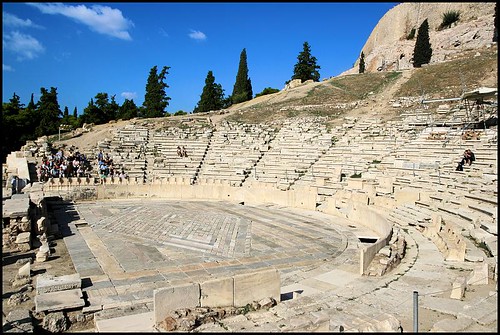
The ‘birthplace of drama’ – the Theatre of Dionysus, located on the south slope of the Acropolis – is to be partially restored in a 6 million project that is set for completion in 2015. The ancient open-air theatre in Athens saw the premire of many of the great dramatic works written during the ‘golden age’ of Greek Tragedy. Famous ancient playwrights – such as Aeschylus, Euripides, Sophocles and Aristophanes – took part in competitions staged twice yearly at the Dionysus theatre; the City Dionysia festival during the spring and the Lenaia in wintertime. The limestone and marble version of…
-
Scottish history lovers can get a unique view of their country’s heritage at the National Museum of Scotland (NMS) – a team of experts has rebuilt a Pictish throne. The wooden giant was created by master furniture maker Adrian McCurdy, who took his lines from ancient stone carvings. Picts ruled Scotland north of the Firth of Clyde from the 4th to 9th century AD. But they are best known for their mysterious rock art, which still baffles experts today. The throne was commissioned by the museum alongside distillers Glenmorangie. It will go on display next Tuesday (December 1st) at the…
-
Luxor, Egypt is one of the most culturally rich parts of the world and is often described as the “World’s Greatest Open Air Museum” for all the various tombs, temples and monuments in the area. Luxor is close to the site of the ancient city of Thebes, the capital of the New Kingdom and famed for its luxurious standards of living and high social order. The city served as an important trading route, and the base of political power in Egypt which made it a favourable destination for Pharaohs and nobles to be buried in tombs. The vastness of the…