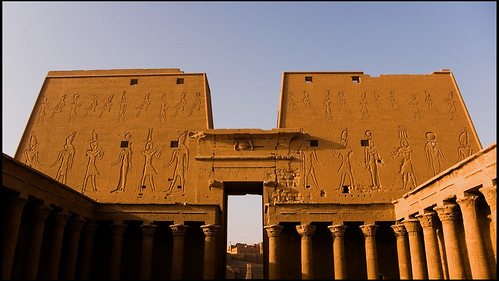
With the UN’s Climate Change summit taking place in Copenhagen next month, it seems everyone’s minds are adjusted to the environment. Zahi Hawass is no different. The sands of time and weather pose a serious threat to many of his famous Egyptian landmarks, and the antiquities chief has set up several projects to combat the forces of nature on some of man’s greatest achievements. Though the rising tides of the Nile have been threatening Egypt’s monuments for millennia, the 20th and 21st centuries have no doubt posed their biggest problems. Man has hardly played a positive role in this: take…
-
-
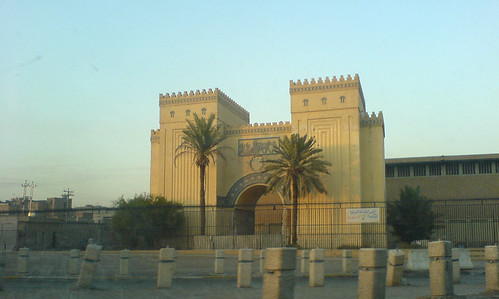
Google will soon begin digitising artefacts and documents at Iraq’s National Museum, chief executive Eric Schmidt said on a visit to Baghdad. Some 14,000 digital images taken from the museum will be freely available online from the beginning of next year. The NationalMuseum of Iraq – opened in 1924 with a focus on objects from the Ur excavations and home to an extraordinary collection of Babylonian, Sumerian and Assyrian artefacts as well as rare Islamic texts – suffered damage and looting caused by the Iraqi war and only reopened to visitors February this year. Some 6,000 artefacts were recovered, but…
-
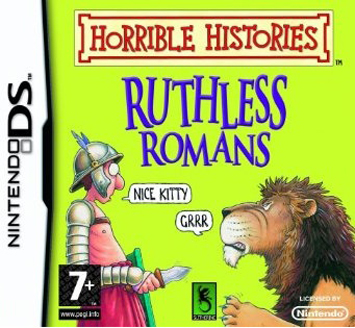
Think youd make a ruthless Roman? Find out when Terry Dearys Horrible Histories books make it on to the games market in North America on January 26, 2010. Graffiti Entertainment has secured the rights to publish Wii, Nintendo DS and PC versions of Horrible Histories: Ruthless Romans in North America. It has been developed by Slitherine, which released the game in the UK and Europe in August. Slitherine is also the company behind the Field of Glory and Legion Gold games. Ruthless Romans features a series of mini-games about a young boy, Rassimus, who is captured and forced into slavery…
-
As we described in our recent handy guide to how to make a mummy, the ancient Egyptians went to great and grizzly lengths to ensure that every last bit of a body was efficiently preserved. The internal organs had to be removed in order to effectively dry out a corpse. They would then be individually wrapped and preserved separately in canopic vessels. King Tuts guts in keeping with the generally lavish and wondrous spirit of his mummification and burial were given extra-special treatment, as we discover in the first instalment of the new four part video series, Tuts Treasures. Shot…
-
Hadrians Wall all 84 miles of it will be bathed in light for one night only in March. A spectacular line of light will run along the entire coast-to-coast Hadrians Wall Path National Trail on Saturday, March 13. Lights will be placed at 250m intervals along the route thats around 500 illuminated spots stretching from Wallsend to Bowness-on-Solway in Cumbria. The Romans built fortlets, known as milecastles, along the Wall at intervals of one Roman mile. Between each milecastle, and spaced one third of a Roman mile apart, were a series of turrets. The plan is to create a point…
-
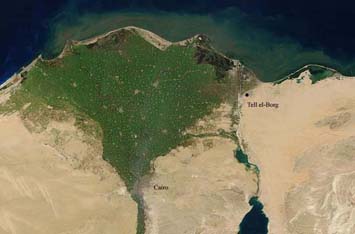
Sinai Desert Egypt Located in the North Sinai desert, just east of the Suez Canal, this site contains two ancient Egyptian fortresses. One of them dates to the Amarna Period (18th dynasty) and was used continuously throughout this time-frame. This fort was 120 meters east-west by 80 meters north-south. It contained a dry-moat that may not have been completed. Its purpose would have been to serve as a barrier to attackers trying to destroy the fort. There would have been more than 250 men serving in its garrison, including a chariot unit. Wine and other supplies were sent by the…
-
Attribution: John Kannenberg Ontario Canada Key Dates Founded in 1900. Founded in 1900 by a group of private citizens as the Art Museum of Toronto, the Art Gallery of Ontario is one of the largest art museums in North America, with a physical facility of 486,000 square feet. Currently under construction, the AGO’s new facility will boast 583,000 square feet, and will re-open in 2008 with an innovative architectural design by world-renowned architect Frank Gehry. Collection The AGO currently has more than 68,000 works in its collection, spanning from 100 AD to the present. Highlights include: More than 40% of…
-
It’s fair enough not to be allowed to snap away inside the tombs of the Valley of the Kings (unless you’re Sandro Vannini , see why here). Flash photography – and that’s what you’ll need – can have a damaging effect on the delicate tomb paintings, some of which are around 4,000 years old. But jobsworth Egyptian officials denying you a snapshot outside the tombs? According to Egypt’s antiquities chief Zahi Hawass, that’s not on. The SCA boss has come out this week to smash claims his men are forbidding photography outside some of Egypt’s biggest attractions including the pyramids,…
-
As I write this piece, we are only hours away from the opening of King Tut and the Golden Age of the Pharaohs, at the Art Gallery of Ontario, in Toronto Canada. I was at the media preview on Friday and wrote an in-depth article on what to expect. For me the Toronto show was the first time in my life that I saw Tuts treasures in person. Its a very remarkable experience to see them withmyown eyes andonethat Im never going to forget. I thought I would take the opportunity to point out a few of Tutankhamun’s treasures which,…
-
Archaeologists from USC, UCLA and the Middle East have developed a searchable online map that details 7,000 archeological sites on the West Bank and Jerusalem – many of them never publicy disclosed. The map – an effort to identify Israeli archaeological activity since 1967, when Israel took over the West Bank and East Jerusalem – is freely accesibly online at the USC’s Digital Library. Built over several years through hundreds of hours of research, bolstered by freedom of information requests and, when necessary, a lawsuit in Israeli courts, the Web site provides interactive satellite maps showing locations of about 7,000…