• lucie-goulet

    The Good, The Bad, and the Belly: The Facts About Ancient Beer

    Earlier this month, beer-drinkers from around the world convened at Oktoberfest to celebrate their favourite bevvy. Associated with fights and bloated bellies, beer gets a pretty bad press these years. But the brew has been drunk for millennia, and it seems that the ancients had some surprisingly positive benefits for the drink. The invention of beer is impossible to attribute to either a period or country. The easy fermentation process means that civilisations around the world probably started producing beer independently around the same time. Early evidences of beer existence have been found in Iran and Iraq and date back…

  • world

    Preserving Rock Art

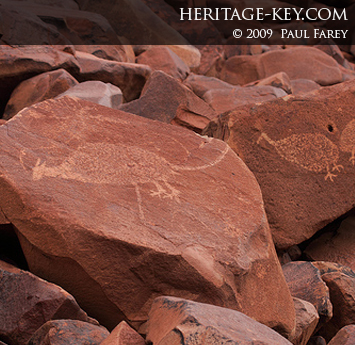
    There’s no doubting the natural durability of cave and rock art – in many cases ancient paintings, carvings and sculptures have resisted tens of thousands of years of the withering effects of history and the elements to still be around to reveal their splendor today. Yet, that’s not to say that their continued survival is guaranteed, particularly as many sites become more and more popular as tourist attractions and therefore increasingly subject to human wear and tear. Other examples simply don’t have the protection they need and are at the mercy of vandals and robbers, while some are threatened by…

  • bija-knowles

    Tablets to Return to Vindolanda in Spring 2011 Thanks to £4 Million Heritage Lottery Funding

    A date has now been set for the return of some of the Vindolanda Tablets to the museum at Vindolanda in Northumberland, following an announcement this week that the UK’s Heritage Lottery Fund is to donate £4 million towards the costs. The date now set for some of the tablets to be housed at the Vindolanda museum is spring 2011 – they will come on loan from the British Museum for a period of five years, after which the loan can be renewed. The tablets – a collection of 1,600 documents etched on thin wooden boards – represent the earliest…

  • britain

    The Tale of Horus and Seth

    Key Dates 1800 BC The papyrus is from the Late Middle Kingdom, between 1850 – 1700 BC. Key People Horus, god of the king, sky and vengeance in ancient Egyptian religion. Seth, aka Set, god of storms, chaos and the desert. Osiris, god of the underworld. The Tale of Horus and Seth is an ancient Egyptian myth about Horus and Seth’s rivalry for the Egyptian throne, held in the story by Osiris, Horus’ father and god of the underworld. There are several versions of the story worldwide, but this particular one, held at the Petrie Museum in London, allegedly contains…

  • world

    Modern Mummies: 10 Surprising Personalities Who Refused to Lie Down and Play Dead

    The ancient Egyptians weren’t the only ones that mummified their dead for the sake of posterity. In more modern times, there have been multiple examples of mummification, using a range of weird and wonderful techniques from simple embalming to submerging the cadaver in a chemical-filled preservation tank, or perfusing it with wax, effectively rendering the corpse a giant human candle. Here we examine ten of the most famous examples of modern mummies, their stories, and some of the methods used to preserve them for eternity. The deceased range from an Argentinean First Lady, a Soviet Head of State and various…

  • keith-payne

    Drilling Under the Sphinx: A Heritage Key Video About Keeping Your Paws Dry

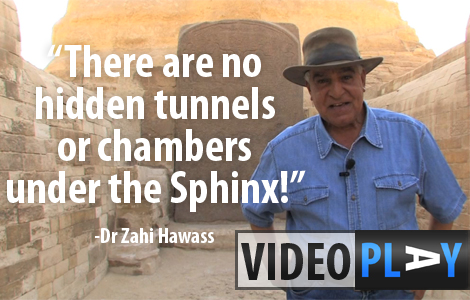
    How do you keep the Great Sphinx’s paws dry?  With a lot of work, that’s how!  The latest Heritage Key video clip of Dr Zahi Hawass highlights his collaborative effort with Dr Mark Lehner in protecting the Sphinx from the danger of rising ground water, an issue that is threatening Egyptian heritage sites from Nubia to the Giza Plateau.  The problem is as large as global warming and as local as sewage and agricultural runoff, but the insidious threat coming from below—the changing of the water tables—requires innovation as recent as cutting-edge mining technology and as ancient as divining water…

  • egypt

    Giza’s Robot Explorers

    The Great Pyramid of Giza is one of the world’s oldest and most iconic ancient structures – a 4,500 year old mass of more than 2.3 million limestone blocks, built as tomb for Fourth dynasty Egyptian Pharaoh Khufu. Reaching 138.8 meters into the sky, for thousands of years it was the tallest man-made structure on earth. The Great Pyramid has attracted explorers and tourists by the bus load for decades. But not all of its secrets have yet been revealed. One set of features that remains a source of bafflement to experts are the two narrow shafts – each about…

  • egypt

    Discovery of Abydos: Examining the Work of the Penn-Yale-IFA Joint Expedition

    Abydos is arguably the most sacred site of ancient Egypt, and quite possibly the most important archaeological site to Egyptology.  Many would argue that other locations, such as the Memphis Necropolis or the Valley of the Kings are much more important, but before you cringe at the above statement, consider the work of the Pennsylvania University, Yale University, and New York University Institute of Fine Arts’ joint expedition to Abydos.  After more than four decades in the field, the Penn-Yale-IFA expedition held a symposium at the University of Pennsylvania Museum of Archaeology and Anthropology on September 19, 2009. The cemeteries…

  • General

    Luca Zan

    Luca Zan Professor of Management Luca Zan is Professor of Management at GIOCA, University of Bologna, and teaches at MAM, Carnegie Mellon University, Pittsburgh. He has published extensively in international journals on strategic management and change, management and accounting history, and the management of museums and cutural organisations. Luca Zan’s research deals with: Management and accounting history, both in terms of theories, and practices (especially in pre-industrial settings, such the Venice Arsenal 16th century). Strategic change processes, looked at through the lenses of strategic management, management accounting and organization theory traditions. The diffusion of economic and managerial discourse in non profit…

  • review

    The Eagle of the Ninth

    by Rosemary Sutcliff OUP Oxford (2004) 6/10 The Eagle of the Ninth has been called a modern classic of children’s fiction. Originally published in 1954, interest has been rekindled in it by a new film of the story being shot. The movie will be directed by Kevin Macdonald (The Last King of Scotland), and star Channing Tatum (G.I Joe: Rise of the Cobra) and Jamie Bell (Billy Elliot). The big names guarantee maximum publicity for the film and, as a result, renewed interest in the book. In the foreword of the book, Sutcliff cites inspiration for the plot from two…