• malcolmj

    Top 10 Animal Gods and Goddesses in Ancient Egypt

    If you think that people in modern western society are obsessive about their pets, get a load of the ancient Egyptians. Throughout ancient Egyptian history, particularly from around 700 BC until 400 AD, there is evidence that certain animals – all from cows to cats, dogs, birds, fish and even lowly beetles (scarabs) – were worshipped as being able to communicate with the gods, and even serve as their living embodiments on earth. As Professor of Egyptology at the American University in Cairo Salima Ikram described in a pair of exclusive video interviews with Heritage Key, Egyptians would rely on…

  • egypt

    Top 10 Interesting Facts About Pyramids

    Think you know all there is to know about these goliaths of the ancient world? Heritage Key picks out ten key facts about pyramids. 1. There are actually 118 pyramids in Egypt. Sure, you might have heard of Khufu‘s, or Khafre’s – or even Djoser’s incredible Step Pyramid at Saqqara, the first known pyramid ever built. But what about the ones which don’t grab the headlines: Amenemhat III‘s Black Pyramid of Dashur looks more like Ayer’s Rock than an Egyptian tomb, and Sahure’s fine mausoleum in Abusir once stood 47m high. 2. The 118th pyramid was unearthed by Egypt’s most…

  • egypt

    Pharaoh Khufu

    2589 BC – 2566 BC Relationship People Children Djedefre Khufu was born in 2589BC and died in 2566BC. He was Pharaoh of the 4th Dynasty which lasted from 2613-2498BC. He was the son of Sneferu and Queen Hetepheres I, and is believed to have had three wives. His is credited with building the Great Pyramid of Giza which stood at a massive 147 metres. The pyramid took about 23 years to complete, and took 2,300,000 building blocks, each weighing an average of 2.5 tons. Although he reigned for approximately 24 years there is very little known about him other than…

  • rome

    What Really Happened To The Roman Ninth Legion?

    The legendary Ninth Legion – Legio IX Hispana (The “Spanish Legion”) – was one of the oldest and most feared units in the Roman army by the early 2nd century AD. Raised by Pompey in 65 BC, it had fought victorious campaigns across the Empire, from Gaul to Africa, Sicily to and Spain and Germania to Britain. No one knows for sure why, but sometime after 108/9 AD, the legion all but disappeared from the records. The popular version of events – propagated by numerous books, television programmes and films – is that the Ninth, at the time numbering some…

  • egypt

    The Mummy of Harwa

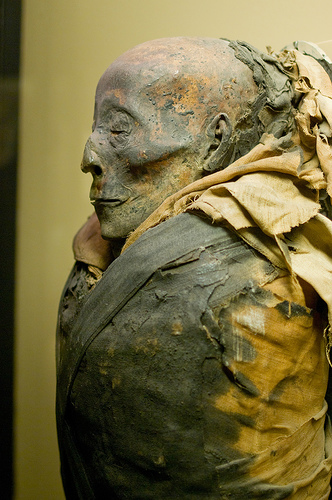
    Key Dates 700 BC Thought to date from around 700 BC, 25th Dynasty. Key People Harwa Perhaps one of the most popular mummies in The Field Museum’s collection is that of Harwa, who died around 700 BC (25th Dynasty). His wrappings have been removed so that visitors can gaze upon his ancient face, preserved for almost 3,000 years. During the unwrapping process, dozens of colorful amulets made of gold, semi-precious stones, and glazed pottery were found within Harwa’s burial linens. Many of the amulets are displayed with his mummy in the approximate place in which they were originally found. Each…

  • egypt

    Horus as a Falcon Headed Man

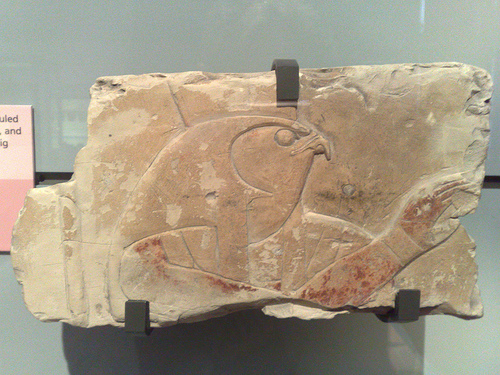
    Key Dates 1800 BC Created during the Middle Kingdom 2055-1650 BCE, given to Kelvingrove Art Gallery and Museum 1903 by the Egypt Exploration Fund Key People The Eye of Horus is an ancient Egyptian symbol of protection and royal power from deities, in this case from Horus or Ra. The symbol is seen on images of Horus’ mother, Hathor, and on other deities associated with her. Horus ruled the living and his father Osiris ruled the dead. He protected the reigning pharaohs, and appears as . In this limestone tablet, Horus, the ancient Egyptian sky god, also known as Re…

  • egypt

    Statue of the goddess Sekhmet

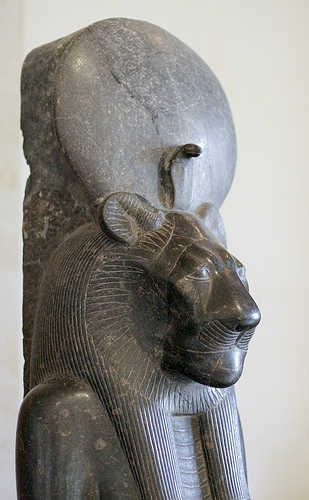
    Key Dates  This item dates from the 18th Dynasty, circa 1391-1353 BC. Key People  An inscription at the bottom of this statue reads, “Amenophis III, beloved of the goddess.” This statue of the Sekhmet is one of many diorite sculptures dedicated to the powerful goddess.  Sekhmet is portrayed with a dual personality; she has the body of a woman and a lion’s head.  This statue is particularly interesting, however, by virtue of the artist’s great skill in blending the lion’s features with those of a woman; the lions mane morphs into human hair, and Sekhmet wears a dress down to…

  • owenjarus

    They’ve found an opening! Egyptologists reach end of tunnel in Seti I tomb

    Question – who can completely fill up a cavernous 1,500 seat domed hall on a Saturday night in Toronto? Answer – Dr. Zahi Hawass “I don’t get to introduce rock stars,” said Art Gallery of Ontario CEO Matthew Teitelbaum. Well tonight he did. Forget the critical New Yorker article, the mixed reviews of the new Tut exhibition at the Art Gallery of Ontario, or the fact that local Toronto media largely stayed away from this lecture. The world’s most well-known Egyptologist completely filled Convocation Hall, with people who had all paid a small admission fee (no more than $18) to…

  • rome

    Letters from the Legions: a Personal View of World History

    For any solider fighting wars away in foreign lands, letters to and from family and loved ones take on enormous resonance and importance. We’ve all seen the TV and movie versions of army life in the world wars, in which the handing out of letters is a ritual frought with excitement, emotion, and rivalry. The same situation was probably played out thousands of years earlier, as some remarkable ancient letters attest. While the first letters ever written were probably cuneiform imprints onto clay tablets, penned in Mesopotamia and Egypt, by the time the Roman civilization began to expand around the…

  • greece

    Lion of Knidos

    Key Dates 350 BC Key People The Lion was found in 1859 by British architect Richard Pullen. The Lion of Knidos is a colossal 6-8 ton fearsome lion sculpture formed from one giant lump of Pentellic marble. It lay on a funerary base at the top of a 200ft cliff overlooking vessels sailing on the Mediterranean past its home in the ancient Greek city of Knidos, on the modern-day Datca Peninsula in Turkey. Its dates are disputed – some believe it to have been built as a celebratory piece following Conon’s triumphant defeat of the Spartan fleet at the city…