
Today was the first day of the CRE XI conference, but last night we had a lecture by Prof. Demarée of Leiden University. Demarée, who studied Egyptology in Leiden, Copenhagen and Oxford and has a PhD on “Ancestor Worship in Ancient Egypt”, spoke about a group of papyri fragments scattered in different museums that, together with some ostraca and graffiti, provide researchers more information on the workers’ community at Deir Al-Medina, especially from the Ramesside Period and the second half of the New Kingdom. “Now, thanks to a largely unpublished dossier of texts, we are gradually beginning to understand what happened…
-
-
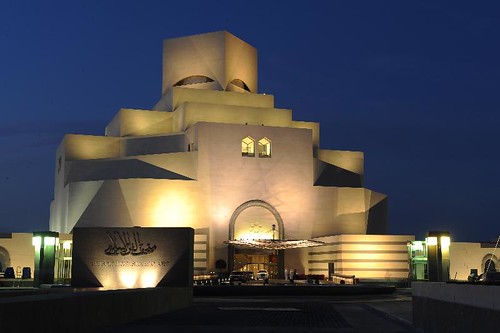
The Arabian peninsula has been suffering recently. Yemen has been accused of harbouring terrorists by the West, and the gargantuan Burj Tower in Dubai was unveiled last week amid a haze of economic uncertainty. Yettiny Qatar, an outcropwith a population barely toppingone million,continues to buck its diminutive stature with world-beating business and heady ambitions. And the Museum of Islamic Art in capital city Doha may just be Qatar’s most impressive structure. In this Heritage Key video, Museum Director Dr Oliver Watson shows us some of the treasures of the museum, and explains the far-reaching importance of Islamic art. The striking…
-
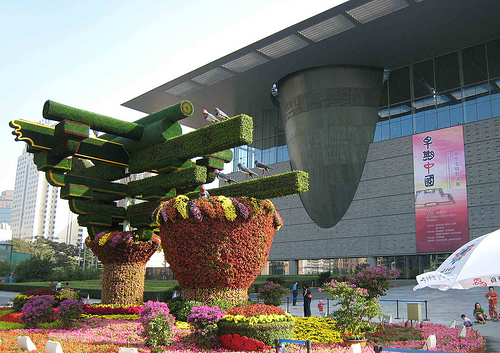
With the recent developments in the excavation of Qin Shi Huang’s mausoleum, and the discovery of more terracotta warriors, not to mention the ground-breaking discoveries of the tomb of Cao Cao, and the 100,000-year-old fossil, it’s an exciting time for archaeologists in China. The past decade has certainly been a good one for Chinese archaeology. So good in fact, that one might say it’s been a golden age. To Zhao Zhijun, a Chinese archaeologist working in Beijing, this is no overstatement. “We know the best archaeological methods, our research is open now, we have plenty of funding, and we have…
-
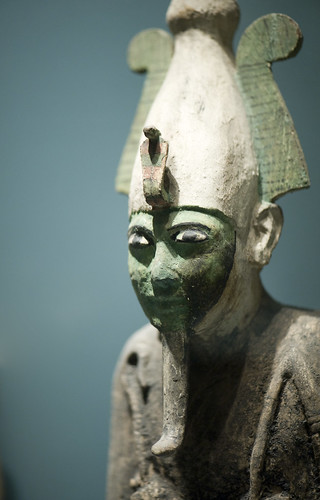
Another exciting CRE conference is about to begin today, as I write this, this time and for the first time ever in Leiden, The Netherlands. Current Research in Egyptology (CRE) has always happened in The UK but, last time, at Liverpool, no one from UK universities wanted it, so our beloved colleagues from Leiden applied and won! CRE is the best way to show your work, explain your research, collect contacts from all over the world and get access to books that don’t exist in your country either by buying them at sale prices or by browsing the nicest libraries…
-
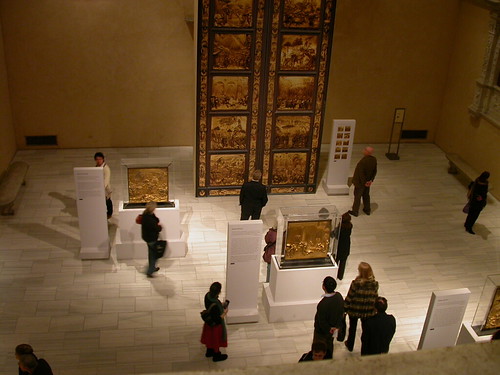
The results of the ‘What value do replicas hold?’ Heritage Key survey are in!Everybody agrees that a replica – regardless of how real it looks – can only ever be a duplicate. Yet the vast majority (79.28%) of those who took our ‘What value do replicas hold?’ survey see good use for these clones, in educations, research, protection from damage and saving on travel costs. Replica Valley of the Kings and King Tut’s Tomb:Worth a Visit? The ‘Replica Valley of the Kings’ is hot news lately, with the SCAand the Getty Institute embarking on a joint effort to protect the…
-
A dying ancient culture, strange visitors from a far away land and a changing climate that helped bring them together. Whether you believe Dr. Patricia Sutherlands research or not, you have to acknowledge one thing she tells an incredible story! Its a tale of how two dynamic, but ultimately doomed, cultures co-existed together the Greenland Norse and the Dorset of the Canadian Arctic. Dr. Sutherland is a curator at the Canadian Museum of Civilization in Ottawa Canada. She has been conducting Arctic archaeology research for more than 30 years. The Norse and the Dorset The Norse people hardly need an…
-
Orkney Scotland Key Dates Although the centre of the circle has never been excavated by archaeologists and scientifically dated, the monument is generally thought to have been erected between 2500 BC and 2000 BC. A Neolithic stone circle in Orkney, Scotland, The Ring of Brodgar (or Brogar) stands on a small isthmus between the Lochs of Stenness and Harray. The henge is 104 metres in diameter, making it the third largest in the British Isles, and originally comprised 60 stones, of which only 27 remain standing. The stones are set within a circular ditch up to three metres deep and…
-
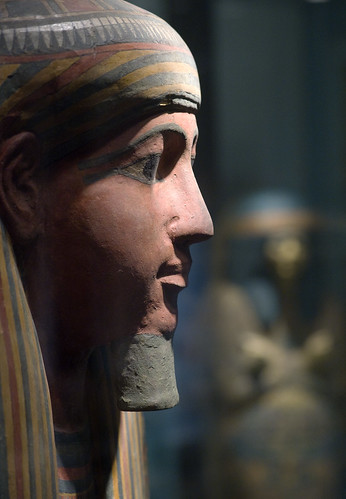
After having been held in the UK for the past 10 years, the Current Reseach in Egyptology conference moves to the continent for the first time in 2010. CREXIwill take place January 5th to 8th at the Leiden University in The Netherlands. Originally set up by students at the University of Oxford in 2000, the main aim of the conference is still to provide graduate and post-graduate students the opportunity to present their research. The conference covers the entire span of the Palaeolithic to the Graeco-Roman and Coptic Periods in Egypt and the Sudan, which leads to a broad range…
-
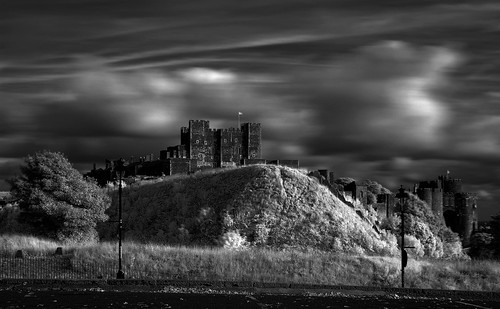
Black and White photography is an artform in itself – it’s so much more than simply clicking the “greyscale” option in Photoshop. It’s about adjusting the contrast, lighting and many other factors to achieve that perfect composition! Just ask Brian H who achieved a powerful and stunning effect in his photograph of Dover Castle. The castle, which contains a Roman lighthouse (Pharos) within its grounds, is one of Britains most iconic defensive strongholds, and recently underwent a 2 million renovation of its Great Tower. The photograph, although taken at some distance, brings the details of the stonework together with the…
-
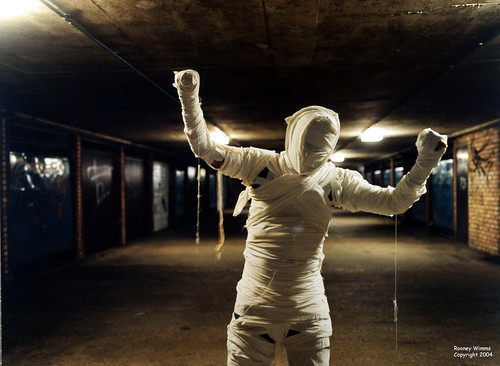
Did ‘mummy paper’ – paper made out of recycled mummy bandages – exist for sure? Worchester librarian S.J. Wolfe believes it is not the myth historians believe it to be. Ms Wolfe recently published her book ‘Mummies in Nineteenth Century America’ about the import of mummies in the USAin the 1800’s. Her research into what happened to these 560 ‘honorary guests’ to the USA’s carnivals and exhibitions (often further dismemberment and a travelling life) lead the researcher to what she calls a smoking gun: proof that ‘mummy paper’ is not an urban myth. Mummy-recycling was a popular passtime or even…