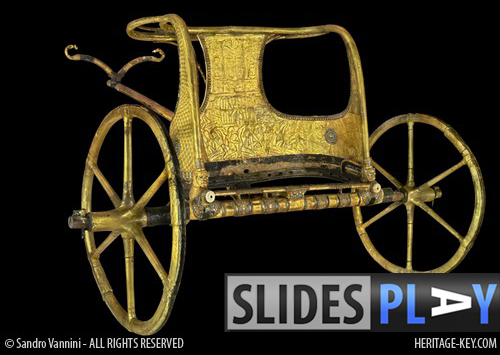
There were six Ceremonial Chariots discovered in the Tomb of King Tutankhamun (KV62), all dismantled in order to be able to take them down through the narrow corridors. In addition to the discovered chariots were miscellaneous fittings which would have belonged to other chariots. Sandro Vannini, the Egyptology photographer who has captured on film some of most stunning artefacts in history, took photographs of the State Chariot – the most beautifully decorated of the six found in the chamber – and the images are bought exclusively to the internet by Heritage Key. The discovery of the ceremonial chariots were made…
-
-
Two large tombs have been discovered at the ancient Egyptian necropolis of Saqqara – one of which is the largest ever found at the site. The 26th Dynasty tombs, likely robbed during the Roman era, are nonetheless filled with important arefacts including coffins, skeletons, pottery and mummified eagles. The tombs, discovered by an Egyptian archaeological mission from the Supreme Council of Antiquities, are at the Ras El Gisr area of Saqqara, near the landmark’s entrance. Both tombs are cut into the hills of the region: the larger first tomb is hewn from limestone while the other is mud-brick. The larger…
-
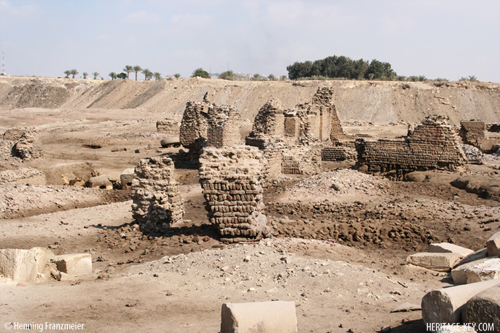
A cat wanders by, leading to myself, the guard, my two friends, and the cat being the only occupants of the ruined city of Fustat on this particular day; it was originally home to roughly 200,000 people. This is an unexpected experience for Cairo solitude in the city. The Medieval Capital Fustat, the medieval capital of Egypt founded in 642 AD by General Amr Ibn el-As, was burnt to the ground (according to Arab tradition) roughly five hundred years later by order of the Vizier Shawar. Frankish crusaders were on their way, and he decided that it was better to…
-
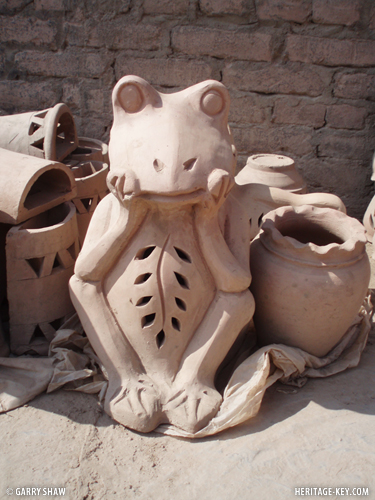
If youve ever wanted to own a perfect hand-crafted piece of traditional Egyptian pottery made by a man with only one thumb and one eye I can tell you exactly where to go. His name is Salah and he lives in Fustat, in the area better known today as Coptic Cairo. Getting to Fustat Its an easy journey, you can take the metro from downtown Cairo there in no time at all, roughly only fifteen minutes. Then, after arriving, you get to confound the local tourist police by walking away from all the wonderful ancient churches, and straight down the…
-
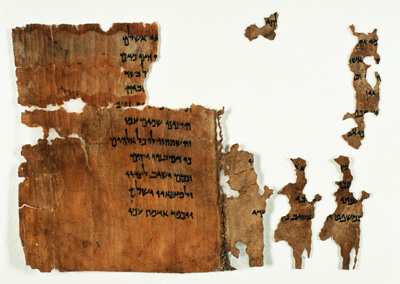
The Globe and Mails Patrick Martin (the papers former Middle East Correspondent), is reporting that Jordan is asking the Canadian government to seize the Dead Sea Scrolls on display in Toronto Canada. The Royal Ontario Museumis currently displaying seven of them as part of an exhibit on the scrolls.Thelast day of the exhibit isJanuary 3. Summoning the Canadian charg d’affaires in Amman two weeks ago, Jordan cited the 1954 Hague Convention for the Protection of Cultural Property in the Event of Armed Conflict, to which both Jordan and Canada are signatories, in asking Canada to take custody of the scrolls,…
-
Mastodons, Woolly Mammoths and bears – one thing is for sure, the first people to cross into North America certainly were not timid hunters! At a lecture at the Vancouver Aquarium Marine Science Centre a few weeks back, Parks Canada archaeologist Daryl Fedje told a crowd that his team has found evidence that people were engaged in bear-hunting, on the Queen Charlotte Islands, as far back as 13,000 years ago. This is the point where humans were just crossing into North America. The Queen Charlotte Islands are located off the coast of British Columbia, a western province in Canada that…
-
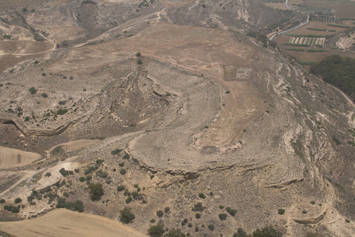
One remarkable tale from ancient history is that of the site of Pyla-Kokkinokremos on the southeast coast of Cyprus. It existedfor only 50 years, at a time of devastation throughout the ancient world. Trying to make sense of this site is difficult and the story reminds me, in some ways, of the ill-fated 16th century AD English colony of Roanoke in North Carolina. A few weeks back Professor Dimitri Nakassis, of the University of Toronto, presented the latest research on the site at an event at the Royal Ontario Museum. In the following days Heritage Key did an extensive interview…
-
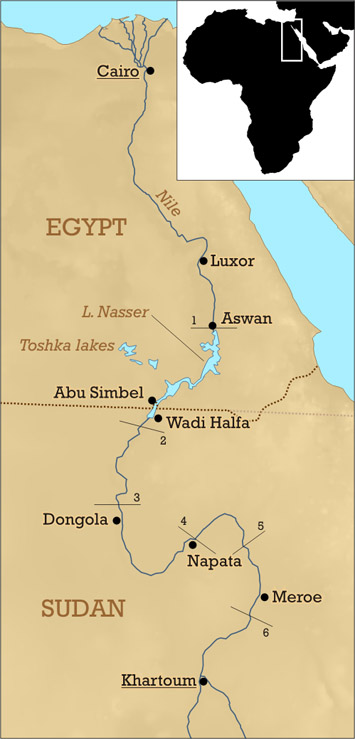
A massive one ton granite statue of the pharaoh Taharqa has been found in Dangeil, deep inside Sudan. Taharqa was a pharaoh of the 25th dynasty of Egypt. This was a period of Kushite rule, which means that Taharqa and his fellow rulers were from Nubia and drew their power-base from there. Update: Further information on the statue of Pharoah Taharqa discovered at Dangeil and a confirmation that – indeed – no statue of a pharaoh has ever been found further south of Egypt than this one in Owen’s follow up blog. You’ll also find photographs of the statues and…
-
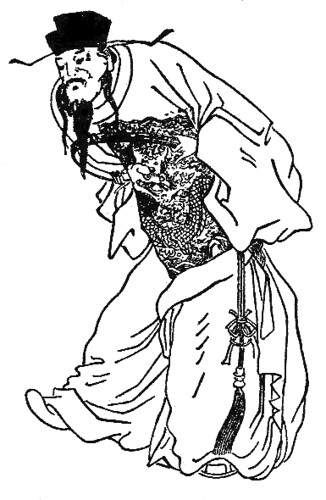
Archaeologists believe they may have found the remains of Cao Cao, a Chinese warlord renowned for his role during Chinas Three Kingdoms period. This past weekend Chinese archaeologists announced the find, saying they had discovered the ancient rulers tomb in Chinas Henan Province, near Anyang. Cao Cao, who lived from 155 to 220 AD, is a major historical figure in China. Both a military general and a poet, he established himself as a king of his own state while fighting to unite the country under his rule. Cao Caos life was later romanticized in Chinese literature, with him being cast…
-
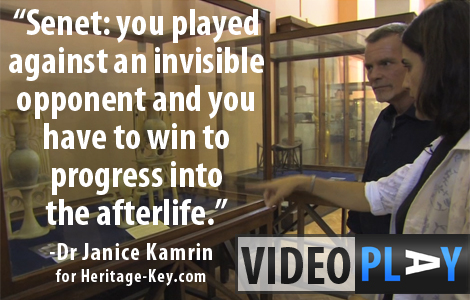
In this Heritage Key video, Dr. Janice Kamrin, head of the EgyptianMuseum Database Project, shows and discusses some of the lifestyle objects found in Tutankhamuns tomb by Carter in 1922, and now housed in The Egyptian Museum in Cairo. Board games, and containers for perfumes, cosmetics and unguents, are amongst the objects shown in this video that give an insight into the livestyles of the rich and famous ancient Egyptians. You can catch up on the previous videos in this series when Dr Kamrin looks at Animal iconography (Watch the video), The Canopic Shrine, Chest and Jars (Watch the video)…