A Little-known Fact A little-known fact about the emperor Titus Flavius Vespasianus is that he shares his name with a common word for public latrines in Italian. Not only were the antique communal latrines, such as those at Ostia Antica – see photo – referred to as ‘vespasiani’, but modern-day urinals in Italy, including the portable plastic versions often seen outside stadiums, also go by that name. This is quite an unflattering namesake for an emperor who was, on the whole, perceived as being mild, generous and fair. It makes Vespasian possibly the only historical figure to have lent his…
-
-
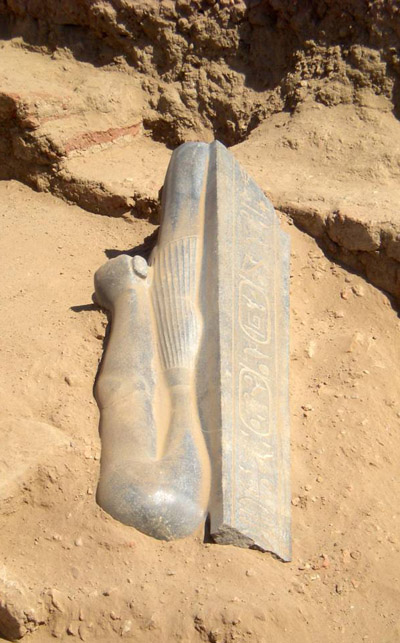
About a week backHeritage Keypublished a story about the discovery of a massive, one ton, statue of Taharqa that was found deep in Sudan. Taharqa was a pharaoh of the 25th dynasty of Egypt and came to power ca. 690 BC. The pharaohs of this dynasty were from Nubia a territory located in modern day Sudan and southern Egypt. When Taharqa came to power, he controlled an empire stretching fromSudan to theLevant. The Nubian pharaohs tried to incorporate Egyptian culture into their own. They built pyramids inSudan even though pyramid building in Egypt hadnt been practiced in nearly 800 years.…
-
CRE XI’s Religion Day – if you’ve missed day 1 of the Egyptology conference, read up here – started off with Susanne Tpfer from Leipzig. In this very very interesting session, we all heard about how some papyri describing embalming rituals can have direct connections to religion myths as the body and the afterlife were treated with the best care. Many publications have been published on Papyrus Boulaq 3 in Cairo, from 1871 to 2009. The position of body parts, the instructions on the application of anointments and other products onto the body of the deceased, how the bandages should…
-
Ron Williamson Chief Archaeologist – Archaeological Services Inc. Dr. Ron Williamson is Chief Archaeologist with the firm Archaeological Services Inc. One of the largest cultural resource management firms in Ontario. He holds an MA and PhD in Anthropology from McGill University in Montreal Quebec and a Hon. BA in Anthropology from the University of Western Ontario. He has directed over 1,000 surveys, excavations and planning projects in the Great Lakes/Northeastern North America region. This includes remains from 12,000 years ago to modern times. He is also an adjunct professor in the Department of Anthropology at the University of Toronto. He’s…
-
A coruscating, insightful history of the human soul. Cannibals, burials, vampires, human sacrifice, bog people – throughout history our ancestors have responded to death in numerous ways. The past has left us numerous relics of these encounters between the dead and those they leave behind: accounts of sacrifices in early histories, rituals that have stood the test of time, bodies discovered in caves and bogs, remains revealed by archaeological digs. Through these insights into the past, Timothy Taylor pieces together evidence of how our ancestors created their universe and asks how we have dealt with the idea of the end…
-
The media preview for Fakes and Forgeries: Yesterday and Today was held today. It will be opening at the Royal Ontario Museum, in Toronto Canada, this Saturday. It’s a much smaller exhibition than the King Tut and Dead Sea Scrolls shows that have hit Toronto recently, and will potentially be dwarved by the very large China show that may or may not include the Terracotta Warriors this June. But Fakes and Forgeries offers some strong lessons about the world of fakes and the experts who try to out them. How the ancient section of the exhibit works is that there…
-
by Paul Elston (Director), Neil Oliver (Presenter) BBC One (2009) Cleopatra: Portrait of a Killer. The very title of the latest BBC documentary draws instant connotations. It’s not everyday that the most famous woman in history and a 19th century cut-throat villain would merge in the consciousness. But that illustration floods into one’s head as the chosen BBC subtitle reminds of Patricia Cornwell’s famous 2002 Casebook on Jack the Ripper. The documentarian Neil Oliver would have us believe that Cleopatra the Seventh was capable of showing the very same malice and cold calculations as the unidentified killer. To those of…
-
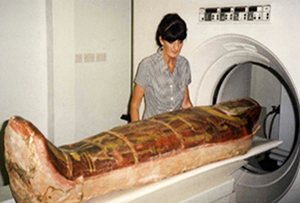
The 21st century has seen incredible advances in our knowledge and use of forensic sciences – to investigate crimes and to find out about people from ancient times. How can we apply this information to the people of ancient Egypt? Find out – and test your own skills in a hands-on practical session – at ‘Forensic Aspects of Ancient Egypt‘ presented by Joyce Filer. The study day – being repeated due to popular demand – will take place on Saturday the 20th of February and will add to your knowledge about the difference between male and female mummies (not as…
-
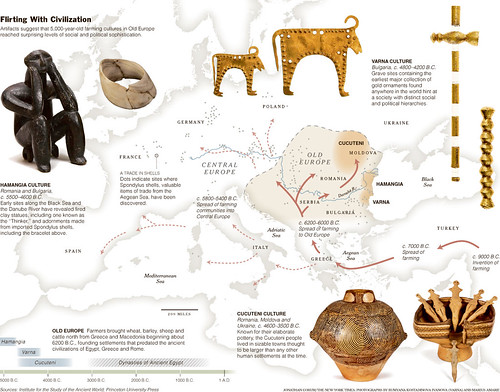
The exhibition “The Lost World of Old Europe,” which opened in Nov. 2009 in New York, has raised some very interesting questions about prehistoric societies and how they changed. David Anthony, guest curator of the exhibition and a leading anthropologist specializing in prehistoric Europe, Eurasia, and North America, raised a particularly powerful issue – why did the collapse of a highly sophisticated, matriarchal culture in what is now Bulgaria, Romania, and Moldova, lead to a shift of power to men? Women, after all, are naturally capable of running households, and should surely be running countries too. Think of our powerful,…
-
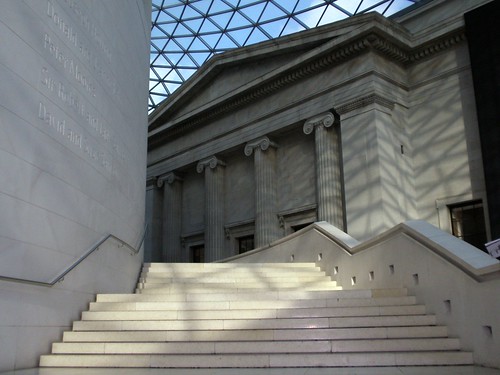
The British Museum is home to one of the world’s finest collections of artefacts and treasures. With such beauties as the Elgin Marbles (Which the Greeks want back, by the way) and the Rosetta Stone (Which Dr Hawass wants to see given back to Egypt) and is currently housing the newly discovered Staffordshire Hoard. Amanda Slater’s lovely shot inside the Great Court inside the British Museum shows nicely the way the light coming in from the modern glass roof shines down inside the historic interior. The roof of the Queen Elizabeth II Great Court, designed by prominent British architect Sir…