• Ann

    Two 4,000 Year Old Temples Discovered at Jaen, Northern Peru

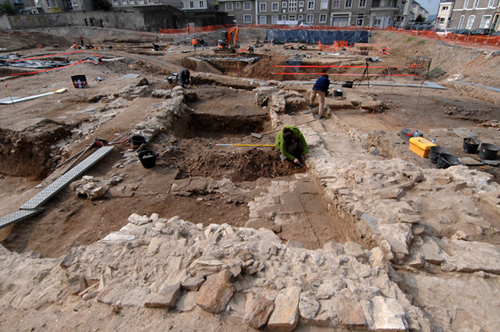
    Archaeologists have discovered two ancient temples – over 4000 years old – in Peru’s northern jungle. If the preliminary dating is correct, this is the country’s oldest temple building found so far. The temples were found near the village of  Jaén, Cajamarca, in northern Peru.  The excavation sites (image slideshow), locally known as Monte Grande and San Isidro, were previously used for agriculture and even as a rubbish dump. The Excavations at the Monte Grande and San Isidro Temples The complex appears to have been built around 2,000 BC. According to Peruvian archaeologist Quirino Olivera, the temples can be associated…

  • Ann

    Exodus Hydrodynamics: How the East Winds Parted the Red Sea

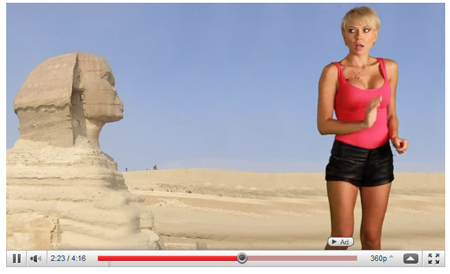
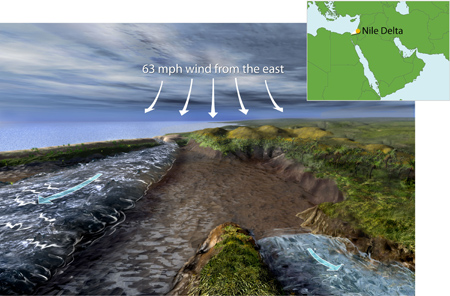
    The biblical narrative of the crossing of the Red Sea has inspired and mystified people for millennia. So far, Archeologists and Egyptologists have found little direct evidence to substantiate many of the events described in Exodus, said to have taken place more than 3,000 years ago. Now, a new study offers a new hydrodynamic explanation for the miracle a strong east wind, blowing overnight, could have created a land bridge (watch the video) and allowed for passage. By pinpointing a possible site south of the Mediterranean Sea for the crossing, the study – based on a reconstruction of the likely…

  • Ann

    ‘Linn Duchaill’ Viking Settlement Discovered at Annagassan, Ireland

    Archaeologists have discovered a 9th century Viking settlement at Annagassan, Ireland. The discovery is the culmination of a long term research project to identify the site of the Viking fortress of Linn Duchaill. It was long time suspected that the stronghold was to be found at Annagassan, County Louth, Ireland. The excavation of three trial trenches now confirms the results of a previous geophysical survey. A defensive rampart, consisting of a deep ditch and a bank was found. Likely, the fosse was the main fortification of the Norsemen‘s stronghold, which was further protected by the river Glide and the Irish…

  • mike-williams

    Taming the Wolf – Domesticating the Dog

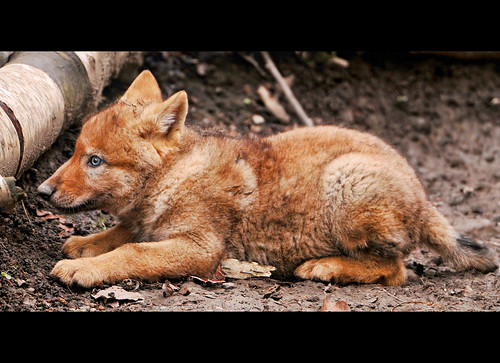
    The first evidence for domesticated dogs has just got earlier with the recent dating of a dogs skull and teeth from Kesslerloch Cave in Switzerland. That puts the transition from wolf to dog to over 14,000 years ago. Previously, the earliest date was from a single jawbone that was found in a human grave at Oberkassel, in Germany, dating to about 13,000 years-ago. (There are earlier dates claimed for the first definite identification of dogs but these are usually discounted by experts). The finds from Switzerland were uncovered in 1873 but it was only last year that archaeologists at Tubingen…

  • Ann

    Pavlopetri, ‘the city beneath the waves’ to surface in BBC Two documentary

    Discovered over 40 years ago just off the coast of Greece, Pavlopetri is the oldest submerged city in the world and the only sunken city in Greece that predates the writing of Plato’s Atlantis myth. Now, for ‘Pavlopetri, The City Beneath the Waves’, BBC Two is to follow the team of experts excavating the submerged site. “The future of archaeology is under the water and we are now armed with the technology to unlock the countless fascinating secrets the sea is yet to yield up to us, says BBCTwo’s Janice Hadlow. The documentary is planned to air next year, and…

  • Ann

    Iron Age Settlement and Roman Remains discovered at Sutton, South London

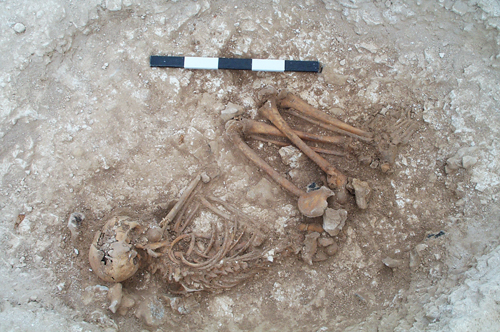
    Evidence of early Iron Age settlements and Roman remains have found at Sutton borough, south London. The infant burials and animal remains uncovered across the site are believed to be over 2000 years old. The discoveries were made by workmen laying the foundations for the new Stanley Park High School on the former site of Queen Mary’s Hospital. The site lies less than 100m to the northwest of one of the largest 150m in diameter Late Bronze Age hilltop enclosures in southeast England, discovered in the early 20th century. The archaeological remains are typical of a late Iron Age and…

  • Ann

    Cheshire’s Oldest Standing Wall, Newest Roundhouse and Iron Age Open Days

    This Saturday, as part of the Iron Age Open Days, Cheshire celebrates the opening of its brand new prehistoric Roundhouse at Burwardsley. The replica Iron Age Roundhouse, built by Chris Park from Acorn Education, will act as a teaching aid helping to bring archaeology to life for children. The free event will include demonstrations of Iron Age techniques such as making fire, bread and Iron Age jewellery, with an opportunity to have a go yourself. Round Houses were the dominant building style of late prehistoric Britain and would have been common to Cheshire throughout the Iron Age. Archaeological remains of…

  • Ann

    Ticket sale starts for ‘Secrets of the Silk Road’ at the Penn Museum – Exhibition Preview

    Tickets go on sale today for “Secrets of the Silk Road” a landmark exhibition from China making its only East Coast stop at the University of Pennsylvania Museum of Archaeology and Anthropology (Penn Museum) in Philadelphia February 5 through June 5, 2011. The exhibition aims to reflect the wide extent of the Silk Road trade and cultural interchange (see some of the highlights in this slideshow). Despite of what its name suggests, the Silk Road isn’t one single route. Rather, it is an extensive interconnected network of maritime and overland trade routes extending from Southern Europe through The Arabian Peninsula,…

  • Ann

    Ancient Egyptian tomb of Karakhamun at Assasif: a major tomb for a minor priest?

    Archaeologists have rediscovered the ‘lost’ tomb an ancient Egyptian priest at the Theban Necropolis in Egypt.It was announced today by Egypt’s Minister of Culture, Farouk Hosny, that the team excavating and conservating the tomb has now cleared the burial shaft of tomb and reached its burial chamber. The tomb is located at Qurnet Murai, south Assasif, on the west bank of the Nile opposite to Luxor, and belonged to a priest named Karakhamun. It dates to the 25th Dynasty (the Reign of Shabaqo, circa 700BC) and is referenced as TT223 (Theban Tomb 223). The el-Assasif area is a well known…

  • Ann

    Roman ‘Crosby Garrett’ Cavalry Helmet to go under Christie’s Auction Hammer

    Earlier this year, an astonishing Roman cavalry helmet was discovered in Cumbria. The helmet found complete with face mask is only the fifth known example discovered in the United Kingdom. Next month, the parade helmet will go on auction at Christie’s London, with Carlisle’s Tullie House Museum as one of the eager bidders for the 200,000 artefact. Crosby Garrett Helmet Discovery The helmet was discovered damaged it was broken in 67 pieces but near-complete by a metal detectoristat Crosby Garrett in Cumbria, in May 2010 (images of the headpiece in its discovery state can be seen on the Portable Antiquities…