• egypt

    Tutankhamun’s Ivory Senet Board

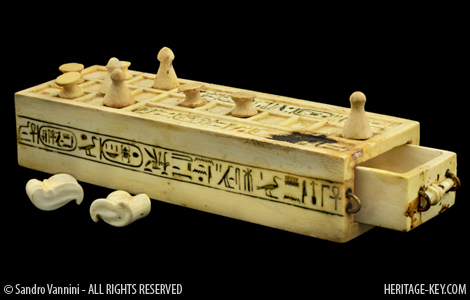
    Key Dates 1333 BC 18th Dynasty Key People Tutankhamun and his wife Ankhesenamun There were four senet sets in the tomb of Tutankhamun, some ceremonial and others for day-to-day use. One such daily set was made of solid ivory and was found in a wooden chest with many compartments. Howard Carter comments: ‘From the contents… that were found in the chest it becomes obvious that the chest was made for the knick knacks of a boy’ which could be indicative that this set was probably played with by Tutankhamun. This gaming box is particularly small and therefore portable. On the…
  • egypt

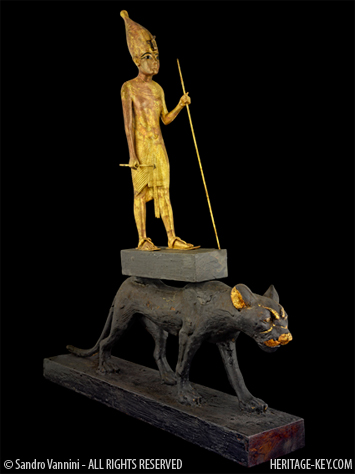
    Ritual Figures of King Tut Astride a Panther

    Key Dates 1324 BC The figures date from around the time of the death of Tutankhamun, in 1324 BC. They were discovered, along with the rest of the treasures of Tut’s tomb, in 1922. Key People The figure depicted is 18th Dynasty Egyptian pharaoh Tutankhamun himself. They were found by Howard Carter, who located King Tut’s tomb. Key People: Tutankhamun Howard Carter These small statuettes of the famous boy king Tutankhamun astride a panther came in a pair and were located along with 32 other ritual figures inside a black resined wooden box in the treasury section of Tut’s tomb,…

  • Articles & Blogs

    New Pyramid Theory: Khufu’s Great Pyramid, its Building Grid, the Number 7 and the ‘Diamond Matrix’

    For thousands of years, scientists from around the world have tried to understand how the Egyptians designed and built the Great Pyramid of Giza – the last remaining of the seven wonders of the ancient world. Now, an architect and researcher at the Norwegian University of Science and Technology (NTNU) says he has the answer to this ancient puzzle. According to Ole Bryn, the Great Pyramid’s building grid was developed based on the prime number seven – and the core of Khufu’s 146.6 meters high monument is likely a step pyramid. Khufu’s Great Pyramid, located on the Giza Plateau, was…

  • Ann

    Giza 3D – Giza Archives Project and Dassault Systemes team up in Virtual Reality

    The Museum of Fine Arts, Boston and 3D software company Dassault Systèmes have announced they will join forces in a partnership that aims to bring the power of industry as well as experimental 3D to the domain of archaeology. The MFA’s Giza Archives Project digital database will be “the first to benefit from the power of interactive, immersive and multi-platform 3D experiences” as the team intents to create new possibilities for the visualisation of archaeological data for both the scientific community and the general public. (preview video 1 – preview video 2) Visualisation of Archaeological Data for Education and Research…

  • exhibition

    Treasures from Medieval York: England’s other capital

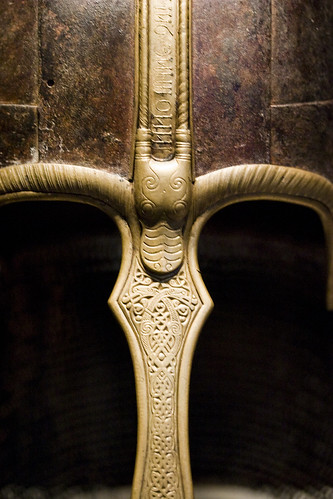
    ‘Treasures from Medieval York: England’s other capital’ is a temporary exhibition in Room 2 of the British Museum, aiming to showcase some of the most stunning treasures of the Yorkshire Museum, which is currently closed for redevelopment. During the Middle Ages, York was one of England’s greatest cities, rivalling London both in size and importance. The display features swords, jewellery and coins from the Anglo-Saxon and Viking periods. Highlight objects include the beautiful Middleham Jewel, the York Helmet, the remarkable Gilling Sword, and the magnificent Vale of York Hoard. The exhibition is also a showcase for the particpation between the…

  • Ann

    Top 10 Archaeology Pranks & Hoaxes (April Fools’ Day Special)

    Emperor Constantine had quite a splendid sense of humour for a Roman, but he couldn’t stand criticism. When in the fifth century one of his court jesters boasted that fools and jesters of the court could rule the empire better than the Emperor himself, Constantine decreed that the fools would get their chance at proving this claim. The ruler set aside one day in the year upon which a fool would reign the great Roman Empire. The first year, Constantine appointed a jester named Kugel as rule, who immediately ordained that only the absurd would be allowed on that day.…

  • malcolmj

    10 Best Ancient World Exhibitions Coming up in 2010

    In 2009, we saw the Terracotta Warriors tour America, racking up record attendance figures, while King Tut exhibitions criss-crossed the globe and the Staffordshire Hoard went on show in London just months after being unearthed in a West Midlands field by an avid metal detectorist. 2010 looks set to be equally as big a year for heritage exhibitions around the world. The iconic and controversial Lewis Chessmen will be reunited in Scotland for the first time in over 150 years in Edinburgh this May. The massive Shanghai World Expo will open around the same time, with a number exhibits themed…

  • meral-crifasi

    Ancient World in London Bloggers Challenge 4:Sex, Guns and Education ?

    So how do we create virtual entertainment that’s meaningful where there are no guns and no sex and still fun and educational? Is it possible? This is the subject of this week’s Bloggers Challenge, and your chance to have your say on this fascinating issue. Kids are exposed to so much violence in their daily entertainment that it becomes an acceptable norm for them and while using anything virtual or online they expect the same level of excitement that they get from games. When we were doing some user testing with high school kids as part of the production of…

  • Ann

    Top 10 Minoan Treasures to See at the British Museum

    With Bettany Hughes’ documentary ‘Atlantis: The Evidence’ set to première on BBC Two, what better way to prepare than to explore the Aegean Bronze Age treasures of the British Museum?  If the Minoan civilisation was indeed home to the Atlantis legend, what better way to get to know the Atlanteans than through what they left behind? And, lets face it, visiting London’s most famous museum is far easier than getting a permit to dig beneath the sphinx. 😉 Though not that many items excavated by Arthur Evans can be found at the British Museum – I probably should have visited the…

  • malcolmj

    First Pictures of Britain’s Oldest Shipwreck

    South West Maritime Archaeological Group (SWMAG) have sent us some of the first pictures of the remarkable finds recovered from the site of Britain’s oldest shipwreck – a 3,000 year old Bronze Age trading vessel that sunk off the coast of Devonshire in southwest England around 900 BC. We blogged about its discovery on Tuesday. The wreck was located in just a few metres of water at the bottom of Wash Gully near Salcombe. When it went down, the boat was on its way back from the continent with a precious cargo of tin and copper ingots – key raw…