
Two British film-makers have discovered what they believe to be the source of the 1,900-year old aqueduct built by the emperor Trajan in the early second century AD. The underground chambers were found and filmed after some years of research into Roman hydraulics by the documentary-makers Ted O’Neill and his father Michael O’Neill. According to Ted, it took some perseverance to find the location, which was hidden beneath a disused church some 30-40km north-west of Rome. Despite difficulties and delays in getting access to the site, the O’Neills were finally able to enter the underground chambers of the church in…
-
-
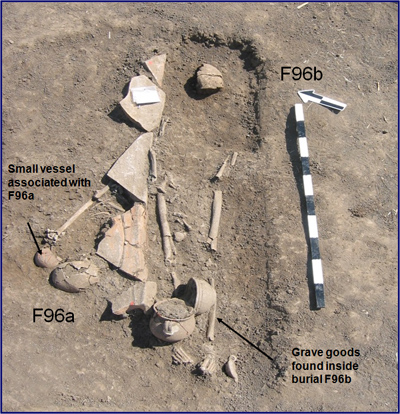
A team of researchers annouced a surprising discovery during a scholarly presentation in Toronto last Friday. The research team, based at McMaster University in Hamilton, Canada, has been helping to excavate an ancient Roman cemetery at the site of Vagnari in southern Italy. Led by Professor Tracy Prowse, theyve been analyzing the skeletons found there by performing DNA and oxygen isotope tests. The surprise is that the DNA tests show that one of the skeletons, a man, has an East Asian ancestry on his mothers side. This appears to be the first time that a skeleton with an East Asian…
-
Roman Britain A New History by Guy de la Bédoyère In this lively, authoritative account of a crucial period in Britains history, Guy de la Bédoyère puts the Roman conquest and occupation within the larger context of Romano-British society and how it functioned.With nearly 300 illustrations and dramatic aerial views of Roman sites, and brimming with the very latest research and discoveries, Roman Britain will delight and inform all those with an interest in this seminal epoch of British history. Thames & Hudson (22 Feb 2010) 288 pages
-
The official announcement is coming a week today (January 27) but news continues totrickle out about the exhibition of the Terracotta Warriors of the First Emperor, Qin Shi Huang, set to hit Toronto in June. Officials have been tight-lipped about this exhibit so what we’ve been hearing has been in drips and drabs. Last week we learned that the Toronto show is going to be the largest Terracotta Warrior’s showever to hit North America. We also learned that it will likely be one of four Canadian stops -with Toronto coming up first. There will be a Canadian tour, Montreal has…
-
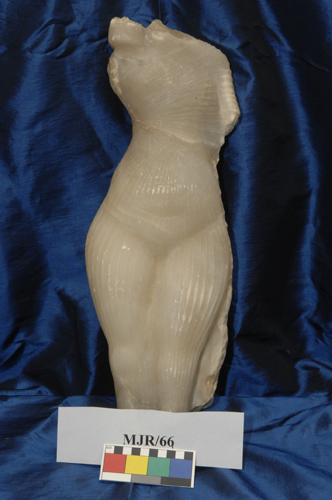
This Saturday the Victoria and Albert Museum in London will open a show that is all about a fake, in partnership with Scotland Yard. The exhibit, Metropolitan Police Service’s Investigation of Fakes and Forgeries, will explore the work of counterfeit mastermind Shaun Greenhalgh, and reveal some of the techniques used by the police to spot fakes. Over a 17 year period Greenhalgh created fake art pieces that fooled museum experts and sold for sums as high as six figures. Sentenced in 2007 he is currently serving a four year prison sentence. His parents Olive and George Greenhalgh, who assisted in…
-

By the time of the emperors, the Romans had created the worlds first global empire stretching from Morocco in the west to Iraq in the east, and from Scotland in the north to Egypt in the south. Around this empire flowed a treasure trove of goods from far flung lands: slaves, spices, precious stones, and coloured marble, as well as an exotic array of foods and wine. From this bounty, the Romans created a culture of pleasure and a passion for sensations that stimulated all the human senses: vision, hearing, smell, touch and so on. A global world of pleasure…
-
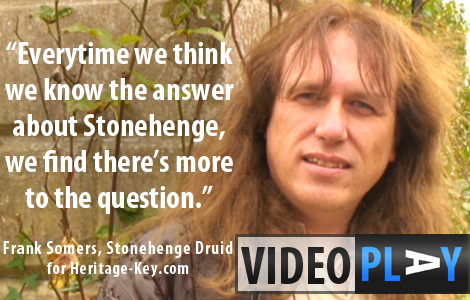
“There’s a passing on of knowledge for over 1,500 years spanning the whole Bronze Age, between our Stone Age ancestors who built Stonehenge and our Druid ancestors who wrote down folklore that we now take from Ireland, Scotland and Wales,” says Stonehenge Druid Frank Somers. “And that means that folklore has earlier origins going right back.” We’re stood outside a stately Wiltshire manor on a blustery winter’s morning, self apparent in the unruliness of Frank’s flowing locks. Barely yards away lies Bluestonehenge, a stone circle even older than Stonehenge itself: 2009’s biggest discovery. But Frank sees it more than an…
-

The Greek City-state, or Polis, is arguably the greatest political system ever created – remarkable given its appearance some 2800 years ago. The Greeks successfully built a system to foster those most elusive of human desires – freedom and equality, and their efforts have had an influence on western thinking since the Hellenic culture was re-discovered during the Middle Ages. But the Polis was much more than a governmental system. It was a culture built around expansion of the human intellect – through philosophy, architecture, drama, and mathematics. The Polis was the engine of these accomplishments because it valued and…
-
A splendid exhibition in New York – ‘The Lost World of Old Europe: The Danube Valley’ – brings to the United States for the first time more than 250 objects recovered by archaeologists from the graves, towns, and villages of Old Europe, a period of related prehistoric cultures that achieved a peak of sophistication and creativity between 5000 and 4000BC in what is now southeastern Europe. The cultures mysteriously collapsed by 3500 BC, possibly brining a shift from female to male power. The exhibition – made possible through loan agreements with over 20 museums in Romania, Bulgaria, and Moldova –…
-
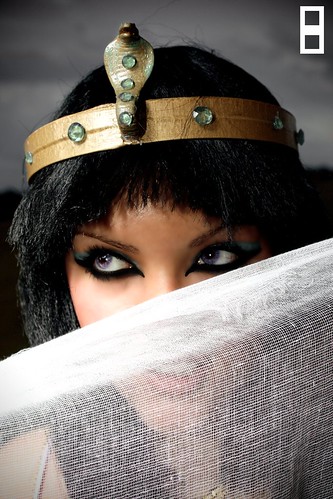
The worlds of cosmetics and archaeology have recently collided over two unexpected discoveries. Over the course of the past week, researchers have discovered that Neanderthals used make-up and that Cleopatra‘s face paint was good for her eyes. Which fact is most surprising? The first thing that springs to mind when thinking about Neanderthal man is definitely not refinement. Its more beard, dirt, animal skins, grunts and women carried by their hair. Like so many clichs depicted in classroom textbooks and carried on by Hollywood, this idea is probably far from the truth. Thanks to scientific research undertaken in Murcia, in…