• lyn

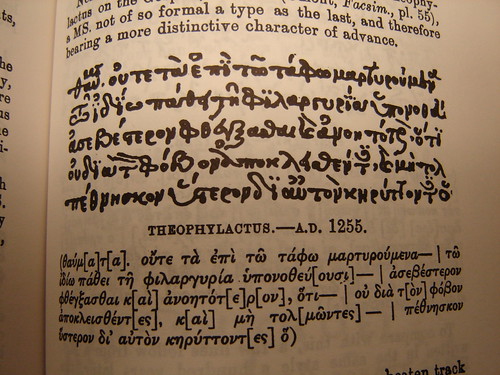
    Can the Power of Social Networks Save Palaeography at King’s College London?

    Since the economic downturn, colleges and universities around the world have found themselves in a pickle: their income is not what it used to be. Endowment-rich, private American institutions have seen an unprecedented decline in the value of their investments, while publicly funded universities around the world have seen their tax-generated budgets shrunken by unimaginable margins. For the first time in a long time (or, perhaps, for the first time ever) publicly funded and privately funded universities are in the same boat and that boat is sinking. Academics have reluctantly begun to accept that cuts are inevitable. Sometimes small things…

  • owenjarus

    Ancient Meteorite Hunting in the Arctic! Did the Thule People Rush East in Search of Alien Rocks?

    Did the ancestors of todays Inuit race across the arctic 750 years ago in search of meteorites?Canwest News Services has just published an intriguing story that suggests just that. According to the news service, Dr. Robert McGhee, curator emeritus at the Canadian Museum of Civilization, recently published this theory in a new book, The Northern World: AD 900 to 1400. Basically the idea works like this. 10,000 years ago a meteorite crashed into west Greenland, its known today as the Cape York meteorite. Mining in the arcticwas quite difficult (even today) so an iron meteorite was very handy for anyone…

  • lyn

    Caroline Lawrence and Millie Binks Join a Growing List of Celebs Fighting to Save Colchester’s Roman Circus

    Best-selling author Caroline Lawrence has added her name to a growing list of celebrities supporting the fight to save Colchester’s Roman Circus. Lawrence, the author of the Roman Mysteries series of childrens books, joins other high-profile people backing the appeal, including authors Ronald Blythe, Guy de la Bedoyere and Adam Hart-Davis, Time Team presenter Tony Robinson, architectural historian and TV presenter Dan Cruickshank, broadcaster Peter Snow, and former MP and cabinet minister Tony Benn. Colchester was the first Roman capital of England, and boasts a number of well-preserved sites such as the Norman castle and Roman wall, which was built…

  • lyn

    Dragons’ Den Helps the Indiana Jones of the Perfumes Industry Release Ancient ‘Scents of Time’

    David Pybus describes himself as a 21st century alchemist and aromancer, and says his mission in life is to get people to stop their frenetic living from time to time and to smell the roses. Hes underselling himself, of course. Hes really a chemist with more than 20 years experience at the worlds largest perfume makers. During an appearance on the BBCs Dragons Den in 2007, he convinced entrepreneurs Theo Paphitis and Peter Jones to part with 40,000 each to help launch Scents of Time, a range of fragrances based on ancient themes. Since his appearance on the show and…

  • lyn

    Museum Closure: Canterbury’s Roman Museum Could be the Latest Victim of the Credit Crunch

    Canterbury City Council is the latest local authority set to close museums as part of cost-cutting measures. The council is wielding the budget axe and its decided that saving the citys Christmas lights is more important than keeping the Roman Museum open to the public. Under the budget proposals, the Roman Museum and the nearby the Westgate Towers Museum would close, while Herne Bay Museum would remain open only for educational groups (though apparently not for the general public who wish to educate themselves). Canterbury is not alone in sacrificing museums often seen as soft targets as part of cost-cutting…

  • publication

    The Agricultural Revolution in Prehistory: Why did foragers become farmers?

    The Agricultural Revolution in Prehistory Why did foragers become farmers? by Graeme Barker The Agricultural Revolution in Prehistory addresses one of the most debated and least understood revolutions in the history of our species, the change from hunting and gathering to farming. Graeme Barker takes a global view, and integrates a massive array of information from archaeology and many other disciplines, including anthropology, botany, climatology, genetics, linguistics, and zoology. Against current orthodoxy, Barker develops a strong case for the development of agricultural systems in many areas as transformations in the life-ways of the indigenous forager societies, and argues that these…

  • sean-williams

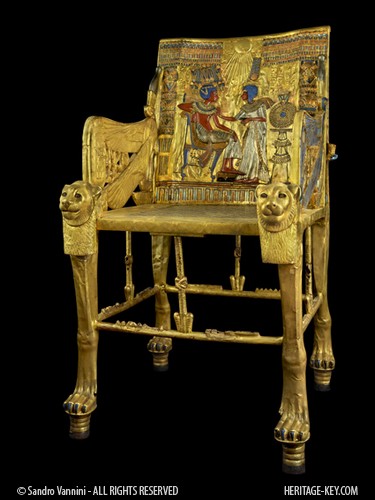
    Discovering Tut – Carnarvon Never Got to See the Golden Death Mask

    When you think of King Tut, do you see a young boy, struggling with the enormity of his power; a slender adolescent in control of the world’s greatest empire? Of course not, because you’re like me: you see the magnificent death mask, the coffins, shrines, shabtis, daggers, beds, decrepit mummy(with or without penis) et al. We ancient world-lovers are just magpies with laptops really. But do you ever wonder why, when Howard Carter and Lord Carnarvonburst into the tomb in 1922, they could see so many ‘wonderful things’? Why wasn’t Tutankhamun’s funerary procession made ancient swag, like those of nearly…

  • images

    Sandro Vannini’s Photography – King Tutankhamun’s Senet Game Board

    Four Senet boards were found inside the tomb of King Tutankhamun and suggests that the boy king was a keen player of the ancient game. In Ancient Egyptian society, senet was regarded as much more than just a game, however – it was a matter of life or death. The game involves throwing casting sticks or knucklebones, and over time became regarded as talismans for the journey into the afterlife with luck being a key deciding factor in the game. Those who would win games of senet were believed to be blessed by powerful gods such as Osiris, Ra and…

  • helen-atkinson

    Vacation in Varanasi: Seeing in the New Year in the Oldest City

    A trip to India with my photographer husband, Tim, found us celebrating the New Year in Varanasi, India. There’s actually almost nothing physically ancient in what claims to be the oldest continually inhabited city on earth. The city was once ruled by King Ashoka, but the Moguls, who invaded from the North and ruled India for nearly two hundred years ending 1707, made rubble of the place, and so you look in vain for anything built before the 18th century (although check out the ancient Dhamek Stupa – one of the few surviving ancient sites – if you visit). However,…

  • malcolmj

    Cracking the Codex: Long Lost Roman Legal Document Discovered by Researchers at University College London

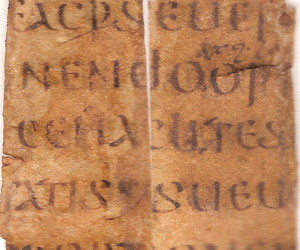
    Dr Simon Corcoran and Dr Benet Salway of the history department at University College London have found fragments of an important Roman law code that previously had been thought lost forever. Its believed to be the only original evidence yet discovered of the Gregorian Codex a collection of constitutions upon which a substantial part of most modern European civil law systems are built. They made their remarkable find by painstakingly linking 17 pieces of seemingly incomprehensible parchment. Together they form, according to Dr Salway, a page or pages from a late antique codex book rather than a scroll or a…