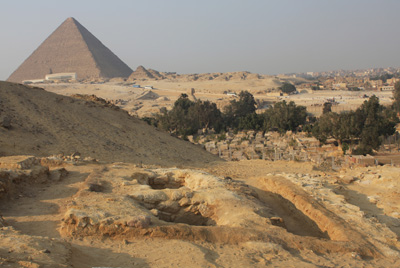
There is exciting news breaking right now in Egypt. An archaeological team led by Dr. Zahi Hawass has discovered several new tombs that belong to the workers who built the pyramids of Khufu and Khafre. This is the first time to uncover tombs like the ones that were found during the 1990s, which belong to the late 4th and 5th Dynasties (2649-2374 BC), said Dr. Hawass in the press release. When we think of Giza we tend to think of the Giza Pyramids. However, while the pyramids were under construction, there was an extensive city to the south that supported…
-
-
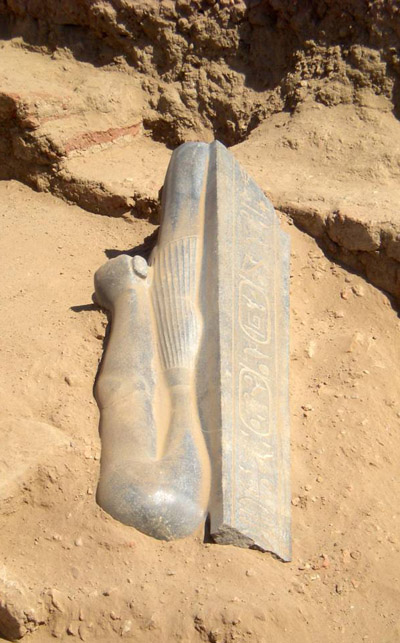
About a week backHeritage Keypublished a story about the discovery of a massive, one ton, statue of Taharqa that was found deep in Sudan. Taharqa was a pharaoh of the 25th dynasty of Egypt and came to power ca. 690 BC. The pharaohs of this dynasty were from Nubia a territory located in modern day Sudan and southern Egypt. When Taharqa came to power, he controlled an empire stretching fromSudan to theLevant. The Nubian pharaohs tried to incorporate Egyptian culture into their own. They built pyramids inSudan even though pyramid building in Egypt hadnt been practiced in nearly 800 years.…
-
The media preview for Fakes and Forgeries: Yesterday and Today was held today. It will be opening at the Royal Ontario Museum, in Toronto Canada, this Saturday. It’s a much smaller exhibition than the King Tut and Dead Sea Scrolls shows that have hit Toronto recently, and will potentially be dwarved by the very large China show that may or may not include the Terracotta Warriors this June. But Fakes and Forgeries offers some strong lessons about the world of fakes and the experts who try to out them. How the ancient section of the exhibit works is that there…
-
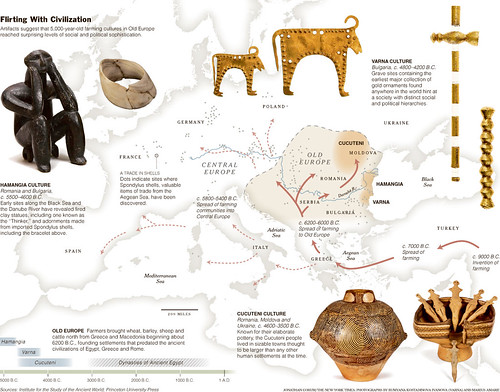
The exhibition “The Lost World of Old Europe,” which opened in Nov. 2009 in New York, has raised some very interesting questions about prehistoric societies and how they changed. David Anthony, guest curator of the exhibition and a leading anthropologist specializing in prehistoric Europe, Eurasia, and North America, raised a particularly powerful issue – why did the collapse of a highly sophisticated, matriarchal culture in what is now Bulgaria, Romania, and Moldova, lead to a shift of power to men? Women, after all, are naturally capable of running households, and should surely be running countries too. Think of our powerful,…
-
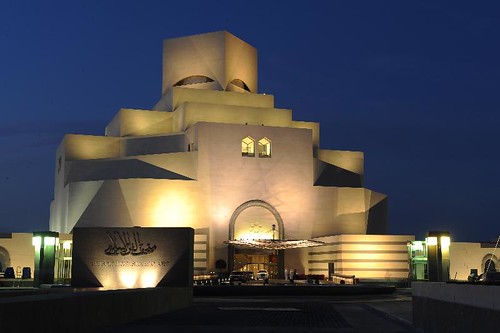
The Arabian peninsula has been suffering recently. Yemen has been accused of harbouring terrorists by the West, and the gargantuan Burj Tower in Dubai was unveiled last week amid a haze of economic uncertainty. Yettiny Qatar, an outcropwith a population barely toppingone million,continues to buck its diminutive stature with world-beating business and heady ambitions. And the Museum of Islamic Art in capital city Doha may just be Qatar’s most impressive structure. In this Heritage Key video, Museum Director Dr Oliver Watson shows us some of the treasures of the museum, and explains the far-reaching importance of Islamic art. The striking…
-
A dying ancient culture, strange visitors from a far away land and a changing climate that helped bring them together. Whether you believe Dr. Patricia Sutherlands research or not, you have to acknowledge one thing she tells an incredible story! Its a tale of how two dynamic, but ultimately doomed, cultures co-existed together the Greenland Norse and the Dorset of the Canadian Arctic. Dr. Sutherland is a curator at the Canadian Museum of Civilization in Ottawa Canada. She has been conducting Arctic archaeology research for more than 30 years. The Norse and the Dorset The Norse people hardly need an…
-
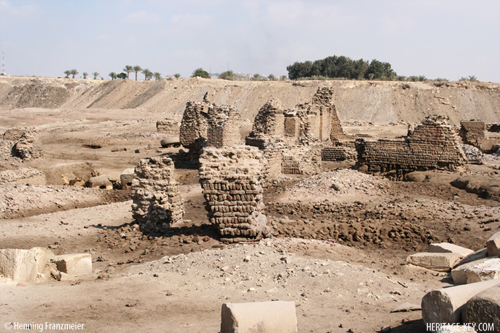
A cat wanders by, leading to myself, the guard, my two friends, and the cat being the only occupants of the ruined city of Fustat on this particular day; it was originally home to roughly 200,000 people. This is an unexpected experience for Cairo solitude in the city. The Medieval Capital Fustat, the medieval capital of Egypt founded in 642 AD by General Amr Ibn el-As, was burnt to the ground (according to Arab tradition) roughly five hundred years later by order of the Vizier Shawar. Frankish crusaders were on their way, and he decided that it was better to…
-
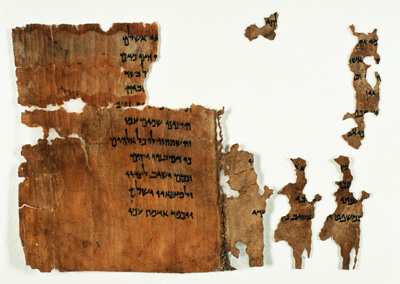
The Globe and Mails Patrick Martin (the papers former Middle East Correspondent), is reporting that Jordan is asking the Canadian government to seize the Dead Sea Scrolls on display in Toronto Canada. The Royal Ontario Museumis currently displaying seven of them as part of an exhibit on the scrolls.Thelast day of the exhibit isJanuary 3. Summoning the Canadian charg d’affaires in Amman two weeks ago, Jordan cited the 1954 Hague Convention for the Protection of Cultural Property in the Event of Armed Conflict, to which both Jordan and Canada are signatories, in asking Canada to take custody of the scrolls,…
-
Mastodons, Woolly Mammoths and bears – one thing is for sure, the first people to cross into North America certainly were not timid hunters! At a lecture at the Vancouver Aquarium Marine Science Centre a few weeks back, Parks Canada archaeologist Daryl Fedje told a crowd that his team has found evidence that people were engaged in bear-hunting, on the Queen Charlotte Islands, as far back as 13,000 years ago. This is the point where humans were just crossing into North America. The Queen Charlotte Islands are located off the coast of British Columbia, a western province in Canada that…
-
One remarkable tale from ancient history is that of the site of Pyla-Kokkinokremos on the southeast coast of Cyprus. It existedfor only 50 years, at a time of devastation throughout the ancient world. Trying to make sense of this site is difficult and the story reminds me, in some ways, of the ill-fated 16th century AD English colony of Roanoke in North Carolina. A few weeks back Professor Dimitri Nakassis, of the University of Toronto, presented the latest research on the site at an event at the Royal Ontario Museum. In the following days Heritage Key did an extensive interview…