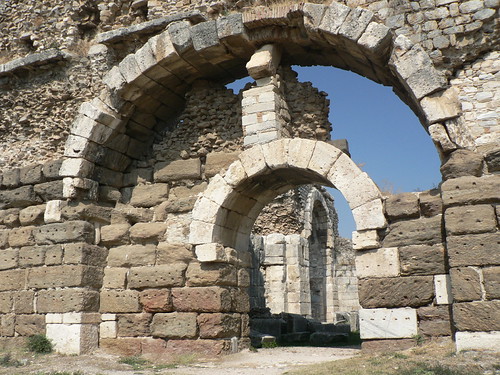
Attribution: Lazy B Millet Turkey Key Dates Miletus was first occupied at around 3500 to 3000 BC. Minoans occupied the area from around 1900 BC. The first settlers from Crete arrived in Miletus at around 1400 BC. The Greeks freed Miletus of Persian rule in 479 BC and famously rebuilt. Alexander the Great seized Miletus in 334 BC. It was annexed by the Romans in 133 BC. The Apostle Paul led his Third Missionary Journey through the city in 57 AD. Miletus’ first excavations commenced in 1873. Key People Hippodamus; the famous Greek architect who built Miletus as the world’s…
-
-
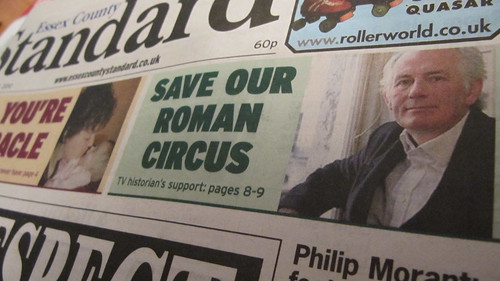
Best-selling author Caroline Lawrence has added her name to a growing list of celebrities supporting the fight to save Colchester’s Roman Circus. Lawrence, the author of the Roman Mysteries series of childrens books, joins other high-profile people backing the appeal, including authors Ronald Blythe, Guy de la Bedoyere and Adam Hart-Davis, Time Team presenter Tony Robinson, architectural historian and TV presenter Dan Cruickshank, broadcaster Peter Snow, and former MP and cabinet minister Tony Benn. Colchester was the first Roman capital of England, and boasts a number of well-preserved sites such as the Norman castle and Roman wall, which was built…
-
Canterbury City Council is the latest local authority set to close museums as part of cost-cutting measures. The council is wielding the budget axe and its decided that saving the citys Christmas lights is more important than keeping the Roman Museum open to the public. Under the budget proposals, the Roman Museum and the nearby the Westgate Towers Museum would close, while Herne Bay Museum would remain open only for educational groups (though apparently not for the general public who wish to educate themselves). Canterbury is not alone in sacrificing museums often seen as soft targets as part of cost-cutting…
-
On March 13, Hadrian’s Wall all of it will be lit by gas beacons, a once-in-a-lifetime event called Illuminating Hadrian’s Wall. From Wallsend in the east, to Bowness on Solway, approximately 500 beaconsspaced every 250 metres will cover the 84 miles of the Hadrian’s Wall. The first beacon will be lit at Wallsend at approximately 5.35pm (sunset is at 6.11pm), and lighting will progress in sequence east to west with a six-second delay between each beacon firing up; 50 minutes later, the last beacon in Bowness should be lit. The beacons will be 6-8ft tall with a 2-3 foot flame.…
-
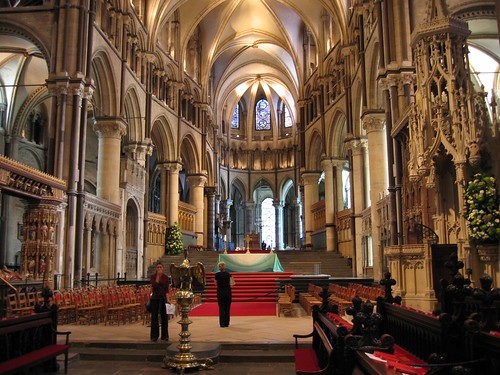
Like any major western city, modern London encourages its residents to live a lifestyle focussed upon the secular. On the surface, finance, business, fashion, the career and socialising outwardly seem to be the major concerns of Londoners as they rush around town. However, one does not need to look far to be reminded of the fact London is very much a religious centre, on top of being the hub for so many other preoccupations of British lives. St. Paul’s Cathedral has been dominant in the city skyline, in one form or another, for nearly a thousand years. Westminster Cathedral and…
-
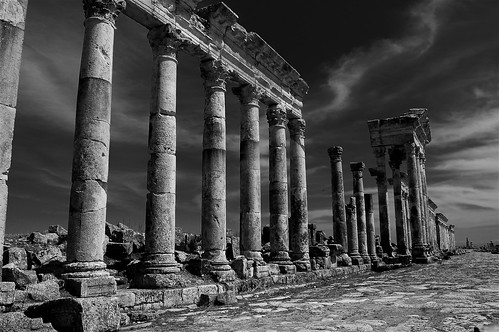
Black and White photography is an artform unto itself – it’s so much more than just clicking “Greyscale” in Photoshop, which will oftentimes just give a bland result. Several adjustments and the right lighting is required to make a black and white image work, and in Robinho’s image of Roman ruins in Apamea, Syria we see a fantastic, dramatic shot. The city of Apamea was adjacent to the Orontes River as served as a treasure city of the Seleucid. It was annexed and formed part of the Roman Empire from 64BC, and it is from the Roman era that many…
-
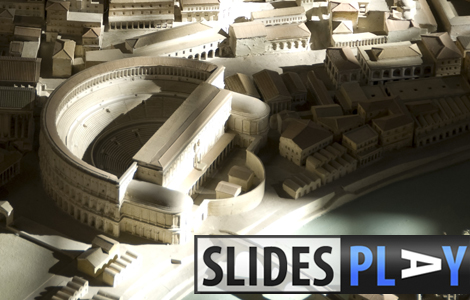
After a recent visit to Rome, Jon dropped off some images to me from the Museo della Civilt Romana in EUR (Esposizione Universale Roma) of one of the most beautifully crafted architectural models I’ve ever seen of Ancient Rome. As a bit of an architecture buff, and having spent 5 years studying it, I’ve developed a small addiction to UHU Glue and can’t really look at balsa wood anymore without my hand subconsciouslly reaching out for a craft knife. Model making was the fun part of studies when I would attempt to use a variety of materials including foamboard, tin…
-
Two British film-makers have discovered what they believe to be the source of the 1,900-year old aqueduct built by the emperor Trajan in the early second century AD. The underground chambers were found and filmed after some years of research into Roman hydraulics by the documentary-makers Ted O’Neill and his father Michael O’Neill. According to Ted, it took some perseverance to find the location, which was hidden beneath a disused church some 30-40km north-west of Rome. Despite difficulties and delays in getting access to the site, the O’Neills were finally able to enter the underground chambers of the church in…
-
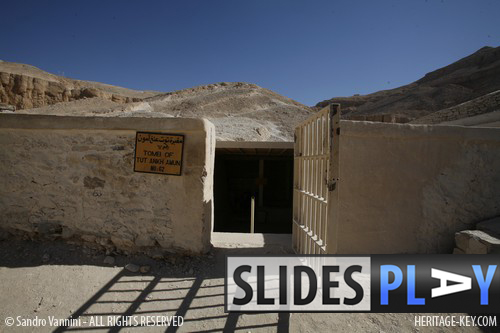
When the entrance to the Tomb of King Tutankhamun (KV62) was discovered by the great explorer Howard Carter and his financier Lord Carnarvon, they could never have dreamed of the treasures which awaited them inside. These two men worked together to track down King Tut’s burial place, as explained in a Heritage Key video with Lord Carnarvon’s modern day ancestors the Earl and Countess of Carnarvon (Watch the Video). Egyptology photographer Sandro Vannini has spent much of the past decade photographing the fascinating artefacts discovered inside KV62, as well as capturing the tomb itself on film. But an angle that…
-
Roman Britain A New History by Guy de la Bédoyère In this lively, authoritative account of a crucial period in Britains history, Guy de la Bédoyère puts the Roman conquest and occupation within the larger context of Romano-British society and how it functioned.With nearly 300 illustrations and dramatic aerial views of Roman sites, and brimming with the very latest research and discoveries, Roman Britain will delight and inform all those with an interest in this seminal epoch of British history. Thames & Hudson (22 Feb 2010) 288 pages