
The remnants of a royal palace built by the family of ancient Romes legendary tyrant king, Tarquinius Superbus (Tarquin the Proud), have been unearthed at Gabii, an ancient site 12 miles south of Rome, according to reports from archaeologists on Thursday. Excavators believe that the palace, which dates back to the 6th century BC, was the home of Tarquinius Superbuss son, the notorious prince Sextus Tarquinius. Recovered fragments of the palaces terracotta roof display an image of the minotaur, a family emblem of the Tarquins, which has led archaeologists to suggest that it was home to many generations of Tarquins.…
-
-
Snow-weary Toronto residents are set to get some Aegean relief this Saturday. The Royal Ontario Museum, in Toronto Canada, will be hosting Ontario Aegean Archaeology Day. Nine speakers from universities in Ontario and New York State will present their research on the ancient Aegean. The event is free if you have a museum membership – non-members will have to pay the usual museum admission fee. The event will be held in the Eaton theatre, and is sponsored by the museum, the Hellenic Republic of Greece, Greek Communities of Canada and the Archaeology Centre at the University of Toronto. Don’t Miss…
-
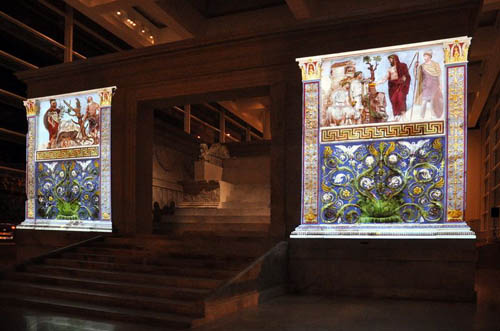
Normally as white as a bleached bone, the Ara Pacis, the emperor Augustus’s altar to peace, is being restored to what could have been its original colours for a series of evening openings from tonight, until April. The famous monument represents the Augustan golden age of the early empire and was excavated from several metres under Rome’s busy main shopping street, via del Corso, during Italy’s Fascist era in the 1930s. The fragments were reassembled and finally housed in a wooden structure in piazza Augusto Imperatore. A new structure to house the monument was opened in 2006. Designed by Richard…
-
For Dr. Robert Mason, an archaeologist with the Royal Ontario Museum, it all began with a walk last summer. Mason conducts work at the Deir Mar Musa al-Habashi monastery, out in the Syrian Desert. Its still in use today by monks. The finds at the monastery date mainly to the medieval period and include some beautiful frescoes. I went for a walk into the eastern perimeter, he said – an area that hasnt been explored by archaeologists.What he discovered is an ancient landscape of stone circles, stone alignments and what appear to be corbelled roof tombs. From stone tools found…
-

My recent travels in India took me to Ajanta, about two hours’ drive outside of Aurangabad, in the Indian state of Maharashtra (where they’re making perfectly drinkable wine these days, by the way). The nearby small town of Ajanta gives its name to the collective of 29 caves carved out of a sheer wall of rock in a horseshoe-shaped river canyon, completed in the period 200BC to 500AD in the name of Buddhism. Several are temples, but most are dormitories originally built for temporarily housing Buddhist monks, as well as travellers and itinerant spice traders. The spice route passed through…
-
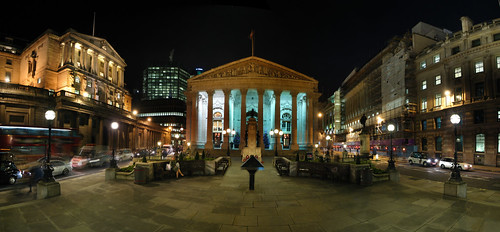
Roman London is mostly intangible, hidden and largely forgotten. Today it’s buried under tons of concrete and glass in the shape of the City of London London’s financial district with its busy streets, packed offices and underground networks. It’s not surprising that getting a peak at the remains of the Roman city founded soon after 43 AD is not easy, but archaeologists have excavated several large areas, often when construction projects and post-war reconstruction have provided opportunities to open up the ground. However, areas remain that have yet to be studied by a professional archaeologist, so what Roman structures could…
-
Attribution: matman73072 London United Kingdom Key Dates Southwark was first founded as part of Roman London sometime during the 1st century AD, then abandoned after Roman withdrawal from Britain in 410. It was re-founded as a “burh” during the Anglo-Saxon period, in approximately 886. The Anglo-Saxon London Bridge was built between Southwark and the City of London by at least 1000. Southwark’s defenses repelled Viking attacks in 1014, then later the Norman army in 1066. It features heavily in the Domesday Book of 1086, by which point we can see a thriving community emerging at Southwark. Key People Southwark was…
-
When it comes to invading marauders, who had more influence in shaping London? To my mind, the Romans will win this hands down. They came, they saw, and they started building drains, underfloor heating and fancy mosaics. They also had awesome military organisation and ferocious fighting techniques, but I think the Romans should be remembered as the invaders to beat all other invaders for a slightly different reason. There’s no doubt they completely transformed the landscape of London. If it wasn’t for the Romans, Southwark would still be flooded by salt water twice a day. If Julius Caesar hadn’t landed…
-
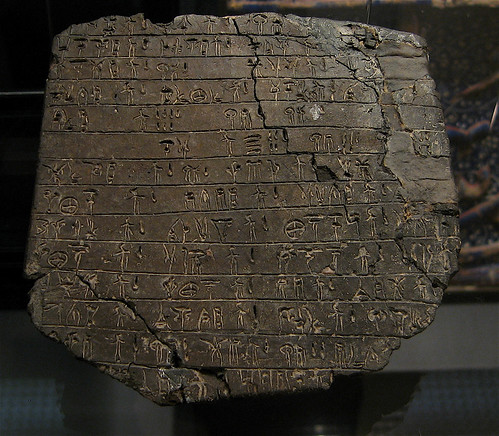
The history of Athens and its many monuments is endlessly exciting for visitors and you don’t need to be in the city itself to get a taste of its glorious past. Wander around London, admire a few buildings, have a short visit to the British Museum and then finish your day with a trip to the cinema and you will feel like you’ve been to transported to ancient Greece. So here are 10 points of call for experiencing your very own “Athens day” in London. 1. Clay tablets With Linear B Get to grips with the language of ancient Greece…
-
When Roman troops led by Aulus Plautius arrived on the banks of the Thames shortly after they landed in Britain (probably on the east coast of Kent or near Southampton) in 43 AD, they would have found little more than a few Iron Age settlements on the banks of a river, with few roads and not much trade to speak of. Within a century the Roman settlers had laid down the foundations of a bustling trade town, which rebuilt itself after numerous attacks, fires and a possible Plague epidemic, with a population peaking between 45,000 and 60,000 by the mid…