
Today was the first day of the CRE XI conference, but last night we had a lecture by Prof. Demarée of Leiden University. Demarée, who studied Egyptology in Leiden, Copenhagen and Oxford and has a PhD on “Ancestor Worship in Ancient Egypt”, spoke about a group of papyri fragments scattered in different museums that, together with some ostraca and graffiti, provide researchers more information on the workers’ community at Deir Al-Medina, especially from the Ramesside Period and the second half of the New Kingdom. “Now, thanks to a largely unpublished dossier of texts, we are gradually beginning to understand what happened…
-
-

With the recent developments in the excavation of Qin Shi Huang’s mausoleum, and the discovery of more terracotta warriors, not to mention the ground-breaking discoveries of the tomb of Cao Cao, and the 100,000-year-old fossil, it’s an exciting time for archaeologists in China. The past decade has certainly been a good one for Chinese archaeology. So good in fact, that one might say it’s been a golden age. To Zhao Zhijun, a Chinese archaeologist working in Beijing, this is no overstatement. “We know the best archaeological methods, our research is open now, we have plenty of funding, and we have…
-
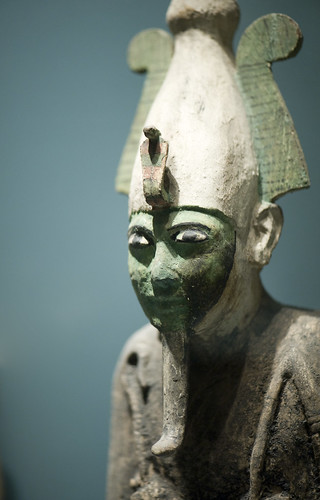
Another exciting CRE conference is about to begin today, as I write this, this time and for the first time ever in Leiden, The Netherlands. Current Research in Egyptology (CRE) has always happened in The UK but, last time, at Liverpool, no one from UK universities wanted it, so our beloved colleagues from Leiden applied and won! CRE is the best way to show your work, explain your research, collect contacts from all over the world and get access to books that don’t exist in your country either by buying them at sale prices or by browsing the nicest libraries…
-
A dying ancient culture, strange visitors from a far away land and a changing climate that helped bring them together. Whether you believe Dr. Patricia Sutherlands research or not, you have to acknowledge one thing she tells an incredible story! Its a tale of how two dynamic, but ultimately doomed, cultures co-existed together the Greenland Norse and the Dorset of the Canadian Arctic. Dr. Sutherland is a curator at the Canadian Museum of Civilization in Ottawa Canada. She has been conducting Arctic archaeology research for more than 30 years. The Norse and the Dorset The Norse people hardly need an…
-
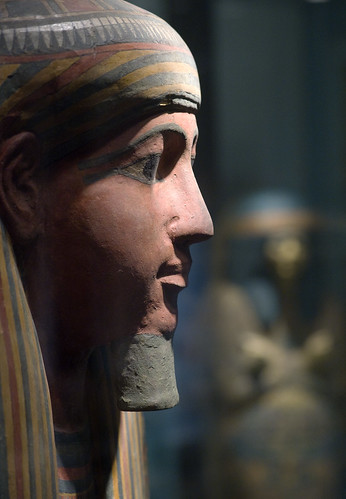
After having been held in the UK for the past 10 years, the Current Reseach in Egyptology conference moves to the continent for the first time in 2010. CREXIwill take place January 5th to 8th at the Leiden University in The Netherlands. Originally set up by students at the University of Oxford in 2000, the main aim of the conference is still to provide graduate and post-graduate students the opportunity to present their research. The conference covers the entire span of the Palaeolithic to the Graeco-Roman and Coptic Periods in Egypt and the Sudan, which leads to a broad range…
-
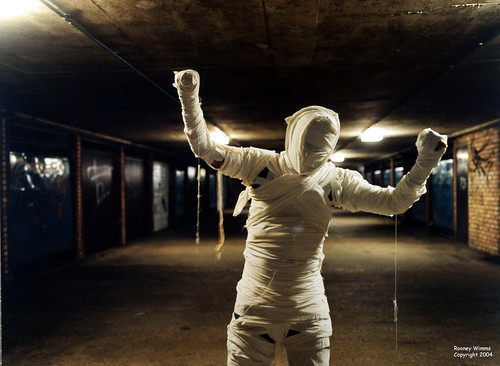
Did ‘mummy paper’ – paper made out of recycled mummy bandages – exist for sure? Worchester librarian S.J. Wolfe believes it is not the myth historians believe it to be. Ms Wolfe recently published her book ‘Mummies in Nineteenth Century America’ about the import of mummies in the USAin the 1800’s. Her research into what happened to these 560 ‘honorary guests’ to the USA’s carnivals and exhibitions (often further dismemberment and a travelling life) lead the researcher to what she calls a smoking gun: proof that ‘mummy paper’ is not an urban myth. Mummy-recycling was a popular passtime or even…
-
Two large tombs have been discovered at the ancient Egyptian necropolis of Saqqara – one of which is the largest ever found at the site. The 26th Dynasty tombs, likely robbed during the Roman era, are nonetheless filled with important arefacts including coffins, skeletons, pottery and mummified eagles. The tombs, discovered by an Egyptian archaeological mission from the Supreme Council of Antiquities, are at the Ras El Gisr area of Saqqara, near the landmark’s entrance. Both tombs are cut into the hills of the region: the larger first tomb is hewn from limestone while the other is mud-brick. The larger…
-
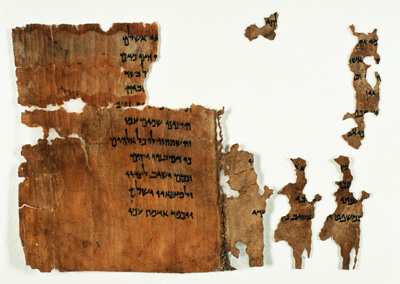
The Globe and Mails Patrick Martin (the papers former Middle East Correspondent), is reporting that Jordan is asking the Canadian government to seize the Dead Sea Scrolls on display in Toronto Canada. The Royal Ontario Museumis currently displaying seven of them as part of an exhibit on the scrolls.Thelast day of the exhibit isJanuary 3. Summoning the Canadian charg d’affaires in Amman two weeks ago, Jordan cited the 1954 Hague Convention for the Protection of Cultural Property in the Event of Armed Conflict, to which both Jordan and Canada are signatories, in asking Canada to take custody of the scrolls,…
-
Mastodons, Woolly Mammoths and bears – one thing is for sure, the first people to cross into North America certainly were not timid hunters! At a lecture at the Vancouver Aquarium Marine Science Centre a few weeks back, Parks Canada archaeologist Daryl Fedje told a crowd that his team has found evidence that people were engaged in bear-hunting, on the Queen Charlotte Islands, as far back as 13,000 years ago. This is the point where humans were just crossing into North America. The Queen Charlotte Islands are located off the coast of British Columbia, a western province in Canada that…
-
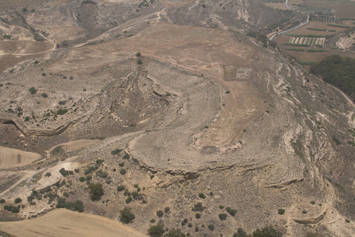
One remarkable tale from ancient history is that of the site of Pyla-Kokkinokremos on the southeast coast of Cyprus. It existedfor only 50 years, at a time of devastation throughout the ancient world. Trying to make sense of this site is difficult and the story reminds me, in some ways, of the ill-fated 16th century AD English colony of Roanoke in North Carolina. A few weeks back Professor Dimitri Nakassis, of the University of Toronto, presented the latest research on the site at an event at the Royal Ontario Museum. In the following days Heritage Key did an extensive interview…