• owenjarus

    Massive statue of Egyptian ruler Taharqa found deep inside Sudan

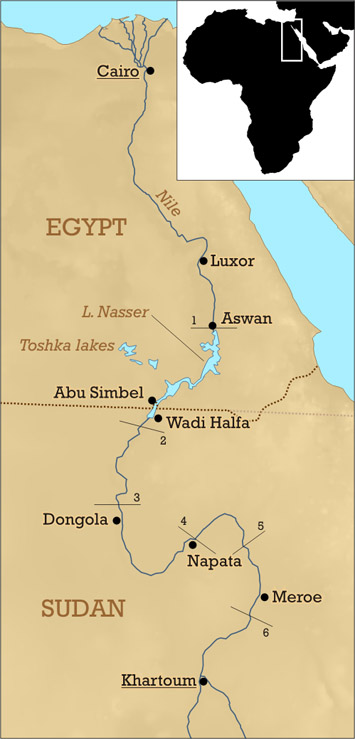
    A massive one ton granite statue of the pharaoh Taharqa has been found in Dangeil, deep inside Sudan. Taharqa was a pharaoh of the 25th dynasty of Egypt. This was a period of Kushite rule, which means that Taharqa and his fellow rulers were from Nubia and drew their power-base from there. Update: Further information on the statue of Pharoah Taharqa discovered at Dangeil and a confirmation that – indeed – no statue of a pharaoh has ever been found further south of Egypt than this one in Owen’s follow up blog. You’ll also find photographs of the statues and…
  • michael-kan

    Tomb of famous Chinese warlord Cao Cao found

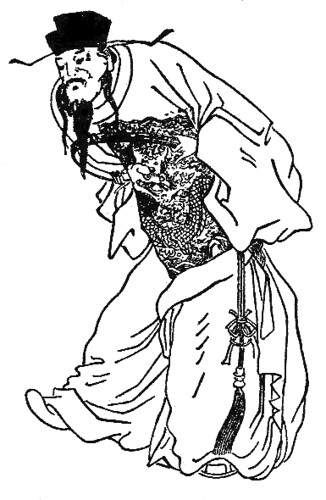
    Archaeologists believe they may have found the remains of Cao Cao, a Chinese warlord renowned for his role during Chinas Three Kingdoms period. This past weekend Chinese archaeologists announced the find, saying they had discovered the ancient rulers tomb in Chinas Henan Province, near Anyang. Cao Cao, who lived from 155 to 220 AD, is a major historical figure in China. Both a military general and a poet, he established himself as a king of his own state while fighting to unite the country under his rule. Cao Caos life was later romanticized in Chinese literature, with him being cast…

  • veigapaula

    King Tut’s Treasures: Perfumes, Alabaster Vessels and Wine for the Afterlife

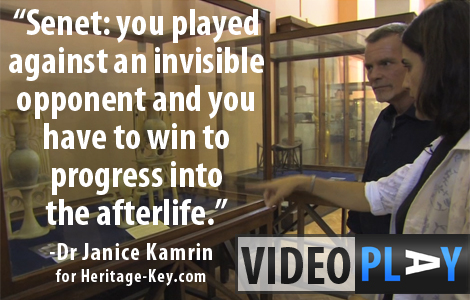
    In this Heritage Key video, Dr. Janice Kamrin, head of the EgyptianMuseum Database Project, shows and discusses some of the lifestyle objects found in Tutankhamuns tomb by Carter in 1922, and now housed in The Egyptian Museum in Cairo. Board games, and containers for perfumes, cosmetics and unguents, are amongst the objects shown in this video that give an insight into the livestyles of the rich and famous ancient Egyptians. You can catch up on the previous videos in this series when Dr Kamrin looks at Animal iconography (Watch the video), The Canopic Shrine, Chest and Jars (Watch the video)…

  • malcolmj

    Life of Adventure – Opening one of the Sarcophagi discovered at Gisr el-Muder, Saqqara

    Nothing keeps Dr Zahi Hawass awake at night quite like the prospect of being the first person to lay eyes on a millennia-dead Egyptian mummy. I could not sleep with thinking about it all the time, he reveals at the start of Heritage Keys latest fantastic video by Nico Piazza, documenting the opening of an intact tomb at Saqqara. Thinking about the moment that I will come down, he continues, about 11 metres, and begin to open a sealed sarcophagus that no one ever touched since 2,600 years ago. The camera pans across creepy piles of heavily decayed human bones…

  • owenjarus

    King Tut Exhibition is Toronto Blockbuster

    The first visitor numbers are in for the number of people visiting the King Tut exhibition. The Art Gallery of Ontario, which is hosting King Tut and the Golden Age of the Pharaohs, announced that more than 100,000 tickets have been sold to date That works out to at least $3.2 million in sales (Canadian currency). The exhibit has only been open for one month. Now I should caution that tickets have been available for three months (you could buy them in advance). I should also add that it doesnt appear as if Tutankhamun will top the 750,000 visitors it…

  • malcolmj

    Stonehenge Winter Solstice Turnout Reduced by Weather-related Traffic Chaos

    Most of you wont have relished venturing out from under the duvet at all on this snowy Tuesday morning, let alone doing it before the break of dawn. But around 600 intrepid souls were up before the birds today, and wrapped in the their woollens in time to trudge out into the middle of a frozen Wiltshire field for the rising of the sun shortly after 8am, and the celebration of the winter solstice at Stonehenge. Attendance at the event a chilled-out, smaller-scale alternative to the much headier summer solstice is usually a lot higher (2000 people turned out in…

  • owenjarus

    Jordan’s Bronze Age Site Khirbet ez-Zeiraqoun Surprises With Glyphs and Water System

    Chances are you have never heard of Khirbet ez-Zeiraqoun, also known as Khirbet ez-Zeraqon. Its a 25 hectare fortified town in Northern Jordan that was occupied during a period known as the Early Bronze III (2700 BC -2300 BC). This time period was a high water mark for many great civilizations. The royal burials at Ur, the construction of the Pyramids at Giza and the rise of the twin cities of Mohenjo-Daro and Harappa in the Indus Valley all these things happened in this narrow stretch of time. Khirbet ez-Zeiraqoun was excavated in the 1980s and 90s, and the analysis…

  • world

    Missing In Action: 5 Armies That Vanished From History

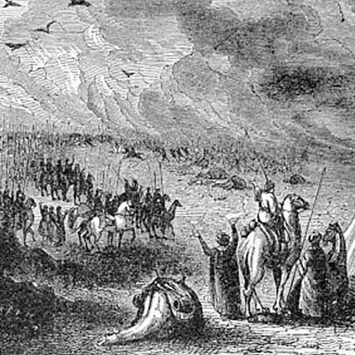
    Thanks to GPS, satellite imaging and digital communication systems, it’s uncommon for so much as a solitary soldier to go missing on the battlefields of the 21st century. But in ancient times – when civilizations often knew precious little of the world outside their sometimes narrow boundaries – it was apparently possible for entire armies to march against a foreign foe and fall off the face of the earth altogether, without conclusive explanation. Myth has undoubtedly embellished – and in some cases overtaken – the truth behind the famous tales of vanished forces such as the Legio IX Hispana, which…

  • vickyd

    Face-off: King Tut’s Dagger ‘v’ Forteviot Dagger

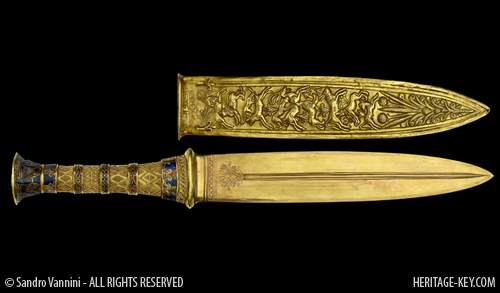
    Two powerful Bronze Age figures laid to rest with special reverence; two large ritual complexes in places of kingly significance; each in a bend of a river valley; two burials with remarkably well-preserved contents; and two impressive daggers. The quartz-handled dagger of King Tutankhamun is part of probably the most famous treasure hoard excavated from the dry, dusty desert of Egypt by Howard Carter and Lord Carnarvon 87 years ago; the dagger excavated by teams from Glasgow and Aberdeen Universities in Forteviot in August 2009 is still being conserved after being freshly lifted from a cist burial in the rich…

  • sean-williams

    Egypt Lifts Cleopatra Temple Pillar From Sunken Palace at Alexandria

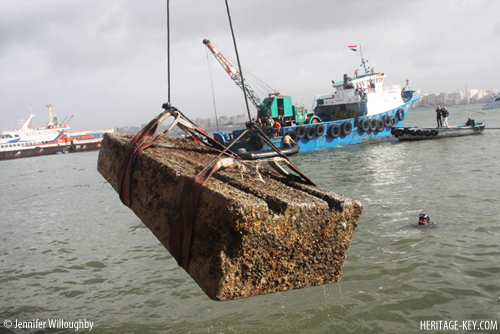
    A huge granite block, believed to be part of a temple belonging to Egyptian queen Cleopatra, has been lifted from the sea at Alexandria. The nine-tonne stone, quarried in Aswan some 700 miles south of the city, is expected to be transported to a new museum celebrating the sunken city. The block is thought to have been the pillar of a temple to Isis at Cleopatra’s palace. Alexandria became a centre of commerce and education during antiquity, but was razed by a 4th century AD earthquake. The stone is one of a series of underwater discoveries made by the Greek…