The life of Heinrich Schliemann is as legendary as the city he claimed to have discovered. A quintessential 19th century adventurer and amateur archaeologist, his obsession for Troy took him around the world and to Turkey and Greece. Fascinated by Homers epic narration, Schliemann stopped at nothing to discover the historical sites named by the poet. The veracity of his findings is however often questioned. Heinrich Schliemann: fanatic obsessed by his boyhood dreams or successful antiquarian? A Boyhood Dream Born in 1822 to a poor Protestant minister father and an unpublished literary critic mother who died when he was nine,…
-
-
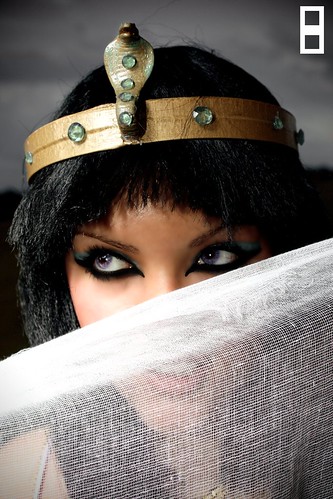
The worlds of cosmetics and archaeology have recently collided over two unexpected discoveries. Over the course of the past week, researchers have discovered that Neanderthals used make-up and that Cleopatra‘s face paint was good for her eyes. Which fact is most surprising? The first thing that springs to mind when thinking about Neanderthal man is definitely not refinement. Its more beard, dirt, animal skins, grunts and women carried by their hair. Like so many clichs depicted in classroom textbooks and carried on by Hollywood, this idea is probably far from the truth. Thanks to scientific research undertaken in Murcia, in…
-
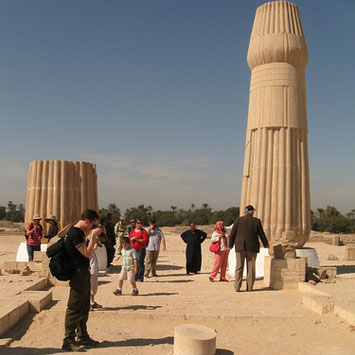
“There is no other site like it,” states the introductory paragraph on the website of the Amarna Project – the body which, since 2005, has been responsible for excavations and research at Tell el-Amarna, the short-lived capital city of the “heretic pharaoh” Akhenaten (who may well have been King Tut‘s dad) in the 14th century BC. As a living site, Tell el-Amarna is perhaps unparalleled in all of Egypt in terms of scale, ready accessibility and quality of preservation. Professor Barry Kemp – of the University of Cambridge – is the director of the Amarna Project, and also the chairman…
-
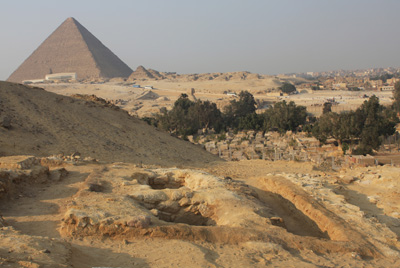
There is exciting news breaking right now in Egypt. An archaeological team led by Dr. Zahi Hawass has discovered several new tombs that belong to the workers who built the pyramids of Khufu and Khafre. This is the first time to uncover tombs like the ones that were found during the 1990s, which belong to the late 4th and 5th Dynasties (2649-2374 BC), said Dr. Hawass in the press release. When we think of Giza we tend to think of the Giza Pyramids. However, while the pyramids were under construction, there was an extensive city to the south that supported…
-
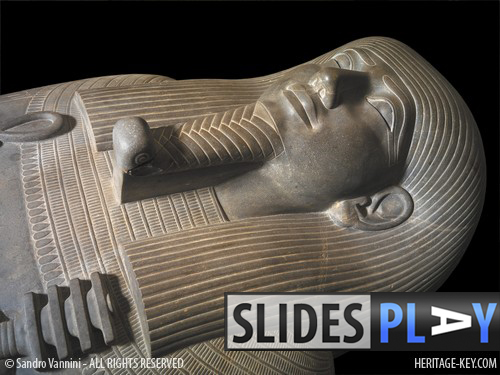
Many archaeological excavations are taking place across Egypt as the wonders of the Ancient World continue to reveal themselves to us. One such excavation taking place is at el-Assasif, Thebes at the site of TT34 – the Tomb of Montuemhat. The archaeological dig, led by Dr Farouk Gomaa, is searching for the yet undiscovered burial chamber of the diplomat Montuemhat. Renown photographer Sandro Vannini captured images of the excavations in progress at TT34, as well as covering many spectacular images in his publication “The Lost Tombs of Thebes: Life in Paradise” authored by Dr Zahi Hawass (Watch a video about…
-
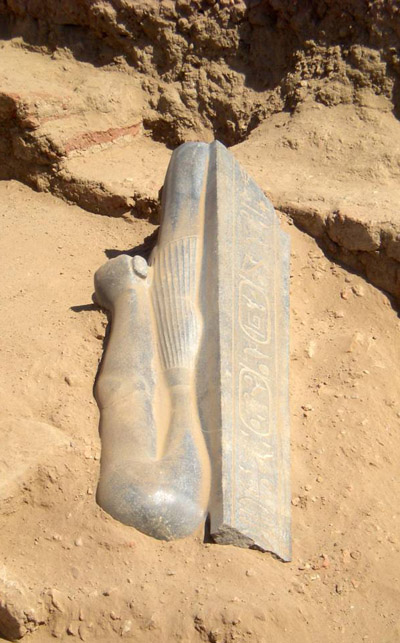
About a week backHeritage Keypublished a story about the discovery of a massive, one ton, statue of Taharqa that was found deep in Sudan. Taharqa was a pharaoh of the 25th dynasty of Egypt and came to power ca. 690 BC. The pharaohs of this dynasty were from Nubia a territory located in modern day Sudan and southern Egypt. When Taharqa came to power, he controlled an empire stretching fromSudan to theLevant. The Nubian pharaohs tried to incorporate Egyptian culture into their own. They built pyramids inSudan even though pyramid building in Egypt hadnt been practiced in nearly 800 years.…
-
CRE XI’s Religion Day – if you’ve missed day 1 of the Egyptology conference, read up here – started off with Susanne Tpfer from Leipzig. In this very very interesting session, we all heard about how some papyri describing embalming rituals can have direct connections to religion myths as the body and the afterlife were treated with the best care. Many publications have been published on Papyrus Boulaq 3 in Cairo, from 1871 to 2009. The position of body parts, the instructions on the application of anointments and other products onto the body of the deceased, how the bandages should…
-
The media preview for Fakes and Forgeries: Yesterday and Today was held today. It will be opening at the Royal Ontario Museum, in Toronto Canada, this Saturday. It’s a much smaller exhibition than the King Tut and Dead Sea Scrolls shows that have hit Toronto recently, and will potentially be dwarved by the very large China show that may or may not include the Terracotta Warriors this June. But Fakes and Forgeries offers some strong lessons about the world of fakes and the experts who try to out them. How the ancient section of the exhibit works is that there…
-
The 21st century has seen incredible advances in our knowledge and use of forensic sciences – to investigate crimes and to find out about people from ancient times. How can we apply this information to the people of ancient Egypt? Find out – and test your own skills in a hands-on practical session – at ‘Forensic Aspects of Ancient Egypt‘ presented by Joyce Filer. The study day – being repeated due to popular demand – will take place on Saturday the 20th of February and will add to your knowledge about the difference between male and female mummies (not as…
-
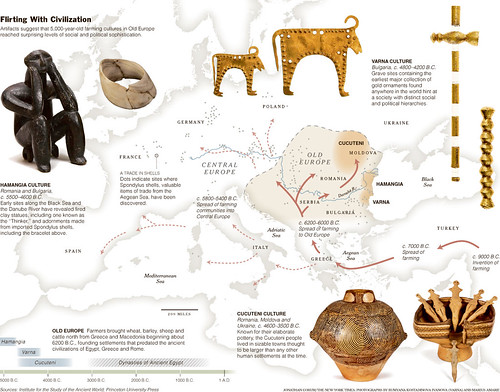
The exhibition “The Lost World of Old Europe,” which opened in Nov. 2009 in New York, has raised some very interesting questions about prehistoric societies and how they changed. David Anthony, guest curator of the exhibition and a leading anthropologist specializing in prehistoric Europe, Eurasia, and North America, raised a particularly powerful issue – why did the collapse of a highly sophisticated, matriarchal culture in what is now Bulgaria, Romania, and Moldova, lead to a shift of power to men? Women, after all, are naturally capable of running households, and should surely be running countries too. Think of our powerful,…