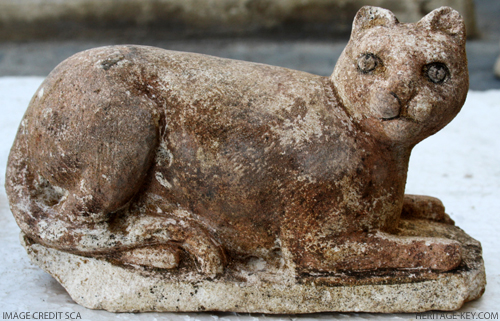
The remains of a temple of Queen Berenike – wife of King Ptolemy III – have been discovered by archaeologists in Alexandria, Egypt. Dr. Zahi Hawass said the remains discovered are 60 meters by 15 meters, and extend under Ismail Fahmy street. About 600 Ptolemaic statues – amongst which are beautiful depictions of the cat goddess Bastet – were also unearthed. Dr. Mohamed Abdel Maqsoud, Head of Antiquities of Lower Egypt, said that the mission excavating at Kom el Dikka on property of the Alexandria Security Forces included 18 skilled excavators and restorers. The large collection of Bastet statues indicates…
-
-
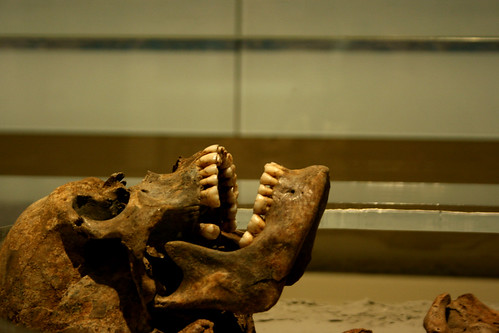
Possibly one of the creepier Heritage Key Daily Flickr Finds that I’ve picked out from our Flickr pool, but this photograph of the remains of this Egyptian Mummy housed in the British Museum captivates me. The angle it’s taken at, looking at its profile as it stares upwards gives the impression that there’s still life in this millennia old corpse. The open jaw gives the mummy an eerie feeling, with the clarity of each tooth bared. The composition of the photograph is also intruiging. It’s an image where you’re interested in what’s not shown just as much as what is.…
-
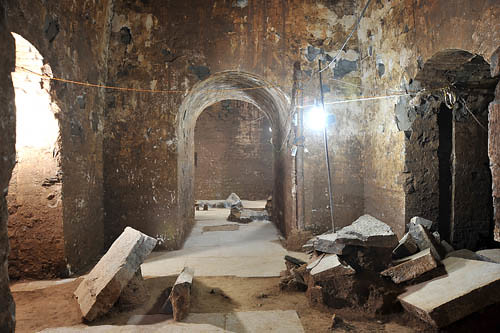
The recent discovery of Cao Caos tomb has sparked heated debates in the Chinese media over whether the find is genuine or not. The tomb, discovered in Chinas Henan province, is believed to belong to Cao Cao, a legendary Chinese warlord who lived about 1,800 years ago. At the end of last year, Chinese archaeologists announced the find to the public. The strongest evidence they point to includes inscriptions on artifacts found at the site, as well as a recovered corpse whose time of death closely matches with when Cao Cao is recorded to have died. Liu Qingzhu, a Chinese…
-
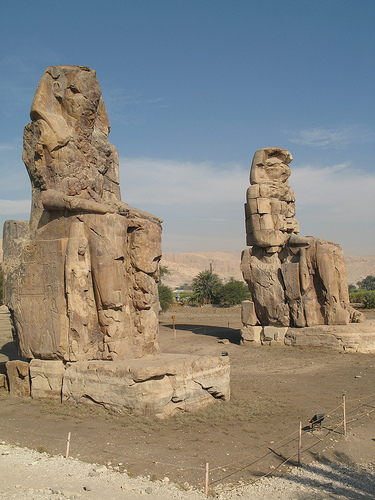
Attribution: Masterplaan Thebes Egypt Key Dates The temple was built in the reign of Amenhotep III, which lasted from around 1391 to 1353 BC. Since 1998, it has been on the World Monument Fund’s list of the planet’s 100 most endangered monuments. Excavation at the site began in 2004, and is expected to be ongoing until around 2027. Key People The temple was built as a funerary monument for Amenhotep III, the most powerful, rich and influential pharaoh in Egyptian history. Research at the site is being headed by German-Armenian Egyptologist Dr Hourig Sourouzian. Dr Hourig Sourouzian Amenhotep III The…
-
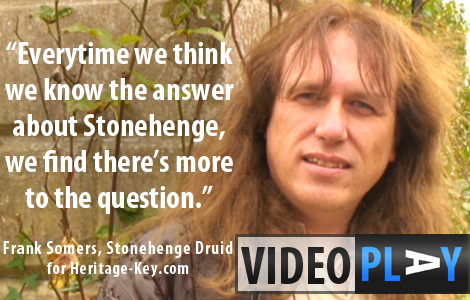
“There’s a passing on of knowledge for over 1,500 years spanning the whole Bronze Age, between our Stone Age ancestors who built Stonehenge and our Druid ancestors who wrote down folklore that we now take from Ireland, Scotland and Wales,” says Stonehenge Druid Frank Somers. “And that means that folklore has earlier origins going right back.” We’re stood outside a stately Wiltshire manor on a blustery winter’s morning, self apparent in the unruliness of Frank’s flowing locks. Barely yards away lies Bluestonehenge, a stone circle even older than Stonehenge itself: 2009’s biggest discovery. But Frank sees it more than an…
-
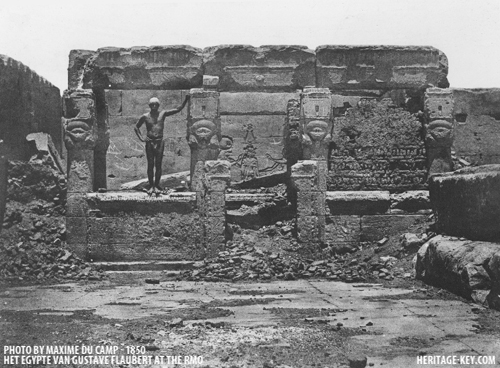
Gustave Flaubert – the author of ‘Madame Bovary’ – travelled through Egypt from October 1849 to July 1850. Together with his friend and photographer Maxime Du Camp he journeyed from Alexandria in the North to Sudan in the South and back. This journey is the focus of the exhibition ‘Het Egypte van Gustave Flaubert’ (Gustave Flaubert’s Egypt), which runs at the RMO in Holland until April 4th 2010. The expo follows the famous French writer on his journey through Egypt and takes its visitors from the amazing pyramids at Giza and the sanctuaries at Luxor to the gigantic pharaonic statues…
-
A splendid exhibition in New York – ‘The Lost World of Old Europe: The Danube Valley’ – brings to the United States for the first time more than 250 objects recovered by archaeologists from the graves, towns, and villages of Old Europe, a period of related prehistoric cultures that achieved a peak of sophistication and creativity between 5000 and 4000BC in what is now southeastern Europe. The cultures mysteriously collapsed by 3500 BC, possibly brining a shift from female to male power. The exhibition – made possible through loan agreements with over 20 museums in Romania, Bulgaria, and Moldova –…
-
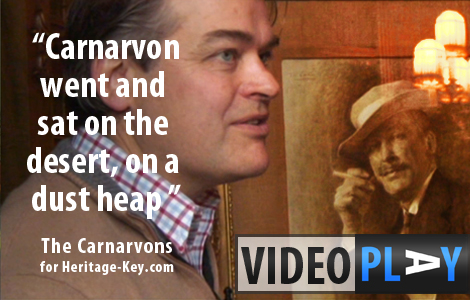
“There is a bit of an Indiana Jones style to that portrait of my great-grandfather, and it rather sums up his character.” George Herbert, 8th Earl of Carnarvon looks up at the image of his namesake forebear admiringly. A dashing 5th Earl of Carnarvon looks playfully down the barrel of a cigarette, rogueish grin etched upon his face. No wonder he’s smiling: George Edward Stanhope Molyneux Herbert, 5th Earl of Carnarvon is an archaeological legend – the man who alongside Howard Carter unlocked the 3,200-year-old secrets of Tutankhamun, Egypt’s boy-king. Adventure, it seemed, was in Carnarvon’s blood. Born into immense…
-
Yesterday was an exciting day for those in Toronto who are interested in archaeology. Heritage Key learned that the Terracotta Warriors exhibit, coming to Toronto in June, will be the largestwarriors exhibitever to hit North America. No terracotta spectacle on this scale has ever come to these shores! But thats not all. Earlier in the day there was an announcement made by Canadas infrastructure minister John Baird. He said that the Canadian government will commit $2.75 million towards the construction of new Roman and Byzantine galleries at the Royal Ontario Museum.It will also be usedinrevamping thebat cave,” – a facsimile…
-
Heritage Key has learned that the Terracotta Warriorsexhibition, whichiscoming to Toronto in June, will be the largest one ever seen in Canada or the United States. Right now the warriors are at the National Geographic Museum in Washington DC. That show, containing more than 100 objects (including 15 terracotta figures), is billed on its website as being the largest display of terracotta figures and tomb artifacts ever to travel to the US. Dr. Dan Rahimi, of the Royal Ontario Museum, dropped Heritage Key a tantalizing nugget of information today in an interview. In response to a question he said that…