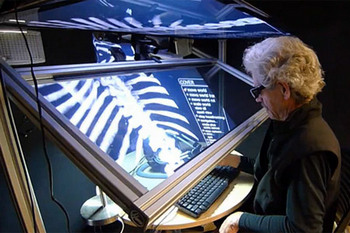
Challenging the University of Virginia’s Ancient Rome in 3D, the UCLA’s Digital Karnak is a three-dimensional virtual-reality model that runs in real time and allows users to navigate 2,000 years of history at the ancient Egyptian religious site Karnak, one of the largest temple complexes ever constructed.
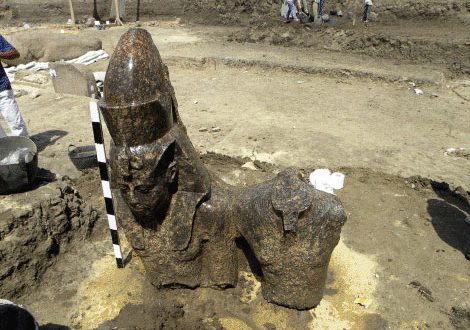
Today, the Karnak site — where generations of pharaohs constructed temples, obelisks, sphinxes and other sacred structures beginning in the 20th century B.C. — is a popular tourist destination near modern-day Luxor.
Developed by UCLA’s Experiential Technologies Center, the Digital Karnak model and a host of additional digital resources are now available for students, scholars and the public to explore for free at UCLA.edu. And that’s quite a lot of additional data resources:
- Karnak Temple Complex Timemap – Using a 2D overlay on Google Map’s you can observe the different phases of construction and demolition work on the Karnak temple, from Senusret I up to Ptolemy VIII’s second reign.
- Thematic Videos & Instrutional Texts – The videos are composed utilising high quality renders of the virtual buildings, as well as current video footage shot on location. Didn’t quite understand everything? We all know what an obelisk is – a menhir sculptor and deliveryman – but ever heard of a ‘hypostyle hall’ or ‘clerestory lighting’? No worries, the matching .pdf files will explain everything.
- Google Earth – You can experience the Karnak Virtual Reality model on your desktop computer by loading it into Google Earth. Get the Karnak overlay by downloading karnak.kml from this page. Although not as high quality as the video renders, this virtual temple complex is still very impressive, and dispite the large amount of wikipedia links, real photographs and extra information work a bit confusing at first, they quickly become an a great source for extra information.
If you’re lost in this large mass of information – although well structured, it can be overwhelming – a good place to return to is the archive page which breaks out the different locations in a chronological order.
The colossal site of Karnak being one of the largest temple complexes in the world, with an incredibly rich architectural, ritual, religious, economic, social and political history, ‘Virtual Karnak’ is definitely a lovely addition to the UCLA’s Encyclopedia of Egyptology and when you look at the scope of this project, you’ll soon conclude it definitely deserves a ‘prime time’ spot at the 10th edition of VAST.