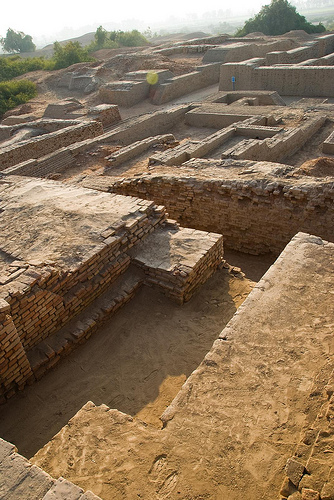
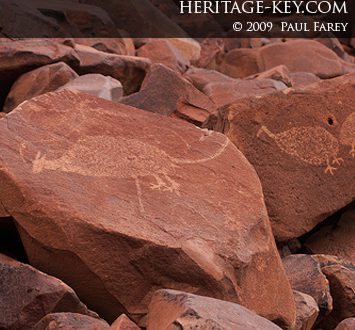
The discovery of the Bosnian Valley of the s in Visoko (Bosnia-Herzegovina), in 2005, requires the traditional definition of a “” to be reconsidered and widened. Certain astronomical and mathematical knowledge incorporated in Bosnian s are similar to Egyptian true s, Chinese or Mexican step s.

The concept of the structures built in the shape of the with the inner chambers and passageways and the orientation toward the cardinal points had been present worldwide from Central and South America to Africa, Asia and Europe. Different civilizations, in different ages, used them for different purposes. Still, some questions remain open regarding the logistics, age and the use of the structures. The discovery of the Bosnian Valley of the s in Visoko (Bosnia-Herzegovina), in 2005, requires the traditional definition of a “” to be reconsidered and widened. Certain astronomical and mathematical knowledge incorporated in Bosnian s are similar to Egyptian true s, Chinese or Mexican step s
The long-held notion that the s were built only in Egypt and Mexico had to change in the 20th century. It was discovered that stone and brick structures in the shape of the were built thousands of years ago from Bolivia and Peru through Central American countries of Mexico, El Salvador, Guatemala, Honduras and Belize as well as throughout the islands of the coasts of Africa such as Canary Islands and Mauritius, then Sudan, Southern European countries such as Italy, France and Greece and in the east in China, Korea and Pacific islands.
Extensive research of these structures worldwide in the twenty first century is to yet to follow, but certain common elements are noticeable. For example, geometry (four-sided , triangular faces), flat top, substructure (tunnels, corridors), underground passageways and chambers, orientation, astronomical and mathematical concepts and other structures affiliated with the .
Bosnia’s Role in the Riddle
The “Archaeological Park: Bosnian of the Sun” Foundation spent over 300,000 working hours excavating the archaeological locations in the Bosnian Valley of the s. This fact alone made this project the largest archaeological project in the world. They discovered the following structures:
- Bosnian of the Sun (former “Visocica Hill”)
- Bosnian of the Moon (former “Pljesevica Hill”)
- of the Bosnian Dragon (former “Buci Hill”)
- Temple of Earth (former “Krstac Hill”)
- Bosnian of Love (former “Cemerac Hill”)
- Tumulus in Vratnica (former “Toprakalija Hill” in Vratnica)
- Structure “Dolovi” (Vratnica)
- Underground tunnel complex “Ravne” (entrance to the tunnel 2.5 km from the Bosnian of the Sun)
- Underground tunnel network “KTK” (entrance to the tunnel 1 km from the Bosnian of the Sun)
Geometric Features
Based on numerous airborne and space-borne images of the Bosnian of the Sun, it becomes evident that the geometric features present with three sides that exhibit geometrical shape of a triangle. Even though such elements occur in nature, it is rarely, if ever, a precise shape and rarely replicated on opposite sides of a mound. In this case, two sides are equilateral triangles, with well-defined sides.
Satellite imaging of the local area in the central part of Bosnia and Herzegovina indicated that there are five hills which show apparent geospatial anomalies where two or more sides are triangular. All of these hills exhibit triangular sides and some have elements of stairs and step features on the sides with flat plateaus on the top.
The measurements made by the Geodetic Institute of Bosnia and Herzegovina indicate that the sides of the Bosnian of the Sun (BPS) are exactly aligned with the cardinal sides of the world – north, south, east and west. This is one of the characteristics often noted with the existing s in Egypt, Peru, Guatemala or China. The North side of the BPS is oriented towards stellar North (like the Great of Egypt), in parallel with the position of the North Star.
Solid Construction
The results of core drilling, test-well sinking and limited trenching in August and October 2005, with a follow-up in 2006 and 2007, revealed that the surface of the s is comprised of layered sandstone and breccia blocks, which have been manually processed and cut to fit the required dimensions. The binding agent found between the sandstone blocks suggests a “clastic breccia,” a multicolored conglomerate comprised out of gravel, sandstone and shale with a connective matrix or cement composed of sandy carbon particles of quartz, feldspar and flakes of mica.
The flat sides of the blocks, the contact zone, and the binding agent are clearly visible. Further detailed cleaning of the contact line between the two sandstone blocks revealed that the blocks were manually processed beneath and that the surface was flat and smooth, with binding agent applied afterwards to the surface.
Military Might
Combined radar analysis from RADARSAT and SPOT radar system suggest that there are apparent lineaments on the Bosnian of the Sun and access plateau. These could indicate buried terraces, walls, or passageways, or entrances, cavities or chambers inside of the structure.
The existence of these artificial structures is also reinforced by numerous statements of the military personnel stationed on the itself and subjected to heavy shelling. They have reported unusual ground vibrations, echoing and ground movement whenever the mound was hit by the artillery fire during the war operations in Bosnia 1992-95. This acoustic evidence suggests that cavities/chambers indeed exist within the structure.
During winter 2006/2007, two independent teams of georadar experts from Germany (LGA Bautechnick GMBH with Dr. Andreas Hasenstab as a team leader) and Serbia (Institute for Geophysics from Belgrade with Dr. Dejan Vuckovic as a head of the research), concluded that a total of 44 anomalies were found in the Bosnian Valley of the s, including terraces, steps, shaped stone structures, and passageways.
Three main s in the Bosnian Valley form an equilateral triangle. The Kadastral Office from the County of Visoko performed GPS measurements of the hilltops and determined that all angles are symmetric (60 degrees). Their measurements showed that the distances among all three hilltops are the same (approx. 2,2 km) with less than 2% error, verifying the artificial structures.
The Bosnian s of the Sun and Moon
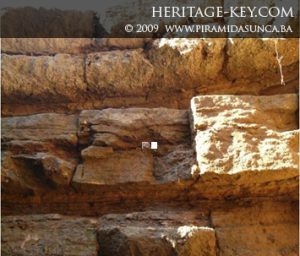
The Bosnian of the Sun is completely covered by soil and vegetation, but excavations unearthed stone slabs, evidently man-made, underneath. Samples of the stone blocks were analyzed in three domestic Bosnian scientific institutions. The presence of calcium carbonate and magnesium carbonate in the material suggests they were made from an ancient synthetic material – the first concrete! Moderately baked clay, combined with water, made an effective binding substance, which was also the basis for ancient Roman cement.
With its height of 190 meters, Bosnian of the Moon is the world’s second largest: next to the Bosnian of the Sun (220m) and higher than Khufu’s Great of Egypt (148m). It is a three-sided with plateaus on the East, leading to the top of the structure. It is constructed from sandstone plates and tiles, with clay as a constructive material.
Going Underground
Examples of the main al complexes worldwide show that underground passageways and chambers have often been built within the s. s in Giza , Teotihuacan , Step in Saqqara , China , and Tenerife all have underground tunnels, and findings suggest that an extensive tunnel network also exists in the Bosnian Valley of the s. It is hypothesized that the tunnel system connects all of the colossal objects, water wells and other structures of importance. Hundreds of meters of tunnels have been secured by wooden support, and the current excavations have already revealed several shaped monoliths in the tunnels. The tunnels were definitively not the mining shafts as no tools, coal, silver, gold or any other worthy material were found and they appear much older than Middle Age or Roman times.
Artefacts
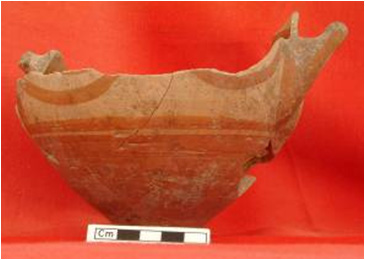
Archaeological work is a slow process and requires a lot of patience. Figuring out answers to five questions: what, who, when, how and why may take decades in the case of the Bosnian complex. Certain important artifacts have been found at the different locations in Visoko valley. In the years to come, more will be discovered and we will get closer to the answers of this mysterious complex that is changing our understanding of the world history.