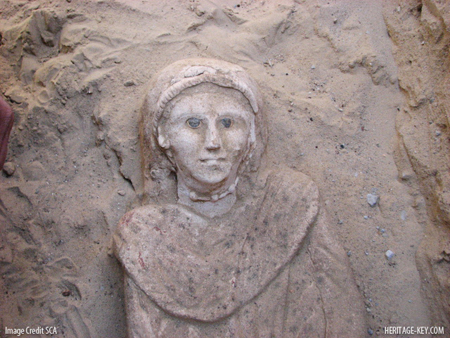
A collection of 14 Graeco-Roman tombs, artefacts and a mummy dating to the third century BC have been discovered in a cemetery in the Ain El-Zawya area of Bawiti, a town in the Bahariya Oasis, Egypt. The find is early evidence of a large Graeco-Roman necropolis at the site. The tombs were found during excavation works ahead of the building of a local youth centre in the area, about 260 miles southwest of Cairo. Dr. Mahmoud Affifi, director of Cairo and Giza antiquities, said that the Supreme Council of Antiquities (SCA) has halted construction and has started legal procedures to…
-
-
Throughout their history the ancient Egyptians recorded making voyages to a place called the ‘Land of Punt’. To the Egyptians it was a far-off source of exotic animals and valuable goods. From there they brought back perfumes, panther skins, electrum, and, yes, live baboons to keep as pets. The voyages started as early as the Old Kingdom, ca. 4,500 years ago, and continued until just after the collapse of the New Kingdom 3,000 years ago. Egyptologists have long argued about the location of Punt. The presence of perfumes suggests that it was located somewhere in Arabia, such as Yemen. However the depiction…
-
Egypt’s Supreme Council of Antiquities is to expand, with the addition of a new department for archaeological collections. Among its duties will be the registration of privately owned artefacts, as well as supervising the transfers of ownership on these items. The Archaeological Collections Administration is established to facilitate the execution of the newly amended Antiquities Protection Law. The announcement comes only days after Egypt held its first conference on the repatriation of artefacts, showing that Egypt’s focus is not just on retrieving looting antiquities from foreign collections, but mapping and saveguarding those ‘at home’ as well. Farouk Hosni, Egypt’s Minister…
-
Key Dates 1370 BC The Egtved Girl in Denmark has died circa 1370 BC. She was a Bronze Age girl whose well-preserved remains were discovered in a barrow in 1921. The oak log that she was buried in is dated to the summer of 1370 BC. Although the body itself is missing, the acidic bog conditions of the soil made that the Egtved Girl’s clothing is extremely well preserved. The Egtved Girl must have been 16 to 18 years-old when she died, and was a slim, 160cm tall girl with long blond hair and well-trimmed nails. At her feet were…
-
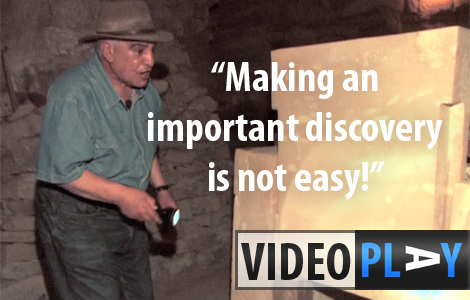
Behind each great archaeological discovery there are at least two stories: who found it and how, and to whom it belonged. In case of the buried, or unfinished, step pyramid at Saqqara, both stories are fascinating. But one definitely does not come with a happy ending. Dr. Zahi Hawass tells us about the 1951 discovery of the Buried Pyramid at Saqqara by Egyptian archaeologist Zakari Goneim, and about how professional jealousy and false accusations eventually ended Goneim’s life as well as his career. In the 27th Century BC, Third Dynasty pharaoh Djoser was buried in the famous – and first…
-
Bookstacks a long time book club that meets in Second Life for regular meet ups to discuss everything from books to movies. Bookstack is a place for people who like books where they can meet other likeminded people and get together and share thoughts about books. Originally founded by Simeon Beresford in the spring of 2007, Kghia Gherardi was recruited shortly thereafter to help with events. Bookstacks currently has 500 members and an additional 100+ notification subscribers. Bookstacks is s collaborative effort and now they are expanding their community into Heritage Key. At Heritage Key we are organising many different…
-
I was asked to gather a heap of data for our timeline-testing, and figured King Tut would make the most interesting case. Why?His history is one that contains a combination of ‘estimates’, undecided parentage and debated dates – and causes of death, as a matter of fact – with very few exact facts and dates for the era in which Carter and Carnarvon dug him out. The ‘split’ makes it a good test-case as well. There’s a huge gap between (circa) 1350BCand 1922 during which Pharaoh Tutankhamun was more or less left in peace. Tut’s tomb did not get robbed…
-
At first glance, Boudica, Agrippinna, Cleopatra and Olympias (Alexander the Great’s mother) dont seem to have much in common other than being strong women accountable for a few deaths along the way. However, recently they have been joined together by a unique series of photographs entitled The Regal Twelve. Depicting 12 diverse women from across the ages, the series of stunning, provocative, images celebrates the famous, infamous and the obscure. Award-winning Australian fine art photographer and digital artist Alexia Sinclair embarked on the project when she was studying for her Masters and was awarded a travelling arts scholarship and two…
-
The Ancient World in London Video – The Spring Equinox at Stonehenge Heritage Key explorer Nicole Favish went to experience the Spring Equinox at Stonehenge. It is one of (only!) four times a year when the public are allowed to roam inside the stone circle. Nicole speaks to the Druids and mingles with the crowds to find out more about Stonehenge and what makes this time of year so special there. Watch the video! Of course, we also visited the Illumination of Hadrian’s wall with the video camera. For a ‘front row (aerial) seat’ of this unique event, check out…
-
Scholars have discovered an ancient treaty ina cache of Assyrian tablets excavated at Tayinat last summer. It was made by the Assyrian ruler Esarhaddon, who was trying to ensure that his son, Ashurbanipal, would be recognized as his successor. Translation work is ongoing and many details are not yet known. The treaty dates to ca. 672 BC, several decades after Tayinat was conquered by Tiglath-Pileser III. Professor Tim Harrison said in a University of Toronto news release that: The tablet is quite spectacular. It records a treaty – or covenant – between Esarhaddon, king of the Assyrian Empire and a…