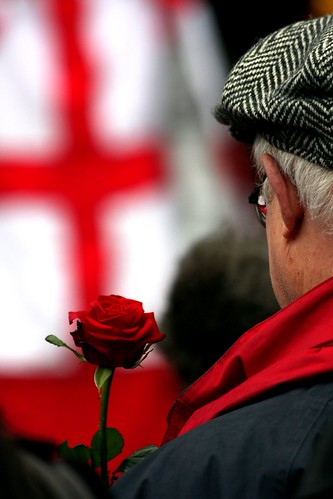
Saint George killed a dragon, saved a princess and became the patron saint of England. Tomorrow he’ll be honoured with no small amount of flag-waving, beer-drinking and, you’d think, a fair few A&E visits. But who’s the man behind the myth, the man Shakespeare’s Henry V evoked so brilliantly at Agincourt? George – good, strong English name, right? Wrong:George was born into Christian nobility in Cappadocia, a lunar landscape in central Turkey best known for its ‘fairy chimneys’, around the middle of the 2nd century AD. In truth George’s early years are about as ephemeral as Emile Heskey’s England career,…
-
-
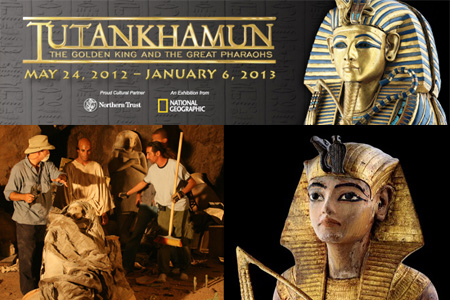
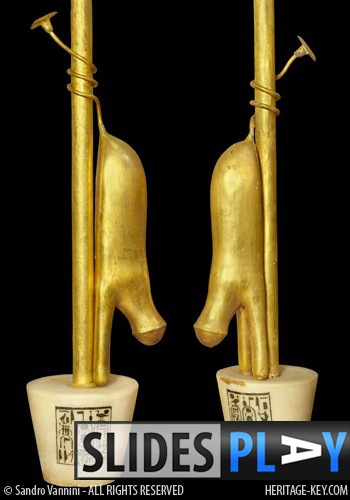
Thirty years after the wonders of King Tut first toured the world, an even bigger exhibition Tutankhamun: The Golden King and the Great Pharaohs will make its appearance at the Pacific Science Center starting May 24th, 2012. With an almost entirely different selection of treasures and more than twice the number of artefacts than were displayed in the 1978 exhibition, Tutankhamun: The Golden King and the Great Pharaohs features more than 100 remarkable objects from the tomb of King Tut and ancient sites representing some of the most important rulers throughout 2,000 years of ancient Egyptian history. This is really…
-
Gladiator was the world’s biggest blockbuster when it hit screens in 2000. Now, ten years later, Colchester’s Odeon Cinema is offering viewers the chance to relive Ridley Scott’s classic on Thursday 13th May, with proceedings going to help save the city’s Roman Circus. The project has already reached an initial 200,000 target, which will eventually be joined by almost 600,000 in public and private funding. Yet Colchester Archaeology Trust, whose director Philip Crummy will introduce the film, may help to secure access to the Victorian building sitting on top of the circus, Britain’s only Roman chariot racecource, by the summer.…
-
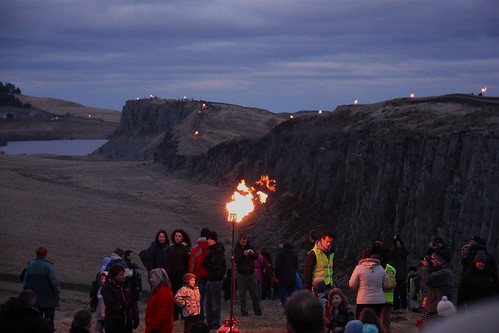
When he arrived in Britain in 122AD, Emperor Hadrian immediately saw a problem. The Roman Empire was already stretched thinner than a Jim Davidson joke, and spreading out into the monstrous back yard of the Picts and Brigantes, two of the island’s fiercest clans, was a hassle he couldn’t afford. So rather than waste energy fighting, Hadrian set about cordoning off Britannia with an 84 mile-long stone wall, manned by thousands of soldiers with its own towns and forts. But while Hadrian’s Wall ligatured Britannia’s frozen north, the southern capital of Londinium was also at risk of attack. And while…
-
Fearless globetrotters or carpetbagging looters? Whatever your opinion, Britain’s adventurers during the Age of Exploration, from the opening of the world’s first museum in Oxford to the King Tut tomb raid, changed ancient history forever. The Ancient World in London is reaching its climax, and over the course of our video series I’ve seen most of the city’s stunning treasures, from the Knidos Lion to the Assyrian Lion Hunt. So here’s a top ten greatest Age of Exploration personalities. If you think I’ve done well, or if you think I’m more inept than a boxer’s tear ducts, have your say…
-
Anubis is the jackal-headed god for the afterlife and mummification, who is seen as a key figure for a Pharaoh to pass into the afterlife. The jackal was associated with associated with death and burials in Ancient Egyptian time for their reputation of scavenging human corpses and eating their flesh. It was common practice to place a figure of Anubis near the entrance of a tomb, and for the priest to don an Anubis mask during the embalming process. This is also one of the reasons the Anubis was selected to sail into New York’s harbour to promote the upcoming…
-
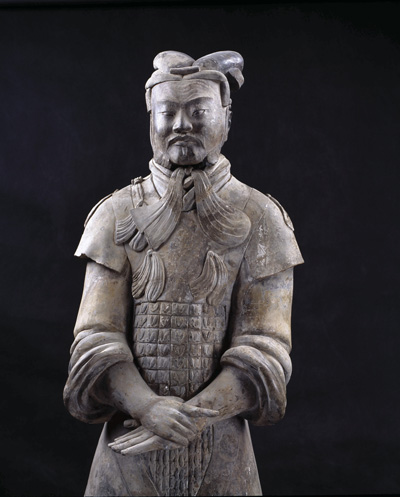
The Royal Ontario Museum will host afour day symposium called Life in the Afterlife at the same time that a giant Terracotta Warriors show will be on display at the museum. Life in the Afterlife will explore ideas on life after death across different cultures. Speakers will be talking about the afterlife in numerous places, including Ancient China, Egyptand the Near East. The symposium also examines China during the rule of Qin Shi Huang, the first emperor. The event is aimed at a popular audience. The keynote lecture will be given by journalist Simon Winchester who will be discussing Joseph…
-
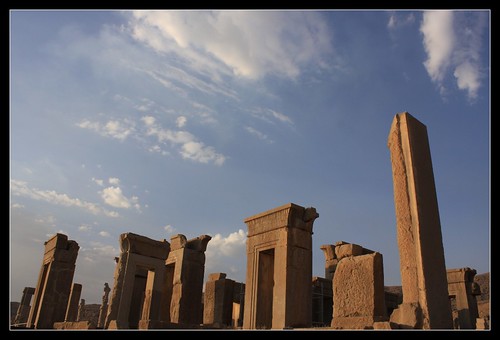
As volcanic ash from Iceland’s volcano continues to cause chaos, there is news that access to Iran‘s ancient sites could soon become easier. From June to October this year, IranAir plans to operate a weekly non-stop flight from London Heathrow to Shiraz. The Saturday service will operate alongside the airlines existing three-day-a-week London-Tehran service, and see a return Shiraz-London flight offered every Sunday. Internal flights already operate from Tehran to Isafahan, Mashhad and Tabriz, as well as to Shiraz. The news comes at a time when Iraq is also opening up to tourists. When the ash clears, adventurous travellers will…
-
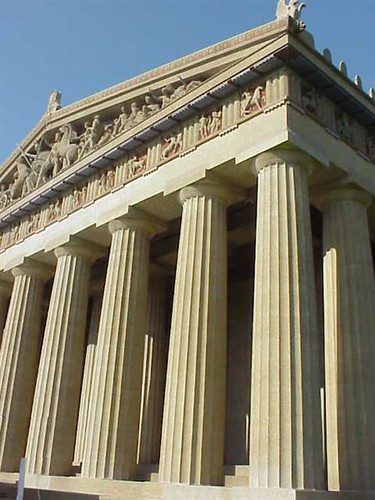
The cast and crew of Percy Jackson and the Olympians: The Lightning Thief didn’t have to go all the way to Athens to film the hydra scene in the Parthenon. They just booked some time in a reconstruction of the Parthenon in Nashville, Tennesse. Perhaps in the future, as the role of CGI increases in movies, they will be able to use a virtual version. I visited the Nashville Parthenon, as well as Second Life’s virtual reconstruction, to find out what the Parthenon of Athens was really like in the time of the ancient Greeks. The Nashville Parthenon I know,…
-
From the bloody rebellion of Boudicca to the fearsome Norman invasion, London had always been under attack in its ancient past. Yet successes during the Middle Ages allowed the city and nation to branch out, conquering new lands and forging trade links all over the world. 1683 saw Oxford play host to the world’s first museum, the Ashmolean, allowing a new generation of explorers to quench their thirst for adventure. And just a few decades later London’s great archaeologists and antiquaries would spread their wings proper, globetrotting to far flung corners of the planet in search of great discoveries and…