• rome

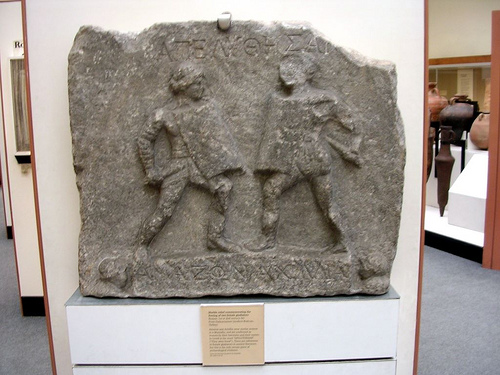
    Marble relief with female gladiators

    Attribution: Image by Cubby Bear Key Dates 100 This marble relief from Halikarnassos (modern-day Turkey) is thought to be carved on the occasion of the ‘missio’ – or honourable release – of two female gladiators. They are wearing the same equipment as male gladiators, but no helmets. Likely the woman fighters, named as ‘Amazon’ and ‘Achilia’, had earned their freedom by giving a series of good performances. According to several contemporary eye-witnesses, women also performed in the Roman arena. Women made up a part of the audience as well, though they had to sit separately from men, in the top rows…
  • lyn

    King Arthur’s Real Round Table Revealed

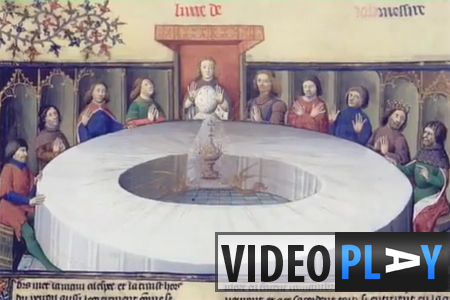
    King Arthurs Round Table wasnt just the romantic meeting place of Arthurs warriors but a massive building on the edge of a huge Roman city. What’s more, it was a powerful symbol of Roman authority that survived for some 600 years after the Romans left Britain. (Skip to the Video) Thats the bold conclusion made by archaeologists in a new documentary that shows how the monumental Roman structure was transformed from an amphitheatre into a fortified stronghold. King Arthurs Round Table Revealed explores this and other mysteries surrounding by the iconic British hero King Arthur. The documentary is an exploration…

  • bija

    Roman Villa Discovered Near Tewkesbury

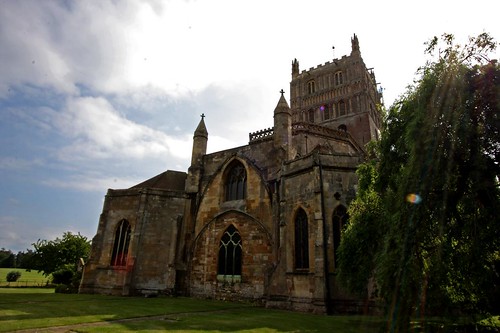
    A previously unknown Roman villa has been discovered in England by archaeologists excavating an area in preparation for a pipeline to be laid near Tewkesbury. The excavation has uncovered part of a wealthy Roman villa north of Bredons Norton in Gloucestershire. Two burials pre-dating the villa have also been discovered. According to Stuart Foreman, an archaeologist from Oxford Archaeology, the most likely dating of the villa is the late-third to the mid-fourth centuries AD. He said: So far we have discovered a masonry building with plaster walls. It’s not impossible that it’s a shrine, but the most likely explanation is…

  • Ann

    King Tut’s Mummy Cloned using 3D Printing Technology

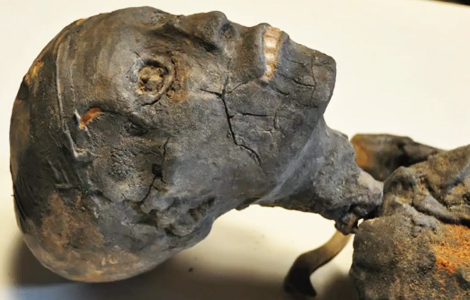
    Tutankhamun’s mummy is being safely kept in KV62 in the Valley of the Kings. It’s hard to imagine his body would ever leave Egypt,  yet thousands of visitors to the touring King Tut exhibition at New York are being offered the chance to see an exact replica of the boy-king’s mummy based on  CT scans of him. The process of creating the replica – the subject of this short video – is highly impressive, and has a nice sci-fi touch to it. Personally I can’t wait to see this done to Motoko Kusanagi* – but in the meantime see how they cloned Tut (and if…

  • bija

    Review: July’s American Journal of Archaeology Focuses on the Classical World

    The July issue, volume 114.3, of the American Journal of Archaeology (AJA) is out now. This month’s issue brings six main articles on subjects ranging from the statues of Manitushu, the culture of late Bronze Age Mycenaean settlements in Thessaly and the legendary ideals of Greek womanhood. While the emphasis is heavily on the Classical period, with some articles on the Bronze Age and the Akkadian empire as well, there is little inclusion of archaeology of the post-Classical world, save for reviews of two publications looking at Medieval pottery and an 11th century shipwreck. The lead article, by Karen Stern,…

  • owenjarus

    Biggest of the Dead Sea Scrolls was created at Qumran

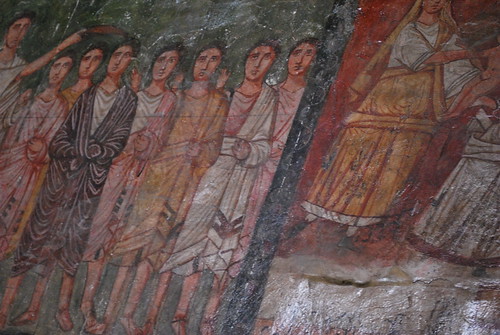
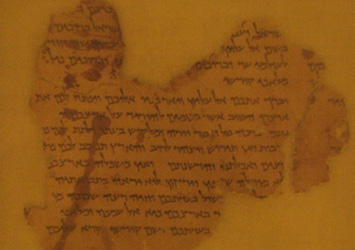
    The debate over the origin of the Dead Sea Scrolls may end up coming down to a very basic element water. The Dead Sea Scrolls were discovered in the 1940s and 50s near the site of Qumran in the modern day West Bank. Its a mystery as to how they got there. Recent archaeological work by Yuval Peleg and Yitzhak Magen suggests that Qumran had nothing to do with the scrolls. It was first used as an outpost by the Hasmonean army and later became a centre of pottery production. They suggest that the scrolls were deposited in the caves…

  • sean-williams

    Bettany Hughes Publications you Can’t go Without

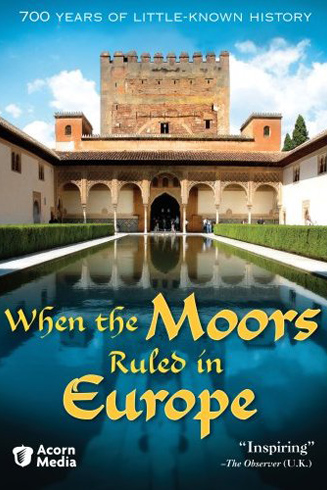
    is Britain’s best-loved and most prolific pop historian. She has appeared in no fewer than 11 television programmes in the past four months, with hotly-anticipated The Hemlock Cup, a major new book on legendary philosopher Socrates, out this October. With Hughes’ formidable CV in mind here’s a handy list of her publications on Heritage Key – they’re available to buy right here, so if one takes your fancy just click the title or the book’s cover. When the Moors Ruled in Europe This rangy DVD sees Hughes exploring one of Europe’s least-known eras: the Islamic occupation of Iberia, today’s Spain…

  • Video

    King Arthur’s Round Table Revealed (Trailer)

    Description A new documentary for the HISTORY Channel – “King Arthur’s Round Table Revealed” – looks into the mystery of the Legend of King Arthur. The show looks for evidence of a battle between Britons and Saxons, and bringing together a team including archaeologists, Arthurian historians and CGI animators to find evidence of a civil war, as well as coverage of a significant fortress which survived as a ruin for over seven centuries. Find out the Top 10 Archaeological Clues to King Arthur in Christopher Gidlow’s blogpost. Related Heritage Experts Christopher Gidlow Credits Christopher Gidlow Transcription Christopher Gidlow: I think if…

  • bija

    Roman Mystery Woman Discovered Near Hereford: Not a Female Gladiator

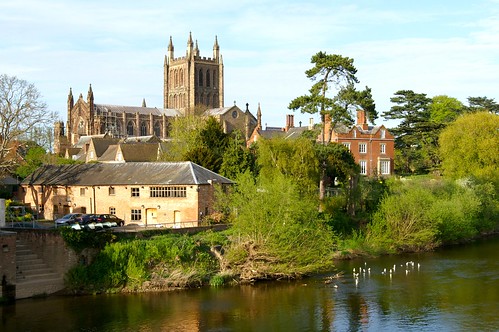
    An unusual Roman burial has been uncovered at a site near Hereford. The female, buried in the first or second century AD, was unusually strong and is buried in a well made coffin. Robin Jackson, senior project manager from Worcestershire council’s Historic Environment and Archaeology Service, was excavating at the site. He said: We’ve been working on the site for three months now and four burials have been found under a building. One of these is slightly unusual, in that it contains the remains of a woman who was very strongly built. She had obviously done hard physical work during…

  • bija

    Excavations at the Mamertine Prison Find Evidence of Pre-Christian Cult and the Cult of Saint Peter

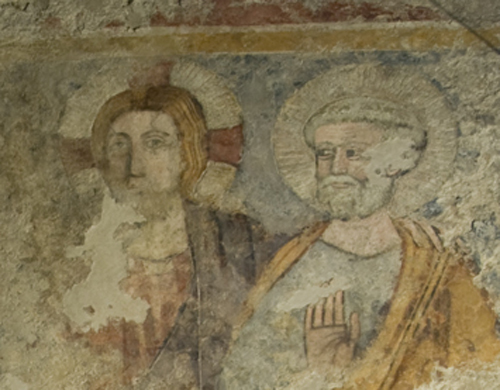
    On Tuesday this week public offices in Rome shut down as the city celebrated the feast-day of two of its patron saints, Peter and Paul. So it was an appropriate time for Rome’s archaeological superintendency to announce some of the findings of an archaeological investigation at the Mamertine prison, in which Peter and Paul were allegedly imprisoned during the first century AD. The recent excavation established that the Carcer Tullianum was the site of a religious cult from the fifth century BC, according to Dr Patrizia Fortini, an archaeologist from the Superintendency for Archaeological Heritage in Rome, who worked on…