
Last week I visited the ‘Tutankhamun: His Tomb and His Treasures’ exhibition in Manchester with Mary-Ann Craig (video), and well… saw wonderful things, and everywhere, the glint of gold. The moment I marvelled at the recreation of the set-up used to remove Tutankhamun’s sarcophagi from his tomb, any doubts still left about the power of replicas disappeared, and I would strongly suggest you visit the touring exhibition before it leaves the UK. Yet, if you want an expert opinion the matter (as well as a great introduction to your visit), watch our Heritage Key video with Robert Partridge, editor of…
-
-
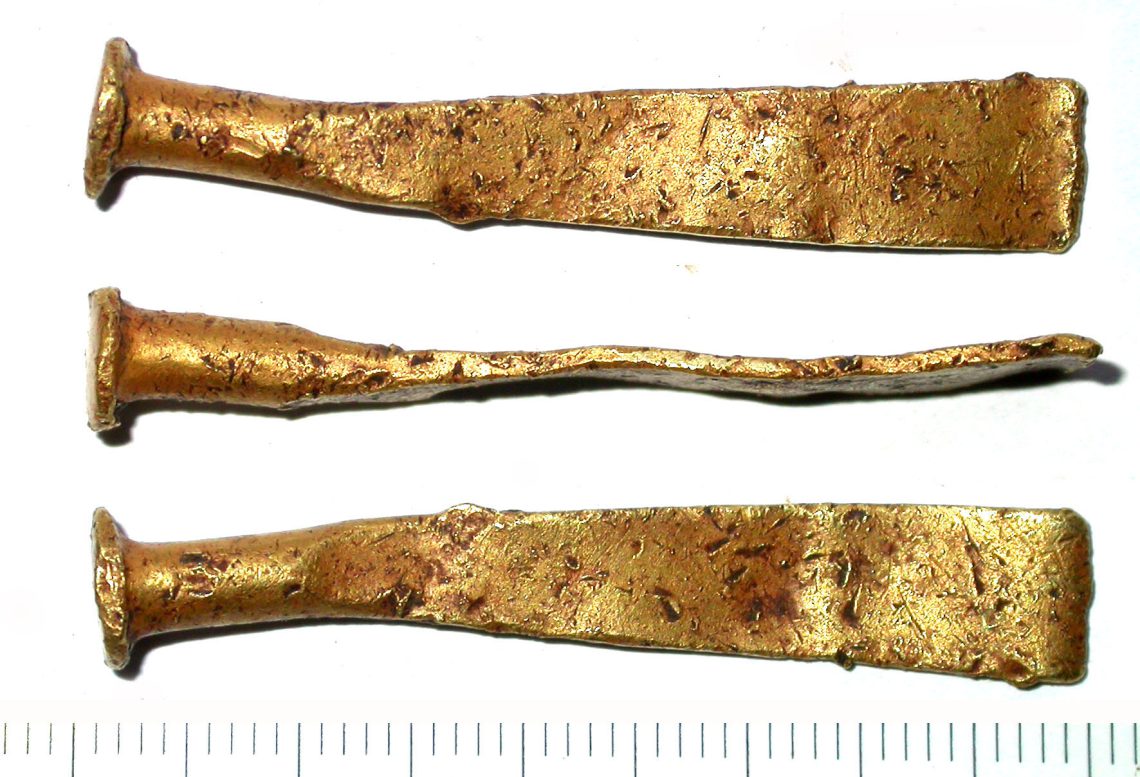
During excavation work in 2008 to build a new luxury hotel on the grounds of Syon Park in west London on the bank of the Thames workers encountered buried objects. The Museum of London Archaeology (MOLA) department now confirms that these are Roman artefacts dating from the 1st century AD. Thousands of artefacts have been collected during the field work including a late bronze age gold bracelet, which has no context in the Roman settlement. Additionally notes the Museum: “Human skeletons found, could have been the remains of former occupants of the settlement, although the placing of the skeletons in…
-
Ever since the remains of a seemingly unknown breed of horse were excavated at the ancient city of Pompeii, scientists have been puzzled over this find. Now, the riddle is solved: what was thought to be a horse, is actually an ass. After DNA tests were done on a skeleton discovered amongst the ruins of an ancient Roman house in Pompeii in 2004, Italian scientists concluded they had discovered a new breed. Yet, after taking a closer look at the data, researchers from Cambridge and Munster say that in this study, a mistake was made. Their arguments the donkey DNA…
-
Archaeologists have unearthed twelve ancient sphinx statues at Luxor, Egypt. The sculptures were found at a newly discovered part of the Avenue of Sphinxes, an ancient road stretching from the temple at Karnak to the temple of the goddess Mut at Luxor. The discovery, made as part of excavation and restoration works at the site by the Supreme Council of Antiquities (SCA), was announced by Egypt’s Minister of Culture, Farouk Hosni. The statues of the mythical creatures, inscribed with the name of Pharaoh Nectanebo I, were found in the last sector of the Avenue of Sphinxes, a part of the…
-
Researchers have discovered that 19 objects in New Yorks Metropolitan Museum of Art are from King Tuts tomb, and an agreement has been struck that will see them be returned to Egypt. The research indicates that Howard Carter kept a few pieces which were bequeathed to the Met after his death in 1939. The artefacts are quite small and at the time it was not known that they were from the tomb itself. Fifteen of the 19 pieces have the status of bits or samples, read a Supreme Council of Antiquities Press release. The remaining four are of more significant…
-

New research on a 2,400 year old star table shows that the Ancient Egyptians kept close tabs on the Big Dipper, monitoring changes in the constellations orientation throughout the course of an entire year. The Big Dipper is composed of seven stars and is easily viewable in the northern hemisphere. Its shape looks like a ladle with a scoop attached. Ancient Egyptians represented it as an oxs foreleg. If a personwere to observethe constellationat the exactsame time every night they would see it gradually move counter-clockwise each time they saw it. Professor Sarah Symons, of McMaster University in Hamilton Canada,…
-
A new study shows that Tutankhamun, Egypts famous boy-king who died around the age of 18, suffered a massive crushing tearing injury to his chest that likely would have killed him. X-rays and CT scans have previouslyshown that the pharaohs heart, chest wall, the front part of his sternum and adjacent ribs, are missing. In Ancient Egypt the heart was like the brain and removing it was something that was not done. The heart, considered the seat of reason, emotion, memory and personality, was the only major organ intentionally left in the body, writes Dr. Robert Ritner in the book…
-
Dr Michel Baud of the Louvre Museum in Paris gave an interesting lecture last week about his excavations of a pyramid at Abu Roash. The monument was badly preserved and its stone had been quarried in Roman times, but the certain details, such as its apparent solar connections, were still discernable. Earlier, Vassil Dobrev stated that the pyramid may actually be a solar temple. However, Baud dismisses these claims…. Nearly 4,500 years ago, in the time of the Old Kingdom, the pharaoh Khufu built one of the greatest monuments on earth – the Great Pyramid. His pyramid was actually a complex of monuments…
-
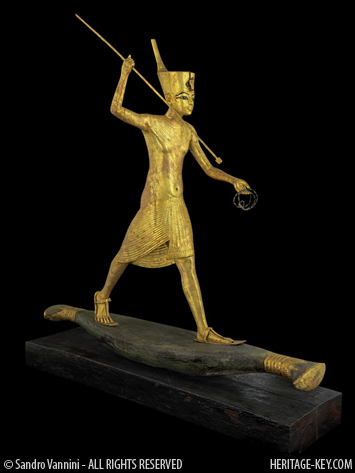
A new study shows that Tutankhamun, Egypt’s famous “boy-king” who died around the age of 18, suffered a “massive crushing tearing injury to his chest” that likely would have killed him. X-rays and CT scans have previously shown that the pharaoh’s heart, chest wall, the front part of his sternum and adjacent ribs, are missing. In Ancient Egypt the heart was like the brain and removing it was something that was not done. “The heart, considered the seat of reason, emotion, memory and personality, was the only major organ intentionally left in the body,” writes Dr. Robert Ritner in the book Ancient Egypt.
-
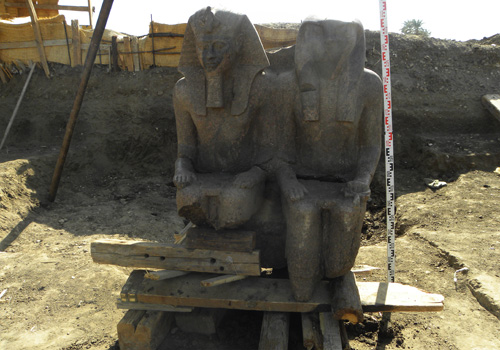
Archaeologists today discovered the upperportion of a statue of Egyptian Pharaoh Amenhotep III at Luxor, Egypt. The find part of a double statue featuring King Amenhotep III with the falcon-headed sun god Re-Horakhti was made at the pharaoh’s funerary temple, locatedon the west bank of the Nile. In a press statement, Egypt’s Minister of Culture, Farouk Hosny said that the discovery was made during routine excavations at Amenhotep III’s mortuary temple carried out by the Supreme Council of Antiquities (SCA). The dig issupervised byDr. Zahi Hawass, who thinks of the newly discovered statue as one of the best of the…