
Egyptian Minister of Culture, Farouk Hosny announced today that six missing pieces from the colossal double statue of the 18th Dynasty King Amenhotep III and his wife Queen Tiye, have been discovered at the kings mortuary temple on Luxors west bank. The fragments were found during excavation work by an Egyptian team under the direction of Dr. Zahi Hawass, Secretary General of the Supreme Council of Antiquities (SCA). The pieces from Amenhotep III‘s statue that were recovered come from the right side of his chest, nemes headdress, and leg. Statue fragments of Queen Tiye that were uncovered include a section…
-
-
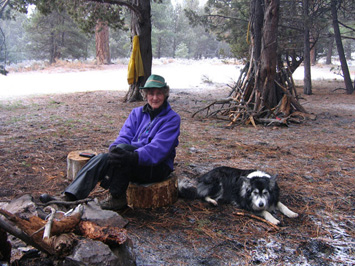
Esther Jacobson-Tepfer Professor of Asian Art at the University of Oregon, Expert on the Archaeology of Mongolia Esther Jacobson-Tepfer is Maude I Kerns Professor Emeritus of Asian Art at the University of Oregon, where she taught undergraduate courses in the History of Indian Art, Art of the Silk Road, and Nomadic Art of Eurasia, and undergraduate and graduate courses in Scythian Gold, North Asian Rock Art, and Judaic Art. Dr Jacobson-Tepfer is a past recipient of the Ersted Award for Distinguished Teaching, and was the first director of the University’s Center for Asian and Pacific Studies. Dr Jacobson-Tepfer received her…
-

Key Dates Athens has been inhabited continuously for over 7,000 years. It became ancient Greece’s leading city in the 5th century BC, and went on to enjoy a period of cultural richness beyond parallel, before experiencing mixed fortunes in the Byzantine, Crusader and Ottoman periods. It became the capital of an independent Greek state in 19th century. Athens Greece Key People Athens is named after the Greek goddess Athena, daughter of Zeus. It’s associated with almost every great name from classical Greece and beyond: philosphers such as Socrates, Aristotle and Plato, dramatists such as Aeschylus, Aristophanes, Euripides and Sophocles, statesmen…
-
Acclaimed heritage photographer Derry Brabbs is regarded as one of England’s finest published photographers within the spheres of heritage and landscape, with over 25 books to his credit. Known for his acclaimed collaborations with James Herriot and Alfred Wainwright, he has also written and illustrated several titles celebrating England’s rich architectural and cultural legacy, including English Country Churches, Abbeys & Monasteries, English Country Pubs, Landmark, and A Year in the Life of the Welsh Marches. He is also the author and photographer of Hadrian’s Wall, in which he charts the Roman frontier from west to east, from the Solway Firth…
-
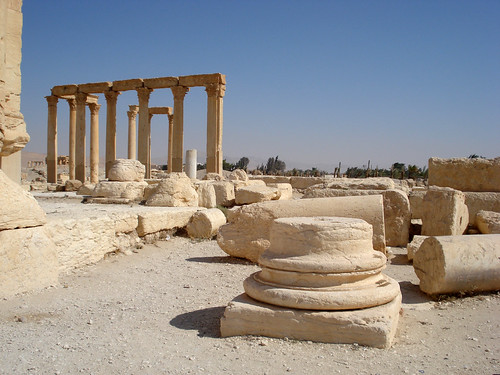
Archaeologist and historian Ross Burns knows Syria better than most, having lived there (and in Lebanon) for many years. He is the author of The Monuments of Syria: A Guide and Damascus: A History. Ross, who is currently preparing a doctorate on the archaeology of the Roman provinces of the Eastern Empire, has lectured at a range of institutions in Australia. He also leads study tours to Syria and Jordan for British and Australian travel companies. He explains why narrowing Syria’s ancient treasures down to a top 10 proves such a challenge: It’s not difficult to guess which of the…
-
A unique queens crown with ancient symbols combined with a new method of studying status in Egyptian reliefs forms the basis for a re-interpretation of historical developments in Egypt in the period following the death of Alexander the Great. In the thesis ‘The Crown of Arsino II’, Maria Nilsson shows that Cleopatra VII was not the only Ptolemaic female pharaoh Queen Arsino II came first, 200 years earlier. Nilsson argues that Arsino (316-270 BC) should be included in the official pharaonic king list as Ptolemy II’s co-regent; her royal authority should be considered equivalent to Hatshepsut, Tawosret and Amenirdis II,…
-

Egyptian Minister of Culture, Farouk Hosni, announced that with a total of 922 units the installation of the new lighting system on Luxors west bank has been completed, allowing for people to visit the tombs in the evening. Dr. Zahi Hawass, Secretary General of the Supreme Council of Antiquities (SCA), said that the aim of this project is to preserve the tombs and temples located on Luxors west bank. The thousands of tourists that daily visit the heritage site will now be distributed throughout the day, from 7:00 am to 8:00 pm. This, he continued, will reduce the level of…
-
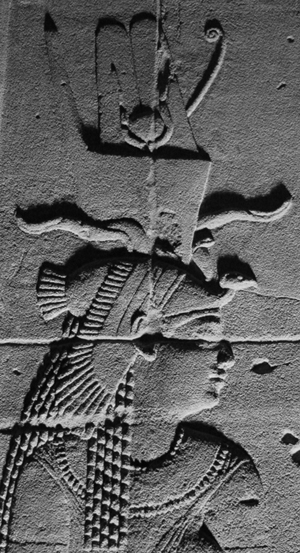
A unique queen’s crown with ancient symbols combined with a new method of studying status in Egyptian reliefs forms the basis for a re-interpretation of historical developments in Egypt in the period following the death of Alexander the Great. In the thesis ‘The Crown of Arsinoë II’, Maria Nilsson shows that Cleopatra VII was not the only Ptolemaic female pharaoh – Queen Arsinoë II came first, 200 years earlier. Nilsson argues that Arsinoë (316-270 BC) should be included in the official pharaonic king list as Ptolemy II’s co-regent; her royal authority should be considered equivalent to Hatshepsut, Tawosret and Amenirdis…
-
From a variety of sources, we know of hundreds of sports and games in the ancient world, some of which one can be traced from the beginning of writing in about 3,000 BC to the time of the Middle Ages. Many of these pursuits played a prominent role in their respective societies and transcended mere sport to become associated, for example, with religion, entertainment, the military, and social customs. Several sports listed below have parallels in the modern world even though in some cases there may be no direct ancestry. I have extended the discussion to include (in one instance)…
-
King Tut’s Golden Death Mask is the greatest thing ever discovered. See it now online and up close in 3D. Click below. Deemed too fragile and precious to travel, Tutankhamun’s death mask will never leave Egypt again. Admire the Golden Death Mask online and up close- in 3D! – on Heritage Key. View the 3D Mask right inside your browser – all you need is the Unity3D plug-in (sort of like Flash). If you haven’t installed it yet, the application below will offer to download and install it for you. Then just refresh the page. King Tut’s Golden Death Mask –…