
Archaeologists have discovered the 3,300 year-old tomb of Ptahmes, 19th Dynasty army leader and royal scribe, at Saqqara. The discovery of the tomb – dated to the second half of the 19th Dynasty (1203-1186BC) – by the Archaeological Faculty of the Cairo University was announced today, putting an end to a 300-year-old archaeological riddle. Ptahmes’ tomb is 70 metres long and contains numerous chapels. Dr Zahi Hawass commented its design is similar to that of the tomb of Ptah Im Wiya, a royal sear bearer who lived during the reign of Pharaoh Akhenaten, discovered in 2007 by Dutch archaeologists. As…
-
-
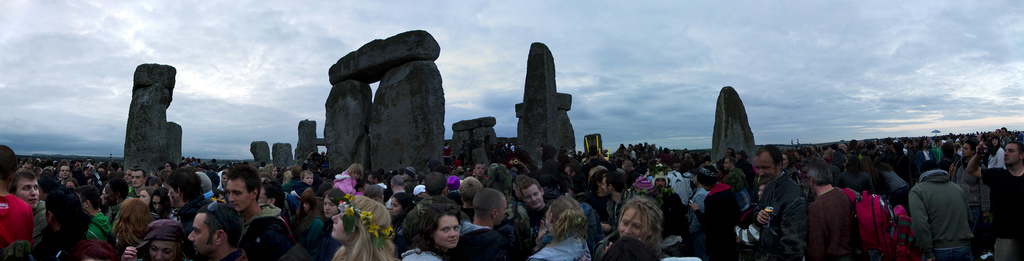
Each year on the 21th of June visitors from around the world gather at Stonehenge overnight to mark the summer solstice and to see the sunrise above the stones. (We’re attending as well, go here for live updates and pictures from the Solstice: first photographs from the solstice.) At dawn the central Altar stone aligns with the Slaughter stone, Heel stone and the rising sun to the north-east. The Summer Solstice at Stonehenge is certainly the ‘ancient history’ summer event in Britain to attend. Summer Solstice Info & Thing to Do Pictures from the Stonehenge Summer Solstice 2010 – The Ancestor, the Druids…
-
by Derry Brabbs Frances Lincoln (2008) 7/10 Derry Brabbs is a well known UK photographer who has published nine books as photographer and author. He has also collaborated on 18 other books with other writers as photographer in his 25-year career to date. He is particularly interested in blending the story of England’s heritage with its landscape. Brabbs worked with the inimitable fell walker, Alfred Wainwright, on many books and told Heritage Key in December 2009 that he started to photograph Hadrian’s Wall in his first assignment along the Roman frontier with Wainwright in 1984. Brabbs’ Hadrian’s Wall can be…
-
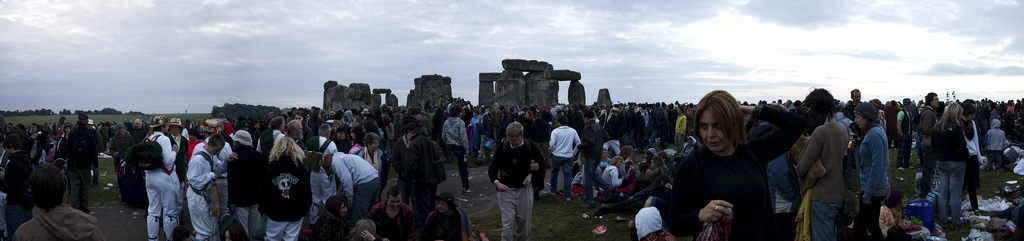
With Summer Solstice 2010 near, we’re starting to prepare for our trip to Stonehenge to – hopefully – see the sun rise above the heel stone. (Go here for live updates from the Solstice celebrations or photos from the 2010 Solstice.) We can’t command the weather (only in our Stonehenge Solstice Virtual, where it is never cloudy), but we can supply some information and tips to make sure you get the most out of your Stonehenge Summer Solstice visit. Read on for tips on how to get to Stonehenge, what (not) to bring and wear. If you’re going, let us know in…
-
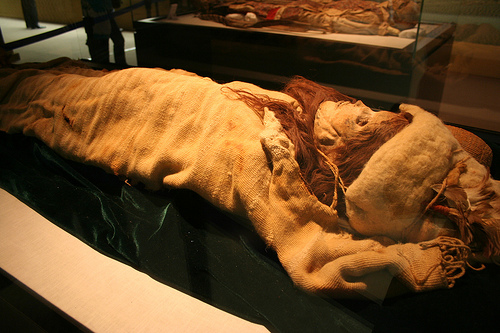
According to archaeologist Liu Qingzhu, trying to name the most important discoveries in China is like facing another, albeit seemingly more simple, question — which one tastes better: dumplings or rice? “Southerners from China will say rice is better, but northerners will say dumplings,” Liu said. “Then Westerners will say they like French food and that bread is good.” Listing the most important archaeological discoveries faces similar difficulties, he added. One finding may have had more relevance for one region of China, while not affecting the other. China’s history is also long and not so easy to cover. Still, Liu…
-
One of the earliest descriptions we have of Nero is particularly unflattering. It comes from the Roman writer and historian Suetonius in his work The Twelve Caesars, a biography of 12 of the Roman empire’s rulers, from Augustus to Domitian. He gives a physical description of Nero as “about the average height, his body marked with spots and malodorous, his hair light blond, his features regular rather than attractive, his eyes blue and somewhat weak, his neck over thick, his belly prominent, and his legs very slender.” Body odour, acne and skinny legs? Surely those are not the macho attributes…
-

Nowadays being part of the ‘web’ isn’t limited to having an interesting website, but also means doing a genuine effort to reach out, being part of the community as well as inviting others to take part in your website. Heritage Key is doing exactly that, so you can find us on Twitter, YouTube, Facebook, Flickr, iTunes, … as well as subscribe to our feeds to get a daily overview of all the new articles and blogs posted to Heritage Key. You’re welcome to join us on: Twitter Follow Heritage Key’s latest tweets – and REtweets – or reach out to…
-
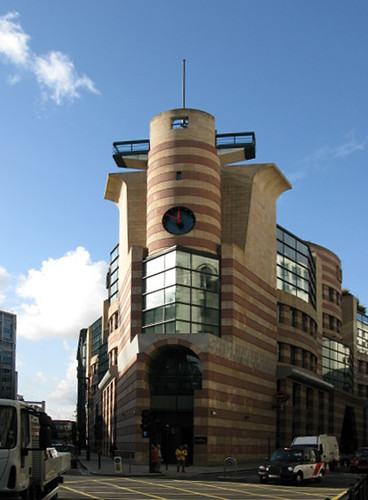
Last week’s inaugural Ancient World in London Blogger’s Challenge called for opinions to be cast on the subject of which invaders had the most historical impact on Britain’s venerable capital, sparking shouts for all from rats to Roman traders, Scandinavian raiders and even a band of (admittedly made-up) Roman warrior-pigeons. I’ll today kick off round two – which again gives entrants the chance to win prizes both real and virtual – by posing a brand new question: What’s the most important ancient site in London? As a city, the Big Smoke has origins stretching back at least as far as…
-

The Petrie Museum is celebrating International Women’s Day by honouring Amelia Edward’s contributions to Egyptian archaeology and the Petrie Museum with the new installation of her bust against an image of her study, followed by a one-woman show written and performed by the actress Kim Hicks. Kim Hicks has enjoyed a wide-ranging career, on radio, TV, film and stage. She was inspired to bring Amelia Edwards back to life in celebration of her 175th birthday. This event is organised by the Friends of the Petrie Museum to celebrate the life of Amelia Edwards and support the world-class museum of Egyptian…
-
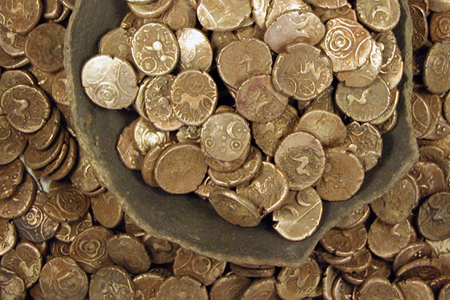
From May 3rd until June 10th, the Ipswich Museum is hosting a free sneak preview of 2,000-year-old Iron Age gold coins once belonging to Boudicca’s Iceni tribe. The 200 coins on display are part of the Wickham Market hoard, discovered in 2008. The Wickham Market hoard consists of 840 Iron Age gold coins which makes it the largest the largest hoard of its type found in Britain since 1849 (and is featured in our Top 10 Metal Detector Discoveries). Almost all of the coins belong to the Iceni tribe but five of them were ‘issued’ by a neighbouring tribe from…