It’s the month of love, as our wealth of Valentine’s-inspired articles and contests testify (including dinner at Stonehenge Virtual and the top ten ancient romances), so from the murky history of theLondon Stone, we’ve delved into the mucky world of love and sex in the ancient world. A quick glance on the net will show you February has been linked with love since the Classical Period: Lupercalia, celebrated from the 13th to 15th, hailed fertility – while Gamelion worshipped the marriage of Zeus and Hera. But there’s a seedier side to Greco-Roman relations. And if you’ve ever seen the erotic…
-
-
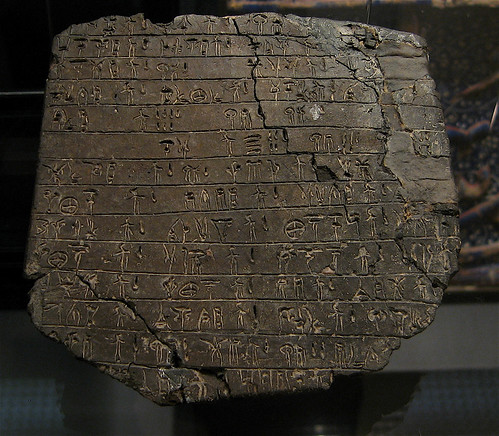
The history of Athens and its many monuments is endlessly exciting for visitors and you don’t need to be in the city itself to get a taste of its glorious past. Wander around London, admire a few buildings, have a short visit to the British Museum and then finish your day with a trip to the cinema and you will feel like you’ve been to transported to ancient Greece. So here are 10 points of call for experiencing your very own “Athens day” in London. 1. Clay tablets With Linear B Get to grips with the language of ancient Greece…
-
Attribution: Jon Himoff Key Dates 440 BC Created around 440 BC The statue of Pericles (also known as Perikles) was created by the Greek Sculptor Kresilas who was originally from Kydonia. Pericles was an powerful statesman in Athens through the Golden Age. He lived between 461 and 429 BC, and had a major influence on Athenian society. The Corinthian Helmet over his head symbolises his position as a General in the military. There are also other examples of it in the British Musuem and the Vatican Museum. Origin & Collection Discovered at: Zincirli On display at: Altes Museum, Berlin Physical…
-
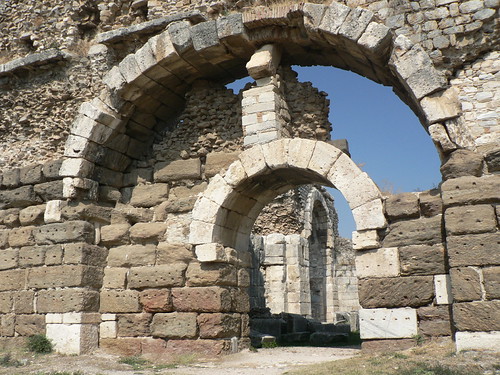
Attribution: Lazy B Millet Turkey Key Dates Miletus was first occupied at around 3500 to 3000 BC. Minoans occupied the area from around 1900 BC. The first settlers from Crete arrived in Miletus at around 1400 BC. The Greeks freed Miletus of Persian rule in 479 BC and famously rebuilt. Alexander the Great seized Miletus in 334 BC. It was annexed by the Romans in 133 BC. The Apostle Paul led his Third Missionary Journey through the city in 57 AD. Miletus’ first excavations commenced in 1873. Key People Hippodamus; the famous Greek architect who built Miletus as the world’s…
-
We’ve come a long way from the time when Ugg would mutter inanities to Uggetta in the cave, present her with a wad of crushed up flowers and move in for the kiss- and if she resisted he would reach for his club, gives it the old ‘knock on the head and drag away’ routine. Nowadays, for example, we do all the inanities on dating websites or in noisy bars. The rules of romance and courting have been shifting rapidly in the last 50 years and now many people are so clueless as to what they are supposed to do…
-
Who is the man in this picture? How did this fellow, whose maternal ancestry is East Asian, end up in a modest grave in southern Italy about 2000 years ago? Its an enticing question and one that has been in the news ever since Heritage Key announced the story of this mans discovery. Just a quick recap; a team of scientists based at McMaster University in Hamilton Canada have found that this man, buried in a Roman cemetery at Vagnari, in southern Italy, is of East Asian ancestry on this mothers side. They determined this through mitochondrial DNA testing. The…
-
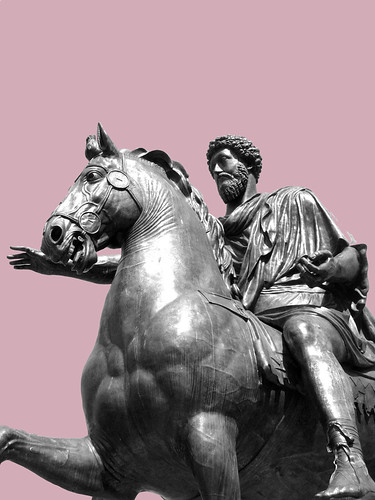
Very few large equestrian statues from antiquity have survived until modern times. Two that have reached us are the bronze statue of the Roman emperor Marcus Aurelius, on display in the Capitoline Museums in Rome, and the Greek marble statue in fragments known as the Rampin Rider. Found by Georges Rampin in the late 19th century in Athens, it is a masterpiece of Archaic art and pre-dates the much more intact bronze of Marcus Aurelius by about 700 years. Each statue tells us a huge amount about the time and place they come from the Rampin Rider from Athens in…
-
The Greek City-state, or Polis, is arguably the greatest political system ever created – remarkable given its appearance some 2800 years ago. The Greeks successfully built a system to foster those most elusive of human desires – freedom and equality, and their efforts have had an influence on western thinking since the Hellenic culture was re-discovered during the Middle Ages. But the Polis was much more than a governmental system. It was a culture built around expansion of the human intellect – through philosophy, architecture, drama, and mathematics. The Polis was the engine of these accomplishments because it valued and…
-
The life of Heinrich Schliemann is as legendary as the city he claimed to have discovered. A quintessential 19th century adventurer and amateur archaeologist, his obsession for Troy took him around the world and to Turkey and Greece. Fascinated by Homers epic narration, Schliemann stopped at nothing to discover the historical sites named by the poet. The veracity of his findings is however often questioned. Heinrich Schliemann: fanatic obsessed by his boyhood dreams or successful antiquarian? A Boyhood Dream Born in 1822 to a poor Protestant minister father and an unpublished literary critic mother who died when he was nine,…
-
The media preview for Fakes and Forgeries: Yesterday and Today was held today. It will be opening at the Royal Ontario Museum, in Toronto Canada, this Saturday. It’s a much smaller exhibition than the King Tut and Dead Sea Scrolls shows that have hit Toronto recently, and will potentially be dwarved by the very large China show that may or may not include the Terracotta Warriors this June. But Fakes and Forgeries offers some strong lessons about the world of fakes and the experts who try to out them. How the ancient section of the exhibit works is that there…