• prad

    Myrtis the 2,500 Year Old Athenian Girl Finds a New Home

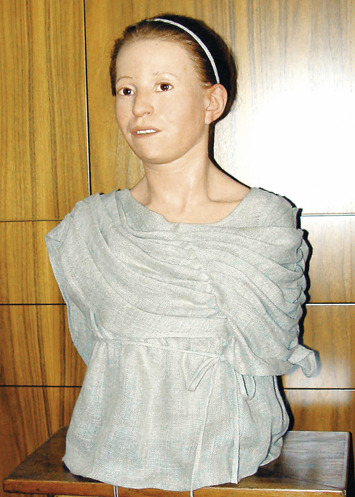
    ‘Myrtis‘ has attracted thousands of people across Greece to see her, has appealed to the world leaders to end the spread of disease and now she earns herself a place amongst historic artefacts in the National Archaeological Museum in Athens. All this, and her name isn’t actually Myrtis. It was the name that was given to her by scientists who uncovered her remains, as well as over 150 other skeletons, from an archaeological dig of a ‘plague grave’ at Kerameikos Cemetery dating back between 426-430BC, as reported by ana-mpa. Myrtis’ resurrection some 2,500 years after her death from Typhoid –…

  • Ann

    Fiery Pool: The Maya, the Mythic Sea and the Turtle

    After a successful stay at the Peabody Essex Museum, ‘Fiery Pool: The Maya and the Mythic Sea’ opens this weekend at Forth Worth’s Kimbell Art Museum. The exhibition offers a new interpretation of the ancient culture, beyond the traditional view of the Maya as a land-based civilisation. Expect supernatural crocodiles breathing forth rain; cosmic battles taking place between mythic beasts and deities; and art works adorned with shark teeth, stingray spines, sea creatures and waterfowl all part of the new and vivid picture the exhibition paints of the Maya world view: the Maya did not just navigate river and streams,…

  • owenjarus

    ‘Huge’ structure discovered near Snefru’s Bent Pyramid in Egypt may be an ancient harbour

    Archaeologists have discovered a large structure to the northeast of the 4,600 year old Bent Pyramid which may be the remains of an ancient harbour. It connects to one of the pyramids temples by way of a 140 meter long causeway. The discoveries were made by a team from the Cairo department of the German Archaeological Institute, and the Free University of Berlin. The team used magnetic survey and drill cores soundings to make the finds. The structure is mostly unexcavated and only a portion of the causeway has been unearthed. The structure itself is U-shaped, 90 meters by 145…

  • Ann

    Traces of Lost Language and Decimal Number System Discovered in Peru

    Excavations at a Colonial Period site on the North Coast of Peru have revealed the first traces of a lost language. Sometime in the early 17th century, a Spaniard jotted down some notes on the back of a letter. Four hundred years later, archaeologists dug up and studied the paper, revealing how Peruvian natives used numbers. The find is significant because it offers the first glimpse of a previously unknown language and number system, says Dr. Jeffrey Quilter, director of the archaeological project at Magdalena de Cao Viejoand curator at the Peabody Museum Harvard. It also points to the great…

  • Ann

    Utah Locals Continued Eating Beaver Despite Invention of Early Flour

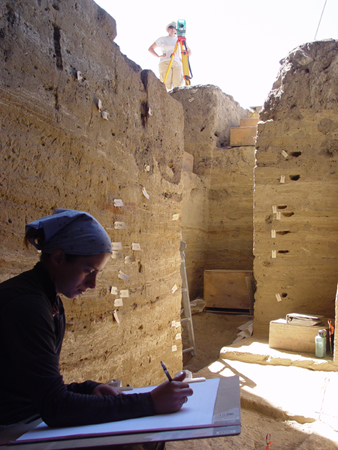
    Almost 10,000 years ago, in Utahs Escalante Valley, a new recipe was added to the prehistoric cookbook: mush cooked from the flour of milled sage brush seeds.In those times,what else would the early chefs put on your plate..err… rock? Archaeologists from the Brigham Young University are publishing what they’ve learned from five summers of excavations at the ‘North Creek Shelter’. The site,on the northern Colorado Plateau in southern Utah,has been occupied by humans on an off for the past 11,000 years, and is one of the oldest of such archaeological sites in Utah. In the upcoming issue of the journal…

  • Ann

    ‘Digging for Britain’ with Alice Roberts – New Archaeology Series on BBC2

    Britain, man your TVs and iPlayers!Great Britain might be a small island but it has a huge history and, every year, hundreds of excavations bring lost treasures up to the surface. Presented by Dr Alice Roberts, ‘Digging For Britain‘ joins these excavations in a new BBC Twohistory series. ‘Digging for Britain’ is produced by 360 Production (a look behind the scenes) and follows ayear of archaeology around the country, revealing and contextualising some of the newest finds, research and social history. Its four episodes focus onfocus on the Roman, Prehistoric, Anglo-Saxon and Tudor eras. Digging the Romans In the first…

  • Ann

    Oldest Evidence for Stone Tools and Eating Meat Discovered in Ethiopia

    Thinking of Lucy strolling around the east African landscape in search of food, we can nowpicture her looking for meat with a stone tool in hand. Bones foundin Ethiopia, push back the earliest known stone tool use and meat consumption by almost one million years and provide the first evidence that these behaviours can be attributed to Lucy’s species. Aninternational team of researchers has discovered evidence our ancestors were using stone tools and ate the nutricious meat and marrow of large mammals 1 million years earlier than previously documented. While working in the Afar region of Ethiopia, the Dikika Research…

  • malcolmj

    Easter Island Was Devastated by Western Invaders and Not Internal Conflict

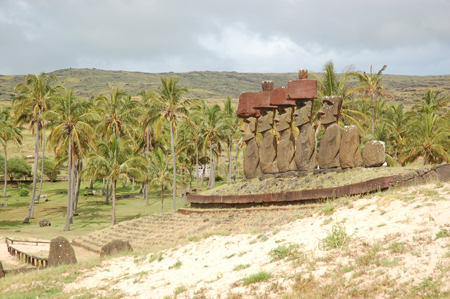
    An archaeologist from the University of Manchester has produced new research suggesting Western invaders should be blamed for the demise of the ancient people and culture of Rapa Nui or Easter Island, further contradicting the once popular idea that its primitive, warlike Polynesian inhabitants had already themselves provoked societal collapse long before the remote southeastern Pacific island was first visited by European explorers in 1722. Backing an already substantial body of opinion, Dr Karina Croucher a post-doctoral researcher in the School of Arts Histories and Cultures argues that the Easter Islanders must have had a sophisticated and successful culture until…

  • owenjarus

    19th Century Manuscript and Drawings by Egypt Explorer Frédéric Caillaud Discovered

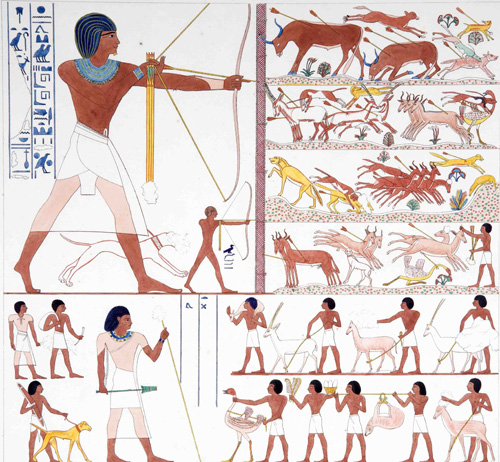
    An unpublished manuscript, written by 19th century Egypt explorer Frdric Caillaud, has been discovered and it points the way to a 3,500 year old tomb of an Egyptian official. It is called Arts and Crafts of the Ancient Egyptians, Nubians and Ethiopians. It iswritten in French and illustrated with drawings. The American Research Center in Egypt (ARCE) is in the process of translating and publishing it. The work is being led by Dr. Andrew Bednarski. He gave a lecture and interview recently in Toronto, and provided me withsnippets from the bookand pictures ofthree of the drawings. Frdric Caillaud was one…

  • Ann

    Man’s First Domesticated Animals Were Tools Before Food

    Almost 32,000 years ago, man got its first puppy. Today still, humans have a special connection with animals, regardless if they are sitting on our laps, or – point on our plates. Why is it in our nature to accept of all kinds of creatures into our families and homes? What came first, the carbonade that would stay put, or the steadfast companion in the pursuit for game? And what if our first prehistoric attempts at art were no mindless doodling or sacred effigies, but an early publication of ‘Useful Beasts for Dummies’? In a paper describing a new hypothesis…