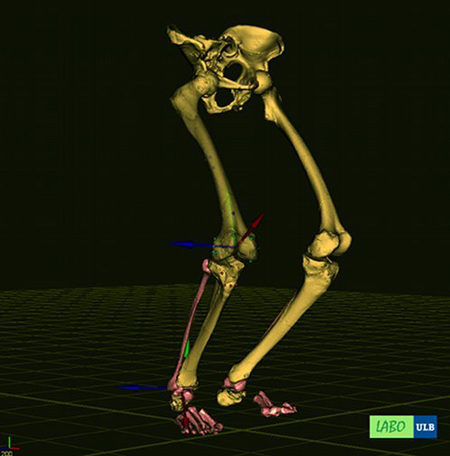
A new research project from the Universit Libre de Bruxelles (ULB) takes us one step further as it comes to understanding Neanderthal locomotion. The Laboratory of Anatomy, Biomechanics and Organogenesis’ (LABO for short) project created a 3D virtual reconstruction of a pair of Neanderthal lower limbs. The skeleton shows the Neanderthals had the same moves as we do and between 5% and 20% more leverage than us. Homonids (that includes all forms of the human lineage, be it extinct or living) started bipedal locomotion (moving by means of your two rear limbs or, in our case, legs) some 6 million…
-
-
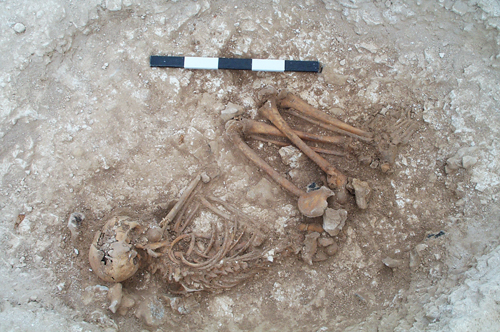
The links between the Stonehenge area and the Mediterranean have been debated for years. Recent research suggest that some of the people buried in the area duringthe Bronze Age were not local. Rather, they came from both the snow of the Alps and the heat of the Mediterranean to visit Stonehenge. The analysis of the teeth from two males provides new evidence that one dubbed the Boy with the Amber necklace had come from the Mediterranean area, whilst it confirms the Amesbury Archer had come from the Alps. The Amesbury Archer was discovered around five kilometres from Stonehenge. His is…
-
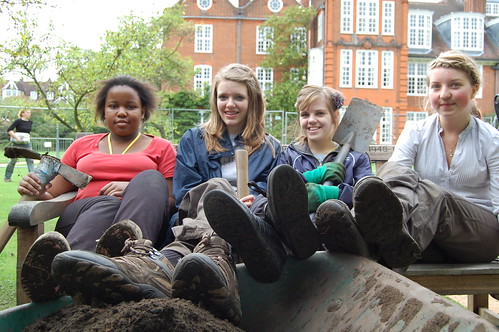
A dig in search of Anglo-Saxon skeletons has instead unearthed signs of a sprawling Roman settlement. The discovery was made last week, on the grounds of Cambridge’s Newnham College. Evidence of a 16th or 17th century farmhouse that could date back to the reign of Henry VIII was unearthed at the site as well. “We knew there was a Roman settlement here before but we had no idea of the size,” said Dr Catherine Hills. “The village has been buried under the gardens for nearly 2,000 years, and may have seen the Roman conquest of Britain and Boudicca’s revolt. The…
-
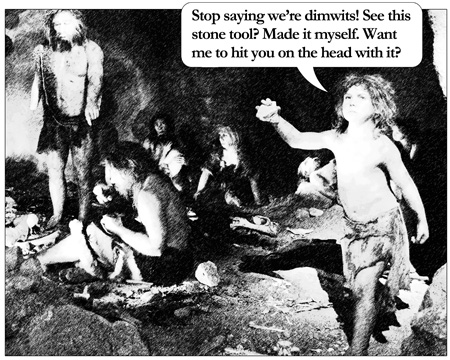
For decades scientists believed Neanderthals developed ‘modern’ tools and ornaments solely through contact with Homo sapiens, and it is often said that the cavemen weren’t able to adapt their hunting techniques to the changing climate quickly enough to prevent their extinction. A new study nowsuggests these sturdy ancients were well capable of innovating without our help, adding to the growing pool of evidence that Neanderthal man was not a primitive, clumbering caveman. Basically, I am rehabilitating neanderthals, explainsJulien Riel-Salvatore, assistant professor of anthropology at UC Denver. They were far more resourceful than we have given them credit for. Uluzzian Innovation…
-
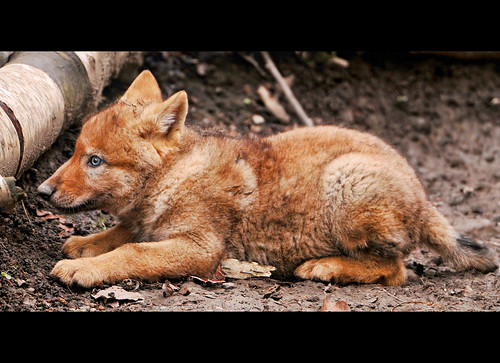
The first evidence for domesticated dogs has just got earlier with the recent dating of a dogs skull and teeth from Kesslerloch Cave in Switzerland. That puts the transition from wolf to dog to over 14,000 years ago. Previously, the earliest date was from a single jawbone that was found in a human grave at Oberkassel, in Germany, dating to about 13,000 years-ago. (There are earlier dates claimed for the first definite identification of dogs but these are usually discounted by experts). The finds from Switzerland were uncovered in 1873 but it was only last year that archaeologists at Tubingen…
-
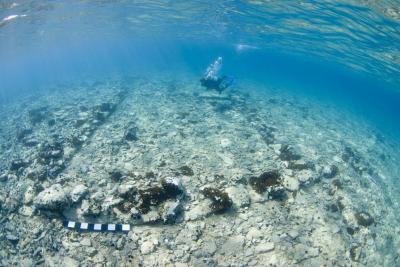
Discovered over 40 years ago just off the coast of Greece, Pavlopetri is the oldest submerged city in the world and the only sunken city in Greece that predates the writing of Plato’s Atlantis myth. Now, for ‘Pavlopetri, The City Beneath the Waves’, BBC Two is to follow the team of experts excavating the submerged site. “The future of archaeology is under the water and we are now armed with the technology to unlock the countless fascinating secrets the sea is yet to yield up to us, says BBCTwo’s Janice Hadlow. The documentary is planned to air next year, and…
-
Evidence of early Iron Age settlements and Roman remains have found at Sutton borough, south London. The infant burials and animal remains uncovered across the site are believed to be over 2000 years old. The discoveries were made by workmen laying the foundations for the new Stanley Park High School on the former site of Queen Mary’s Hospital. The site lies less than 100m to the northwest of one of the largest 150m in diameter Late Bronze Age hilltop enclosures in southeast England, discovered in the early 20th century. The archaeological remains are typical of a late Iron Age and…
-
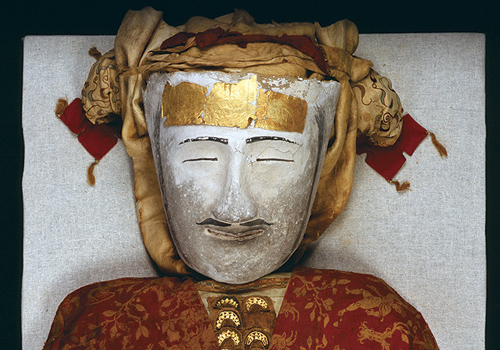
Tickets go on sale today for “Secrets of the Silk Road” a landmark exhibition from China making its only East Coast stop at the University of Pennsylvania Museum of Archaeology and Anthropology (Penn Museum) in Philadelphia February 5 through June 5, 2011. The exhibition aims to reflect the wide extent of the Silk Road trade and cultural interchange (see some of the highlights in this slideshow). Despite of what its name suggests, the Silk Road isn’t one single route. Rather, it is an extensive interconnected network of maritime and overland trade routes extending from Southern Europe through The Arabian Peninsula,…
-
As documented in the article ‘Woman of Sparta: Tough Mothers’, Spartan women enjoyed all kinds of rights not shared by their Athenian sisters – albeit plenty of plights too. Sparta’s unique social system and constitution, which was completely focused on military training and excellence, afforded females a level of freedom and responsibility uncommon in the classical world – as child bearers, they were vital to replenishing the ranks of an army that suffered an almost constant stream of casualties; with so many men constantly away at war, they were crucial to running their households and the community at large. Yet, Spartan…
-
In a conversation with Heritage Key (HK), Paul Denis (PD), the curator of Fakes & Forgeries Yesterday and Today, a newly announced exhibit at the Royal Ontario Museum, talks about how fake ancient artefacts are affecting the museum world. Among the things discussed are: -The emergence of ancient Greek coins as a new hot area for fraudsters. -Why the internet is an awful place to acquire artefacts. -How curators (with a little scientific help) pick out fakes. He also shares some interesting news: of the hundreds of Zapotec artefacts his museum has, about 50 percent are forgeries. He explains how they got duped on such a grand scale.…