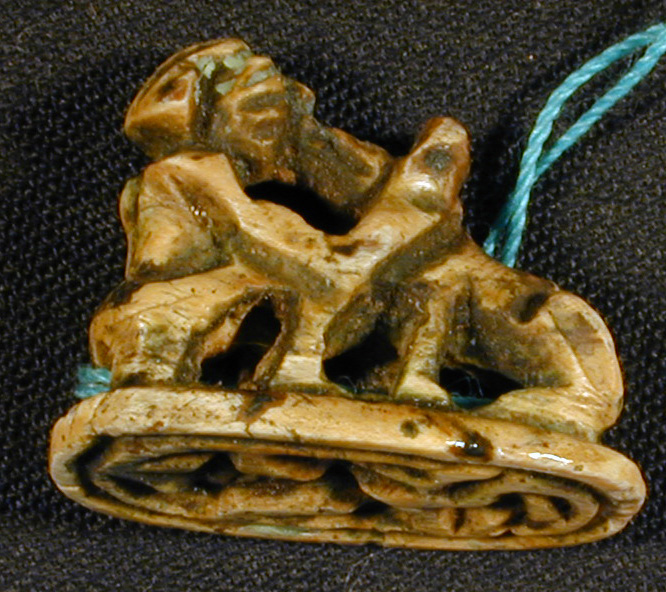
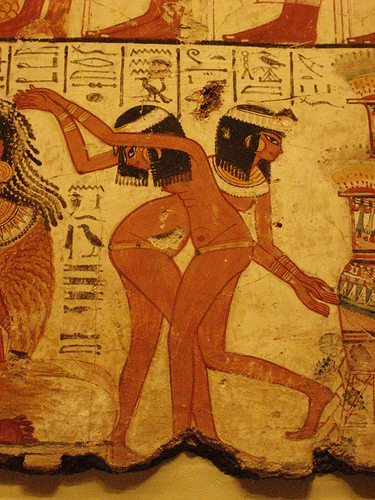
One of the most unusual presentations on Egyptology that Ive seen in awhile took place at the Egypt symposium in Toronto recently. Professor Emeritus Vincent Tobin, of St. Marys University, has been translating and analyzing Late Egyptian love poems, and finds that they reveal a rather risqu side to Egyptian life. The Egyptians were well aware of the more salacious aspects of love, said Tobin. For the Egyptians sexuality is part of human nature. He read a number of examples to the audience, which offer a unique insight into the sex lives of the ancient Egyptians: I shall lie down…
-
-
‘What killed the forests of Easter Island?’ is a question that has bamboozled experts for years. Outcomes have ranged from natural disasters, to disastrous ecology – but an invasion of rats? It’s the latest posit doing the scholarly rounds, thanks to University of Hawaii professors Terry Hunt and Carl Lipo. But before you’re conjuring hoards of rodent Jack Sparrows patrolling the Pacific, the pair do have hard evidence backing their claim. It’s widely agreed that Europeans are largely to blame for the demise of the Easter Islanders, famous for their eerie megalithic statues, following its European discovery in the mid-18th…
-
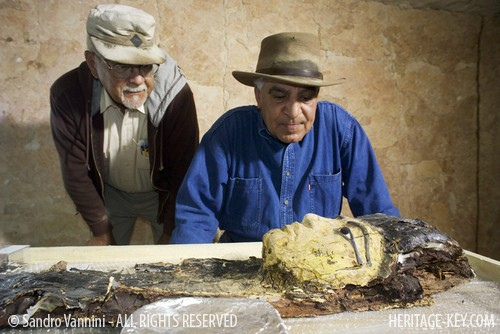
Want to know how to mummify a body but don’t know where to start?Well, you’ve come to the right place. Following on from our video featuring Dr Zahi Hawass, in which he gives Heritage Key a fascinating insight into how mummies are made (see the video embedded below), and an enlightening interview with Bob ‘Mr Mummy’ Briers on mummification, we’ve condensed millenia of wisdom into 7 not-so-easy and certainly not pleasant steps. Egyptian embalmers were masters of their craft, and while we possess a lot of clues about the long and laborious procedure they went through in order to ensure…
-
A leading language expert claims man’s first forays into the art world may be nothing more than ‘ancient doodles’. Dr Ekkehart Malotki, a professor at Northern Arizona University, told an audience at Deer Valley Rock Art Centre on Saturday the true meanings behind the world’s earliest images etched onto rocks will remain a mystery forever – and that they may have been spurred by nothing more than an inane desire to create. Malotki has laid out his theory in a book entitled ‘The Rock Art of Arizona: Art for Life’s Sake’. “The act of making the image was more important…
-
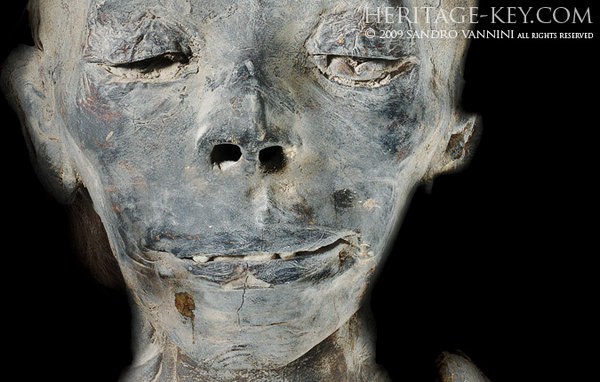
After 3,000 years its appears all but certain that the husband of the mummy of Djedmaatesankh has been found. We know from her coffin that his name is Paankhntof. She was a musician at the temple of Amun-Re in Thebes – he was a doorkeeper at the same temple (actually something of an important position). At the weekend symposium, researchers presented evidence that the mummy of her husband is now located at the Art Institute of Chicago. Heritage Key broke the story a week ago here. The research was presented by Gayle Gibson of the Royal Ontario Museum and Stephanie…
-
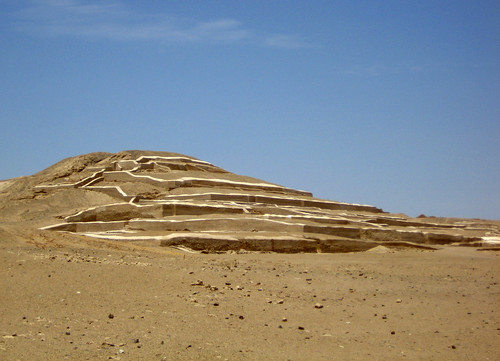
The mummy of a young Nazca priestess has been discovered in the ancient city of Cahuachi, Peru. Italian archaeologist Giuseppe Orefici, director of the Nazca Project, made the startling find in a mini-temple between the mysterious metropolis’ Great and Orange Pyramids. The 300-450 AD woman had been buried beneath ropes and reeds, and covered in finely-woven fabrics with killer whale pattern. Several obsidian arrow heads had also been worked into the weave. The young woman’s face had been painted, and an extra vertebra added to her back. Her arms were also deformed – possibly as a result of having had…
-
Next Saturday Venice will be holding its own funeral. As far as publicity stunts go, it’s quite an unequivocal message that the city is on the brink. Only this time the threat is not from the rising tides and the island city’s subsiding foundations; the danger comes in the form of the rapidly shrinking population it seems that the Venetians are migrating to the mainland faster than you can say ‘just one cornetto’. According to one group of locals members of the online community venessia.com – the population has now fallen below the threshold of 60,000 people (down from about…
-
The recent reopening of Berlin’s Neues Museum has brought back into the limelight one of the ancient world’s greatest treasures. Yet as Thutmose’s masterful Bust of Nefertiti takes centre stage in Germany’s latest collection, the woman behind Egypt’s most famous sculpture remains a conundrum. Heresies, lost kingdoms and mysterious kingships have made Nefertiti more than the ‘most beautiful woman in the world’. But who was she, and how did she become one of the greatest leaders in Egypt’s history? Nefertiti’s origins are a mystery. Born some time around 1370 BC, theories abound that she was the daughter of army general…
-
The Society for the Study of Egyptian Antiquities, and the Royal Ontario Museum,kicked off a three day symposium in Toronto. Im going to be filing more detailed blogs at the end, once I have the time to do a proper write-up of all the research. For now here are some news-briefs that I want to fill you in on. –The Seila Pyramid is flat! No it is not a step pyramid. It is a true pyramid. Professor Kerry Muhlestein of Brigham Young University, presented the latest research. A team of engineers, using GPS equipment, completed a3D model of the pyramid…
-
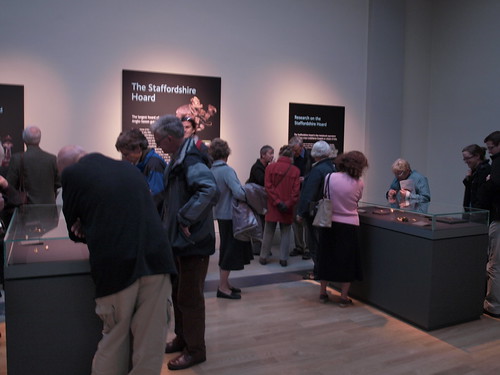
As blogged earlier today, the Staffordshire Hoard made its way to London’s British Museum this week, to feverish public interest. And not wanting to miss out on the party, Heritage Key took a trip to Bloomsbury today, to give you a first-hand look at how it has been laid out for the capital’s history lovers. As you can see, there weren’t queues tailed back hundreds of yards outside the building – as was the case at earlier displays in Birmingham – but interest was high, with HK struggling to burst through the crowd for some decent shots. Only a handful…