• sean-williams

    The Future of Tourism is Virtually Here

    More and more of us are travelling each year, but are we getting the most for our money? I’d say probably not, but the future’s looking brighter. As the latest Ancient World in London bloggers’ challenge suggests, travel continues to buck the economic meltdown. And it’s not surprising: at a time when it takes longer to get across London by car than to fly to the far end of Europe, and for less cash, why not globetrot? Much more of us are looking to infuse some culture into our foreign sojourns. But old-school P2P websites and shoddily slapped-together online guides…
  • bija-knowles

    Just not Cricket: Two Roman Altars Stop Play at Musselburgh

    Two Roman altar stones have been found in the Scottish town of Musselburgh, six miles east of Edinburgh. They are thought to date back almost 2,000 years and were uncovered during renovation work at a cricket pavilion. The archaeological excavation took place before building work could start on Musselburgh Cricket Club‘s new pavilion. That could face a delay now that the Roman altar stones and, according to the cricket club, an Iron Age house were found on the first day of the dig. One of the altar stones has been identified as dating from the second century AD and is…

  • rebecca-t

    How to Train Your Dragon Movie Could Help Teach us Humans to Play Nice

    I went to see How to Tame Your Dragon at the weekend – a beautiful and delightful film by Dreamworks Animation about Hiccup, a distinctly un-Viking-like young boy from a village of blood-thirsty Vikings. Hiccup discovers that creatures who are different from them are not necessarily the enemy a discovery that his marauding fellow Vikings are unlikely to believe easily. Differentiating foreign from invading is a difficult concept that mankind has long struggled to grasp. But do we really still live in an era where a social message like this is necessary – are we still as socially and politically…

  • helen-atkinson

    New York Tutankhamun Exhibit Deserves the Met, not Times Square, Says Zahi Hawass

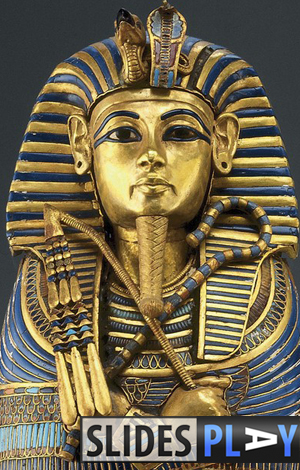
    For me, the press preview of the Tutankhamun and the Golden Age of the Pharaohs exhibition, which opened in New York today, was a momentous event because I’ve never met Dr. Zahi Hawass before, and I got to look him in the eye and shake his hand and even ask him a question. I’ll come to all that in a minute. The exhibition is impressive. I can’t deny that. There was a moment when I actually stopped dead in my tracks, mouth open (soon to be hustled out of the way by a pushy New York journo). This happened when…

  • sean-williams

    Boudicca Cruise Ship hit by Norovirus and title of ‘Worst Ship Name Ever’?

    Boudicca is a stupid name for a ship. Naming a Liverpool-based cruiseliner after one someone who murdered around 80,000 Romans in antiquity is hardly a great idea, especially when said ship is supposed to be travelling round the Mediterranean – you know, the sea that’s right next to Italy. The Boudicca’s management are in hot water today, but not the balmy waters of the Med. Rather the ship has had to return to Liverpool early after passengers were struck with the nasty norovirus, an intestinal problem which causes vomiting, nausea and diarrhea, for the sixth time in as many months.…

  • owenjarus

    Baboon Mummy Tests Reveal Ethiopia and Eritrea as Ancient Egyptians’ ‘Land of Punt’

    Heritage Key reported recently that mummified baboons in the British Museum could reveal the location of the land of Punt – a place to which pharaohsorganized trading expeditions. To theEgyptians, Punt was a placeof fragrances, giraffes, electrum and other exotic goods. It was sometimes referred to as Ta-netjer ‘Gods land’ a huge compliment given that the Ancient Egyptians tended to view outside cultures with disdain. Although Egyptians record voyaging to it until the end of the New Kingdom, 3,000 years ago, scholars do not know where Punt was. Ancient texts offer only vagueallusions to its location and no ‘Puntite’ civilization…

  • sean-williams

    Bettany Hughes to Play for Greece in Live Remake of Monty Python Philosophers’ Football Match Sketch

    A key new signing has been made in the lead-up to the biggest sporting event of the year for philosophers: historian Bettany Hughes has joined Greek team Socrates Wanderers in a shock late move in the Philosophers’ Football Match 2010. Hughes, who has appeared in shows such Alexandria: The Greatest Cityand The Spartans joins a star-studded line-up for the show-off that includes comedians Mark Steel, Tony Hawks and Ariane Sharine. They’ll be facing off against a German side, Nietzsche Albion, featuring philosopher Julian Baggini, journalist Mark Vernon and funnyman Arthur Smith (missing his usual vets game for the occasion), as…

  • helen-atkinson

    Bonus! King Tut’s Chariot Set to Roll Into New York Exhibition

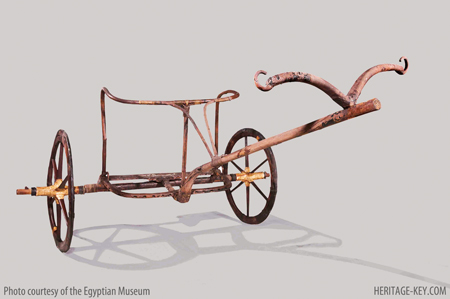
    Dr. Zahi Hawass, the charismatic Secretary General of Eygpt’s Supreme Council of Antiquities, and chief bodyguard of Egypt’s ancient treasures, likes to make revelations to the media -and he didn’t disappoint atWednesday’s press preview of the final leg of ‘Tutankhamun and the Golden Age of the Pharaohs’, set to open at the Discovery Times Square Exposition onApril 23th. He announced, with a typical flourish of portentousness, that King Tut’s chariot will be arriving in about a month to augment the exhibition, which has already toured 7 cities and attracted 7 million visitors. “It is a masterpiece that has never travelled,”…

  • sean-williams

    The Truth behind Saint George

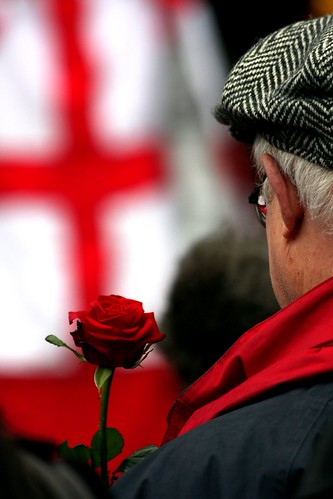
    Saint George killed a dragon, saved a princess and became the patron saint of England. Tomorrow he’ll be honoured with no small amount of flag-waving, beer-drinking and, you’d think, a fair few A&E visits. But who’s the man behind the myth, the man Shakespeare’s Henry V evoked so brilliantly at Agincourt? George – good, strong English name, right? Wrong:George was born into Christian nobility in Cappadocia, a lunar landscape in central Turkey best known for its ‘fairy chimneys’, around the middle of the 2nd century AD. In truth George’s early years are about as ephemeral as Emile Heskey’s England career,…

  • sean-williams

    Face-Off: Hadrian’s Wall ‘V’ London Wall

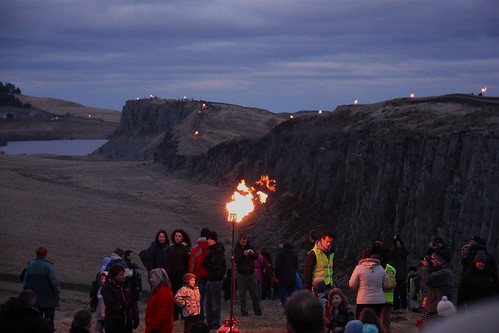
    When he arrived in Britain in 122AD, Emperor Hadrian immediately saw a problem. The Roman Empire was already stretched thinner than a Jim Davidson joke, and spreading out into the monstrous back yard of the Picts and Brigantes, two of the island’s fiercest clans, was a hassle he couldn’t afford. So rather than waste energy fighting, Hadrian set about cordoning off Britannia with an 84 mile-long stone wall, manned by thousands of soldiers with its own towns and forts. But while Hadrian’s Wall ligatured Britannia’s frozen north, the southern capital of Londinium was also at risk of attack. And while…