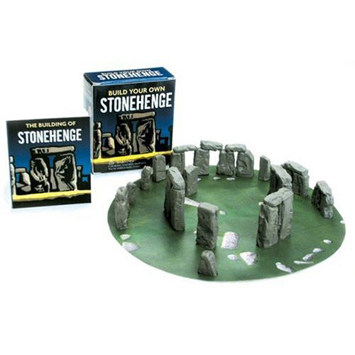
Geoff Holder is an extensively-published author with books that cover Earth mysteries, archaeology, witchcraft and a lot more. His books are an authoritative mix of extensive historical study combined with diligent field research. They are often geographically-based, with titles such as The Guide to Mysterious Glasgow and The Guide to the Mysterious Lake District. He describes himself as a Fortean, which means he’s interested in all things strange and weird, even if they’re not true. Archaeology features large in his books, with a particular emphasis on stone circles, henges and other neolithic ritual and funerary sites. His most recent book is…
-
-
As an experimental archaeologist and independent researcher, I’ve spent the last 30 years investigating the eating habits of ancient civilisations – including their ancient Christmas dinners. Here are some tips and recipes for the perfect xmas dinner that I’ve collected along the way. I use a technique that I’ve developed over the years to explore the practical aspects of the daily lives of prehistoric Europeans. The approach is based on the theory that the inherent skills and ingenuity of prehistoric European is still latent in the people of Europe today. But the skills of surviving in the northern European landscape…
-
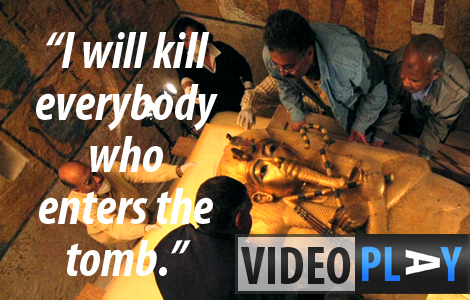
In 2008, an archaeological team found that the Tomb of Seti I (KV17) was in fact larger than originally thought. Where the original discoverer,Giovanni Battista Belzoni had found the tomb to be 100 metres long when he entered in 1817, recent archaeological excavations overseen by the Supreme Council of Antiquities’ Director Dr Zahi Hawass (You can meet Sandro and Dr Hawass at the British Museum tonight, or meet Dr Zahi at his London book signing on Thursday) have uncovered a mysterious tunnel leading from the Crypt which further extends the tomb by another 36 metres at least (Watch a video…
-
We, sitting comfortably in front of our computers here in the 21st century, a mocha-choca-frappe-latte possibly close at hand, like to complain a lot about stress. Balancing the demands of work, family, health and the full range of entertainment offered our by multi-channel digital TV package, is after all a trying daily endeavour. Its blissful to believe that life was somehow calmer and simpler in the quaint days of ancient history. But the findings of some new studies have suggested that that firmly was not the case. High levels of the stress hormone cortisol have been detected in the hair…
-
Did you know Christmas dates back to Roman times? Want to find out more? You could do worse than head down to the British Museum this Sunday (Dec 6) then, where popular children’s writer Caroline Lawrence will head up a day of Roman fun based around the ancient festival of Saturnalia, aptly named ‘A Roman Christmas‘. Visitors can get stuck into music, quizzes and prizes – and enjoy a talk and book signing from the author of Roman Mysteries, which has also been made into a CBBC series. Tickets are priced at 5 for the event which starts at 1pm…
-
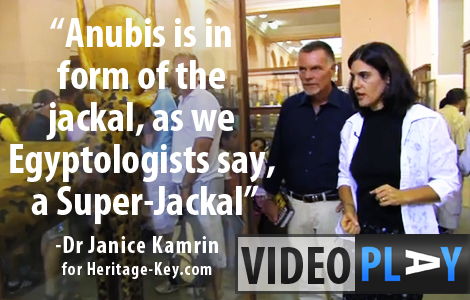
The three ritual beds of Tutankhamun are a very serious proposition, guarded by some of the ancient world’s fiercest chaperones. King Tut’sAnubis Shrine, fashioned in the seventh year of Akhenaten’s reign, was something to be carried processionally during the final movements of the king’s mummy. Dr Janice Kamrin (watch a video of Dr Kamrin exploring the lost tombs of Thebes with Zahi Hawass here) points out that Anubis “is in the form of a jackal, or as we Egyptologists like to say a ‘super-jackal’, because he’s not quite a jackal: he’s a better form of the jackal.” Anubis certainly cuts…
-
The Canopic Chest of King Tut was recently featured in a video with Dr Janice Kamrin, as she walks around the Egyptian Museum in Cairo, and explains what this beautiful artefact would have been used for (Skip to the video by clicking here). As one of the treasures of the Cairo Museum, it was photographed in stunning detail by the established Egyptology photographer Sandro Vannini, and the images are bought to the Internet by Heritage Key. Discovered in the Tomb of King Tutankhamun (KV62), it is one of several Egyptian alabaster artefacts that were found by famed explorer Howard Carter.…
-
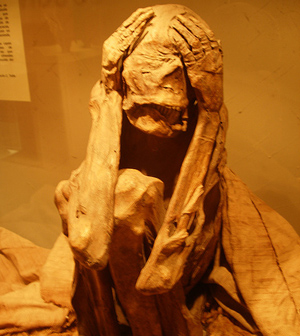
Two Swedish museums have this month returned the remains of Maori people, believed to have been removed from New Zealand in the 19th century. The remains from five different people included a skull, a skeleton, two arm fragments and a mummified hand. A traditional Maori ceremony was held at the Museum of World Culture in Gothenburg to hand over the remains. Representatives from the Museum of New Zealand Te Papa Tongarewa, the countrys national museum, and New Zealand’s Ambassador to Sweden Barbara Bridge attended. The ceremony was all about talking to the spirits and acknowledging that even though the bodies…
-
Tutankhamun, or King Tut as he’s affectionately known, was the boy king who ruled Egypt during the New Kingdom’s 18th dynasty, from 1333 to 1324 BC. In life he wasn’t the most important or memorable of Egypt’s pharoahs, but in death he’s become the one pharoah everyone’s heard of. His death at the age of 19 has been the topic of much discussion (You can watch last week’s video on the mystery of King Tut’s death here) and he was buried in the Valley of the Kings, on the west bank of the Nile near Luxor (ancient Thebes). His tomb…
-
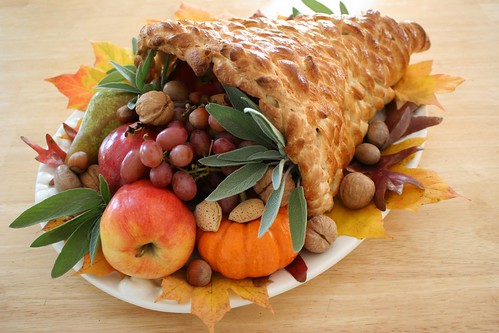
Thanksgiving is one of the most ‘famous’ American holidays known to us in Europe, and when it’s mentioned a turkey instantly springs to mind. The turkeys sacrificed to the stomach-gods during this ‘harvest festival’ might be native, but many of the other habits were brought over from the Continent. Take the cornucopia – the ‘horn of plenty’ – for example, a common symbol food and abundance all over the world, dating back to the 5th Century BC and for which we need to thank the Greeks. The cornucopia is one of the typical symbols for a harvest festival. A horn…