• sean-williams

    AWiL Video Series: Highlights of the Ancient World in London

    It’s the end of the Ancient World in London video series! We’ve travelled up and down the country getting the inside line on London’s impressive history, and we’ve seen no small number of ancient wonders along the way. So here’s a video of our best bits and what we thought of them – from the rebellion of Boudicca to the fearsome Maunsell Sea Forts. The series has been much more than the videos, though: we’ve been running bloggers’ challenges, real-world and virtual events, a pub quiz and even a special concert. Of course you can still see Stonehenge, the Valley…

  • owenjarus

    King Tut Leaves Toronto and Moves South to New York and Denver

    King Tut has left Toronto. The Tut exhibition – Tutankhamun: The Golden King and the Great Pharaohs – at the Art Gallery of Ontario wrapped up on Sunday after a blockbuster run. The final visitor total was about 400,000 people an impressivenumber but not as high as the 1979 show that drew 750,000 visitors. That show featured Tuts golden death mask, an artefact that no longer leaves Egypt. Despite the lower numbers the art gallery considers the show to be a success. “King Tut attracted 404,364 visitors, 47 per cent of whom were making their first visit to the AGO.…

  • britain

    London in the Time of the Anglo-Saxons

    At its peak during the 2nd century AD, Roman London (Londinium) had a population of up to 60,000 people and represented a thriving urban centre. But as the Roman Empire declined over the next 300 years, so too did the city. In 410, Britain was cut loose from the Empire altogether, and with it London. Troops and officials departed, and the city was left to fend for itself. Exactly what happened during the immediately ensuing phase in London’s history – which is referred to as the Sub-Roman period, and lasted from approximately 450 until 600 AD – is mysterious. A…

  • publication

    The Code of Hammurabi

    ‘The Code of Hammurabi’ is a well-preserved ancient law code, created circa 1760 BC in ancient Babylon. It was enacted by the sixth Babylonian king, Hammurabi. The stele containing the Code of Hammurabi was discovered in 1901 by the Egyptologist Gustav Jéquier, a member of the expedition headed by Jacques de Morgan. The stele was discovered in what is now Khuzestan, Iran (ancient Susa, Elam), where it had been taken as plunder by the Elamite king Shutruk-Nahhunte in the 12th century BC. It is currently on display at the Louvre Museum in Paris. Wildside Press (18 Feb 2009)

  • malcolmj

    Stone of Destiny Replica Stolen and Dumped by Thieves

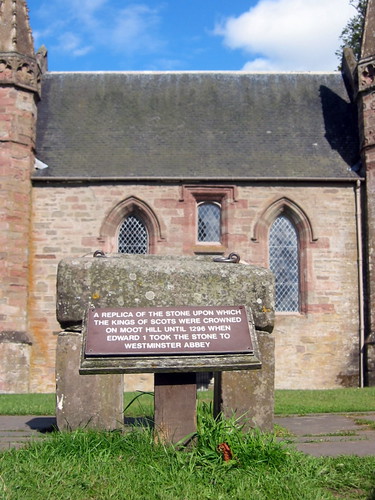
    Police in Perthshire, Scotland are investigating the theft and prompt abandonment of a replica of the Stone of Destiny the battered, iconic, controversial and well-traveled symbol of Scottish royalty from outside Moot Hill Chapel at Scone Palace in Perthshire, by a seemingly ill-informed criminal gang. The real stone which itself has twice been stolen in the past, once from its original spot at Scone by King Edward I of England in 1296 and once from Westminster by a group of Scottish students in 1950 (they later gave it back) resides at Edinburgh Castle. It is said to be the seat…

  • rebecca-t

    Beltane Fire Festival: Naked Dancing Permitted, Wicker Man Sacrifices Now Banned

    Tomorrow, a happy collection of hippies, druids and general revellers will climb up Calton Hill in Edinburgh to celebrate the ancient festival of Beltane. In my experience, the festival is a positive, celebratory, and quite spectacular event with near-naked hippies sporting all-over body paint and leaves and dancing around fires, drinking warm cans of cider. There are drums hundreds of them, practically making the whole hilltop vibrate and hypnotic chanting. Revellers express their joy and drunkenness much in the same way as they do at Hogmanay by dancing around on the spot outdoors, and kissing passing strangers. Its a good…

  • sean-williams

    May Day’s Pagan Roots (and why Anti-Capitalist Protesters Have Got it all Wrong)

    It’s May Day this Saturday. And while to most of us all it means is an extra day off work, to some it’s one of the year’s biggest dates. A menagerie of anarchists, anticapitalists and fairweather philosophers will descend on London intent on burning down burger bars and breaking the system. But among the madness and the rolling news stories, most of them won’t realise they’ve hijacked an ancient festival going back thousands of years – and they’ve all got it hopelessly wrong. May Day today is the sibling of International Workers’ Day, an anti-establishment bash dating back to the…

  • owenjarus

    Raos Excavation on Santorini Reveals Frescoes and Gold Ring

    The story of Bronze Age Santorini (Thera) is one that has become a legend. Located between Crete and mainland Greece, this island supported a thriving civilization that reached its peak between 2000 1600 BC. Its main city, Akrotiri, had its own naval fleet and had trade connections throughout the Aegean and Near East. Its people produced beautiful frescoes thatdepicted everything from boxing matches toshipsand even antelopes. This civilization came to an abrupt end at some point in the late 17th century BC, when Akrotiri was devastated by earthquakes, causing the people to flee. Shortly thereafter a massive volcanic eruption occurred,…

  • sean-williams

    ‘Noah’s Ark’ Discovery: Views from the Blogosphere

    ‘Evangelist explorers’ called Noah’s Ark Ministries International, (a name half-Orwell, half Playdays), search for the legendary vessel. Said explorers then ‘discover’ the ark up a Turkish mountain. Naturally not everyone welcomes the news without a hint of skepticism, and the blogosphere’s been buzzing with hoax stories, images, background info and videos – one of which you can see right here. So here’s a snippet of what the web’s been saying about this ‘breakthrough’ – Hot From NIMA The NIMA site itself gives little more than a few newspaper cut-outs (nearly all in Chinese) and an expedition timeline. Quote:March 2010 –…

  • sean-williams

    Noah’s Ark Discovered on Mount Ararat in Turkey?

    A Chinese-Turkish group of explorers have announced their discovery of Noah’s Ark, 4,000 metres up a mountain in eastern Turkey. The team, named Noah’s Ark Ministries International (NAMI), claim to have taken photographic and physical evidence of the remains on Mount Ararat, near the Turkish-Armenian border. The ‘evangelical explorers’ even say they have carbon-dated the ‘ark’ to around 4,800 years, bringing it in line with most historians’ views on the Biblical flood story. The group, comprising 15 adventurers from Hong Kong and Turkey, have also shown reporters wooden fragments, rope and nails they claim to have brought from the wreckage.…