• helen-atkinson

    Tutankhamun Curator David Silverman Defends the Controversial King Tut Exhibit

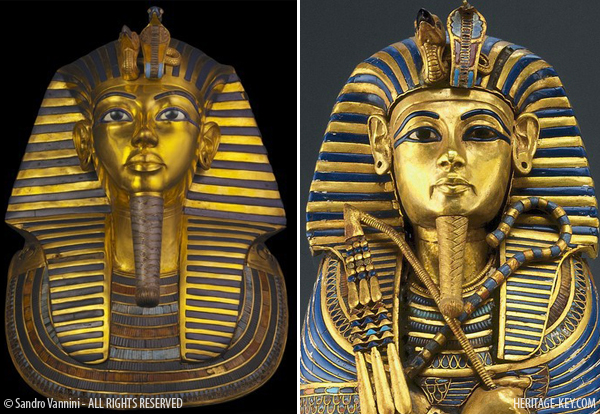
    Dr. David Silverman is delighted at the thought that visitors to Tutankhamun and the Golden Age of the Pharaohs, one of two King Tut exhibitions touring North America right now, would come away as I did – with an itching interest in Akhenaten, who was almost certainly King Tuts father. Hes also enthused at the idea that viewing the vast exhibition at the Discovery Time Square Exposition, with 130 significant objects from King Tuts tomb and the 100 years preceding the boy kings life, will spur people to go take a look at King Tuts funerary urns up at the…
  • images

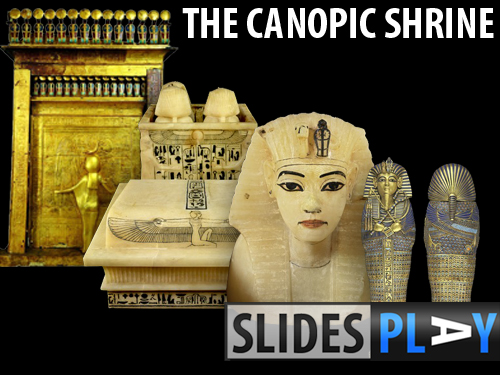
    Sandro Vannini’s Photography – King Tut’s Canopic Shrine

    Several alabaster artefacts were discovered inside the Tomb of King Tutankhamun (KV62) by Howard Carter when he began excavating the tomb in 1922. The Canopic Shrine was one of the intruiging discoveries for how packed together it was, with a box containing several artefacts in a manner comparable to a Russian doll! The Canopic Shrine is a large gilded wooden box flanked by a Canopy and supported on a sledge. Inside the shrine was the Canopic Chest, which has four hollowed spaces inside which are sealed by Human-Headed Stoppers. Inside the hollows were four small Canopic Coffinettes. ‘Canopic Shrine’ Slideshow…

  • owenjarus

    New Egyptian Gallery in Kansas Museum Features “Virtual Reincarnation Machines”

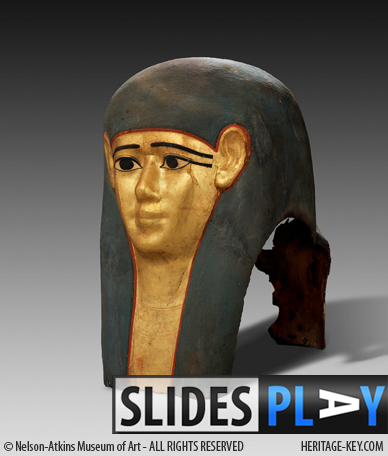
    The Nelson-Atkins Museum of Art in Kansas City has just opened a new Egyptian gallery that features the coffin, cartonnage and shabtis of an Egyptian noblewoman who died around 2,300 years ago. Her name was Meretites which means beloved by her father. Her funerary artefacts date to some point between 380-250 BC. This date means that she may well have been contemporaneous with Alexander the Great and witness to a remarkable period of Egyptian history. Alexander the Great advanced into Egypt in 332 BC, taking over power from the Persians. He would go on to conquer an empire that stretched…

  • sean-williams

    Barkay: Stop ‘Barbaric’ Temple Mount Digs

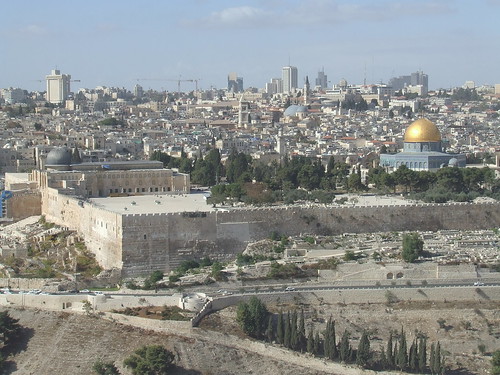
    A top Israeli archaeologist claims ‘barbaric’ Muslim digs are stripping Jerusalem’sTemple Mount of its Jewish heritage. Dr Gabriel Barkay, of BarIlan University, has likened Israel and the West’s denial of the site’s Jewish history to that of the Holocaust, and has warned that thousands of years of history could be lost if authorities do not step in soon to prevent more damage at the hands of the controlling Islamic Wafq council, who he says have been dumping vital archaeological material miles away as waste. “(It is) the most important archaeological site in Israel, and despite all this, Israel has abandoned…

  • owenjarus

    Could Djedefre’s Pyramid be a Solar Temple? Not According to New Research by Baud

    Dr Michel Baud of the Louvre Museum in Paris gave an interesting lecture last week about his excavations of a pyramid at Abu Roash. The monument was badly preserved and its stone had been quarried in Roman times, but the certain details, such as its apparent solar connections, were still discernable. Earlier, Vassil Dobrev stated that the pyramid may actually be a solar temple. However, Baud dismisses these claims…. Nearly 4,500 years ago, in the time of the Old Kingdom, the pharaoh Khufu built one of the greatest monuments on earth – the Great Pyramid. His pyramid was actually a…

  • sean-williams

    Pagan Police Officers Get Days Off For Solstice Festivals

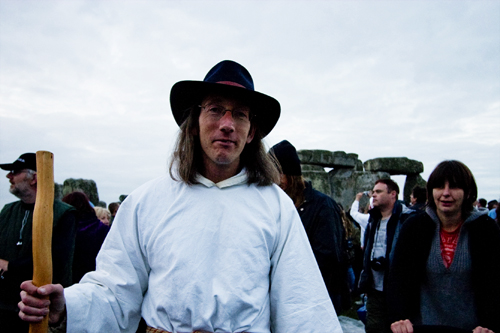
    Britain’s pagan policemen and women have been given the right to take time off to celebrate their ancient festivals. The Pagan Police Association (PPA) has been recognised as a ‘diversity staff support organisation’ by the Home Office, a move which has polarised the force. The PPA is thought to have up to 500 members, including Wiccans andDruids. Co-founder Andy Pardy has hailed the group’s progress, which will see members allowed time off to observe dates like the recent Beltane Fire Festival and Spring Equinox at Stonehenge. “The recognition of paganism is a slow process, but the progress is evident,” he…

  • site

    Parthenon of Athens

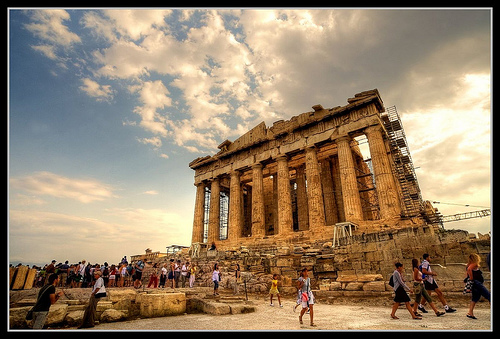
    Attribution: Lluís Sala Athens Greece Key Dates The first Parthenon on the site dated back to 570 BC. The existing Parthenon was built between 447 and 438 BC to replace Parthenon II. In the 5th century it was transformed into a church, before becoming a mosque under Turkish rule in the 1460s. The building was attacked and almost destroyed in 1687 during Morozini’s siege of the Acropolis. Lord Elgin caused more damage when he looted it in the 19th century, subsequently selling much of its contents to the British Museum. The Parthenon underwent restoration from 1896-1900 and from 1922-1933. A…

  • owenjarus

    Coptic Symposium in Toronto to Reveal Ancient Egyptian Graffiti

    What can graffiti tellus about ancient cultures?That’s just one of the questions being explored at a Coptic Studies symposium to be held on May 29 at the University of Toronto. Coptic refers to the branch of Christianity that spread to Egypt as early as the first century AD. It also refers to a writing system that was in use from that time until present day. The symposium is being organized by Dr. Ramez Boutros of the University of Toronto. Dr. Boutroshas been in the news recently as part of the team that recently discovered a third church and tons of…

  • egypt

    Dendera Zodiac: The World’s First Horoscope?

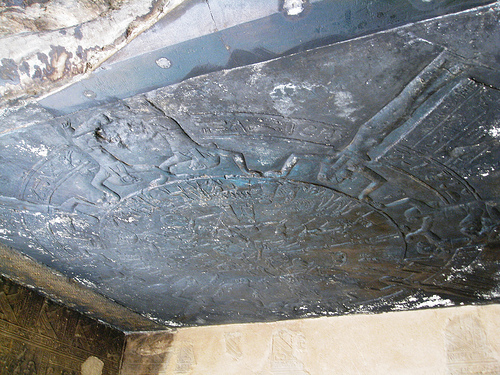
    One of the most famous, popular and mysterious ancient Egyptian treasures of the Louvre, the 2060-year-old Le zodiaque de Dendéra – the Dendera Zodiac – has witnessed more than its fair share of controversy over the centuries. Stripped from the portico of a chapel dedicated to Osiris at the Hathor Temple at Dendera in 1820, then shipped to Paris, the beautifully carved bas-relief played an unlikely role in fierce disputes over science and faith in Napoleonic and Restoration France. Today, the zodiac continues to spark debate. As the first known depiction in history of the classical zodiac of twelve signs,…

  • malcolmj

    Mummy Chamber Exhibit Now Open at Brooklyn Museum

    in New York holds one of the largest and most famous collections of Egyptian material in the world. Today, it opens a brand-new, long-term exhibition gathering together 170 pieces from within its Egyptian collection titled The Mummy Chamber. Its an exploration of the many complex ancient Egyptian afterlife rituals and beliefs, which were all intended to protect a deceased soul from harm once they passed-on, and ensure a pleasant experience on the other side. It covers everything from mummification to the placing of votive goods in burial chambers. Organised by the Brooklyn Museums Curator of Egyptian Art Edward Bleiberg, The…