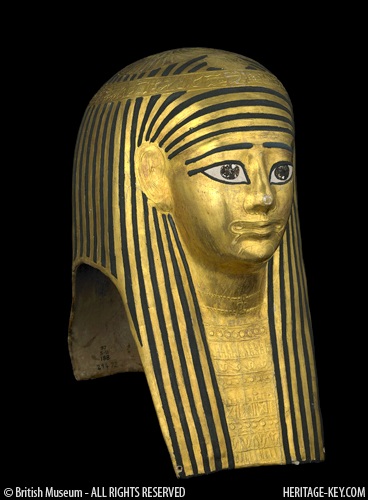
The British Museum’s upcoming exhibition, “Ancient Egyptian Book of the Dead” is set to open on 4th November 2010 and a video posted on the British Museum’s Youtube channel gives a teaser to one of the artefacts which will be a part of the show. The quick video shows the cleaning of Nesbanebdjed’s wooden mask from his coffin in the museum’s Organic Conservation laboratory, which will be one of the pieces on display when the exhibition opens this Autumn. The star of the show will doubtless be the beautifully illustrated papyrus and linen works depicting the journey from death to…
-
-
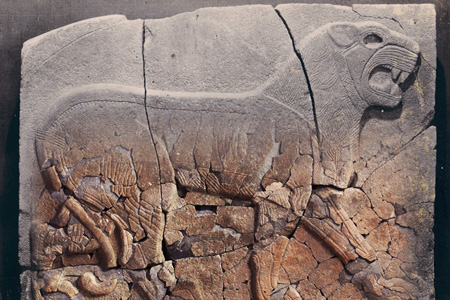
After nine years of shifting through WWII bombing debris, restoration experts have puzzled back together over 30 Aramaean sculptures and reliefs. Watch the slideshow. When in November 1943 an air raid on Berlin destroyed the Tell Halaf Museum and its contents, it was thought one of Germany’s most important Near Eastern collections was lost forever. A year later more than 27,000 fragments were recovered from the museum’s ruins and taken to the cellars of the Pergamon Museum for storage. Luckily, archaeologists never throw something away. Restoration of the 3000-year-old sculptures and bas-reliefs eventually started in 2001. Now, after almost a…
-
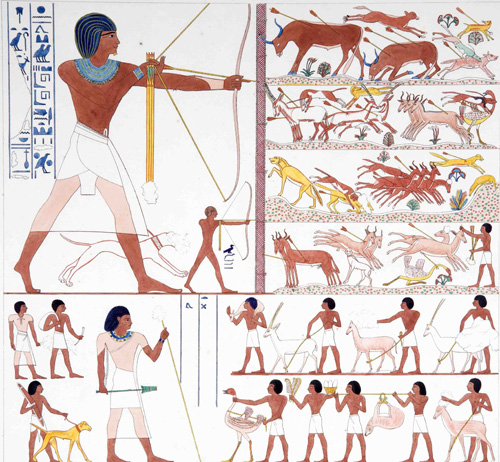
An unpublished manuscript, written by 19th century Egypt explorer Frdric Caillaud, has been discovered and it points the way to a 3,500 year old tomb of an Egyptian official. It is called Arts and Crafts of the Ancient Egyptians, Nubians and Ethiopians. It iswritten in French and illustrated with drawings. The American Research Center in Egypt (ARCE) is in the process of translating and publishing it. The work is being led by Dr. Andrew Bednarski. He gave a lecture and interview recently in Toronto, and provided me withsnippets from the bookand pictures ofthree of the drawings. Frdric Caillaud was one…
-
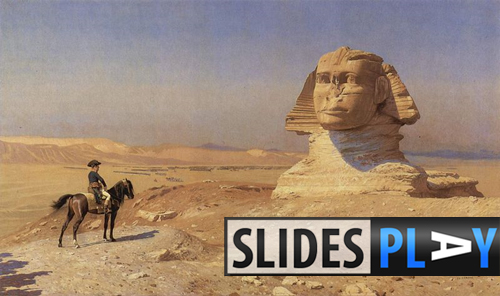
The Great Sphinx of Giza is one of the world’s largest and oldest monuments, and isn’t without its mystery. Theories fly around regularly about whether there are secret tunnels or hidden halls under the Sphinx, which Dr Zahi Hawass, currently starring in the ‘Chasing Mummies‘ series, insists is not the case in this Heritage Key video (Watch the Video). But my question is much more simple – Whatever happened to the nose of the Great Sphinx? In a previous Heritage Key article, “Riddle of the Sphinx”, Robert Cook wrote about the legend that Napoleon’s troops used the Sphinx’s nose as…
-
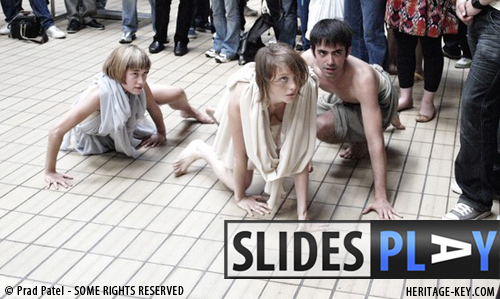
It was with odd reluctance that I took the hand of a pretty young girl in Room 17 of the British Museum on Saturday afternoon as she dragged me to the opposite side of the hall containing the stunning Nereid Monument, but through her broken English, she assured me I wasn’t about to meet my maker as she placed me in position in a crowd slowly forming a circle. I’ve visited the British Museum in Bloomsbury, London countless number of times, but I’d never seen what was about to happen next. It took me a moment to realise the girl…
-
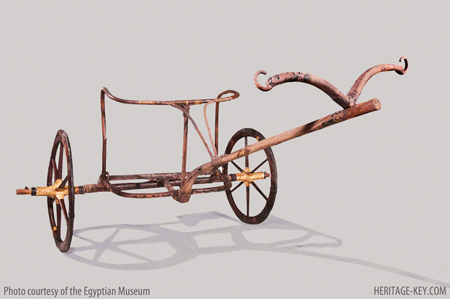
News that King Tut’s chariot will leave Egyptto join the final leg of the ‘Tuankhamun and the Golden Age of the Pharaohs’ exhibition in New York its first trip abroad has been confirmed by an SCA press release. In the same release Dr Hawass and his team say they continue to stand behind the findings published in JAMA earlier;King Tut died of complications from malaria and Kohlers disease. Mr. Farouk Hosni, Minister of Culture, confirmed that one of King Tuts chariotsis travelingto New York City, the first time that a chariot from Tutankhamun’stomb will be allowed out of Egypt. The…
-
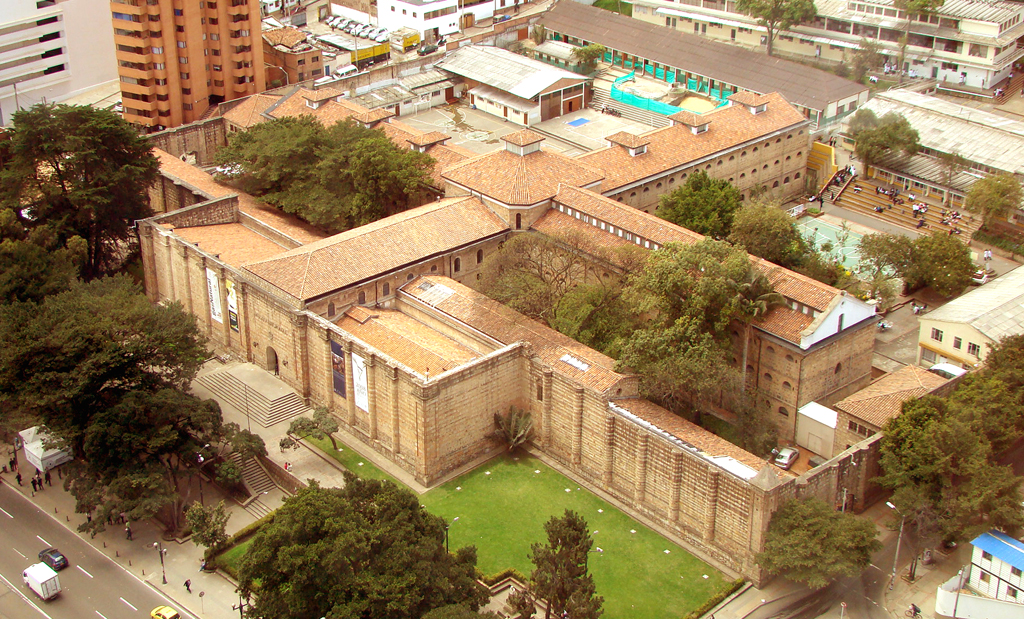
Attribution: Wikimedia Commons Key Dates The museum was founded in 1823. Bogotá Colombia The Colombian National Museum is the largest in Colombia, and is located in a huge building complex in the capital city Bogotá. he building itself was constructed in 1823, and was based on the Panopticon, an Orwellian prison devised by 18th century British social philosopher Jeremy Bentham (whose ‘mummy’ now resides in London’s UCL). The museum’s collections number over 20,000 pieces spanning thousands of years of Colombian and pre-Colombian history, from 10,000 BC to the 20th century. 2,500 items are on display at the museum, whose departments…
-
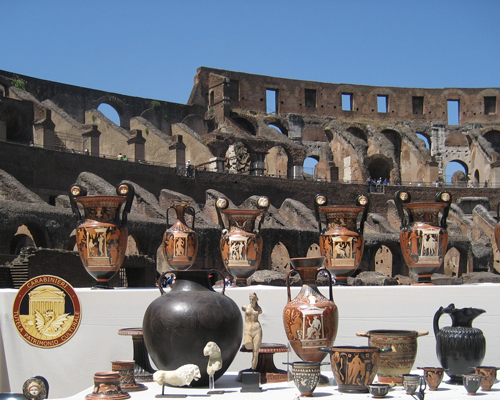
More than 300 looted antiquities, estimated to be worth more than EUR15 million, were displayed to the press this morning in Rome, having been repatriated to Italy after they were discovered in a warehouse in Switzerland. It was a scene slightly reminiscent of a Victorian detective novel, in which the robber and his looted candlesticks is unveiled before an impressed gathering of country house guests. Only today’s unveiling took place inside the Colosseum rather than on the pages of a 19th century novel and while there was no criminal present, there was plenty of loot, which consisted of objects such…
-
A unique piece of 4,500-year-old rock art has been unearthed in the Cambridgeshire village of Over. The prehistoric slab of sandstone is unlike anything previously found in Eastern England. The hand-sized neolithic artefact, which possible dates back as far as 2,500 BC, was found at Needingworth Quarry by Open University student Susie Sinclair. Intothe stone’ssurface, two pair of concentric circles are etched, typical of late Neolithic ‘Grooved Ware’ art. Researchers do not know if the motif represents a type of meaningful art, or if it is nothing more than Neolithic doodling. Examples of similar Grooved Ware art have been discovered…
-
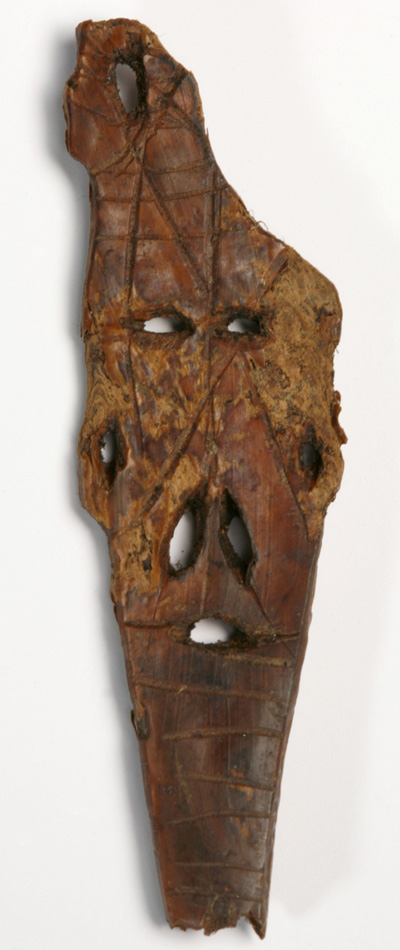
The Tunit made our country habitable. They built the line of boulder cairns that guide caribou to the river-crossings where they can be ambushed by hunters, and they furnished the rivers with fish-weirs. An Inuit story, from Ancient People of the Arctic by Dr. Robert McGhee Today archaeologists believe that the Tunit, who are mentioned in Inuit stories, flourished in the arctic during ancient times, vanishing around the 14th century AD. Archaeologists first encountered their remains in 1925 at a place called Cape Dorset on Baffin Island. They gave them the name Dorset culture, a term that is still used…