
Earlier this year, an astonishing Roman cavalry helmet was discovered in Cumbria. The helmet found complete with face mask is only the fifth known example discovered in the United Kingdom. Next month, the parade helmet will go on auction at Christie’s London, with Carlisle’s Tullie House Museum as one of the eager bidders for the 200,000 artefact. Crosby Garrett Helmet Discovery The helmet was discovered damaged it was broken in 67 pieces but near-complete by a metal detectoristat Crosby Garrett in Cumbria, in May 2010 (images of the headpiece in its discovery state can be seen on the Portable Antiquities…
-
-
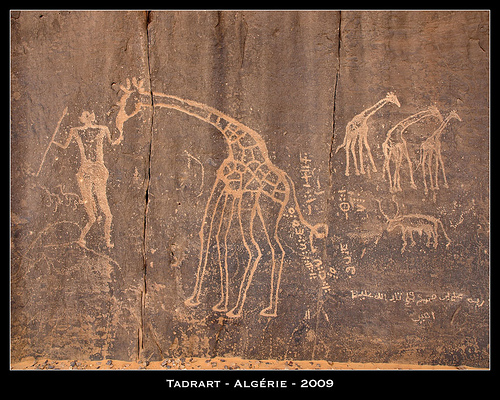
Attribution: jpmiss Sahara Desert Algeria Key Dates The earliest prehistoric paintings probably date to 9000 BC. The prehistoric rock paintings of Tassili n’Ajjer in the Sahara desert in Algeria, probably date from 9000 BC on. They were made during a period when the climate was wetter than now and the Sahara was closer to savannah than desert conditions, and therefore able to support greater human occupation as is evident from finds of stone tools and ancient rubbish heaps as well as the rock art itself. The rock art can be classified into the following periods: the Bubalus period (from c.9000 BC), the Roundhead period (c.6000-4000 BC),…
-
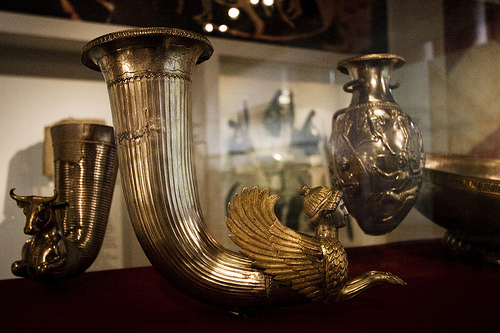
Attribution: Ann Key Dates 350 BC Key People King Kotys I The Borovo Treasure was accidentally discovered in 1974, when a field about 2 kilometres from the village of Borovo, Ruse (Bulgaria) was ploughed. Sadly, the plough machine’s cutting implements severely damaged the five silver artefacts, but thanks to great restoration work, nowadays their ‘scars’ are nearly invisible. No tumulus was found at the location, and why the silver treasure was buried here remains a mystery. The Borovo Treasure is a luxurious five-vessel silver gilted drinking set – decorated with gold. It consists of three rhytons (ending in the protomes of…
-
In a conversation with Heritage Key (HK), Paul Denis (PD), the curator of Fakes & Forgeries Yesterday and Today, a newly announced exhibit at the Royal Ontario Museum, talks about how fake ancient artefacts are affecting the museum world. Among the things discussed are: -The emergence of ancient Greek coins as a new hot area for fraudsters. -Why the internet is an awful place to acquire artefacts. -How curators (with a little scientific help) pick out fakes. He also shares some interesting news: of the hundreds of Zapotec artefacts his museum has, about 50 percent are forgeries. He explains how they got duped on such a grand scale.…
-
Organized by Filippo Coarelli, the exhibition – whose full title is Divus Vespasianus: the Capitoline Hill and Egypt in the Flavian era – illustrates the major building projects that Vespasian was responsible for on the Capitoline hill, including the reconstruction of both the Temple of Jupiter Capitolinus and the Temple of Isis that had been elevated to public sanctuary status. The entire exhibition pivots around the key role played by Egypt under Vespasian and his sons, and their particular devotion to eastern divinities, which wasn’t limited to buildings on the Capitoline Hill, as the reconstruction of the ancient Iseo on…
-
Museums across the world are participating in the “Ask a Curator” event, which uses social networking service Twitter to let the public ask questions to the people curating some of the biggest cultural establishments across the globe. With over 300 experts participating in 23 countries, you can find out the answer to all those questions you may have been wondering regarding the behind-the-scenes runnings of a museum, such as how big those hidden basements full of artefacts (Check out the Basement of the Cairo Museum in this Video) really are, and how does a museum decide what exhibitions to put…
-
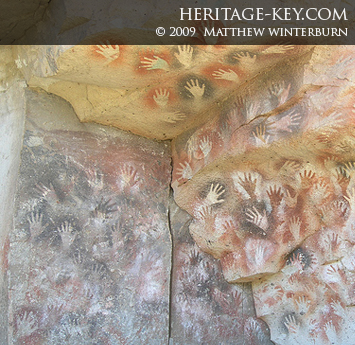
Cave art is the oldest example of non-portable art in history, and dates back in some cases as far as 32,000 years. It can be found painted, scratched, etched, smudged and pecked onto the walls of caves all over the world, on almost every continent. Here we examine ten of the most famous sets of examples yet discovered. Bhimbetka Rock Shelters, India The spectacular Bhimbekta rock shelters in Madhya Pradesh, central India, contain the oldest traces of human life in the region. The vast selection of cave paintings and other forms of rock art found within them are the first…
-
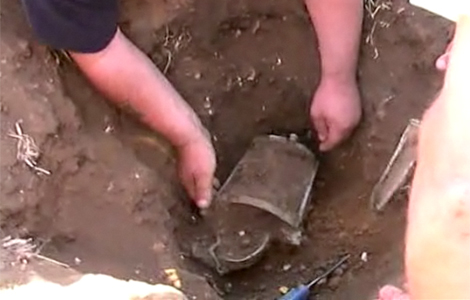
The only complete example of a Roman lantern to have been found in Britain was discovered in Autumn 2009 by a metal detector user. Danny Mills found the large bronze object whilst scanning a field near Sudbury, and immediately notified the discovery to the Suffolk Archaeological Unit. The find is significant as only fragments of similar lanterns are held at the British Museum, and the closest complete example was excavated in Pompeii. The interest in the lantern even earned it a feature in the BBCseries “Digging for Britain”! The Roman lantern dates from between 43-300AD, and is similar to a…
-

After a successful stay at the Peabody Essex Museum, ‘Fiery Pool: The Maya and the Mythic Sea’ opens this weekend at Forth Worth’s Kimbell Art Museum. The exhibition offers a new interpretation of the ancient culture, beyond the traditional view of the Maya as a land-based civilisation. Expect supernatural crocodiles breathing forth rain; cosmic battles taking place between mythic beasts and deities; and art works adorned with shark teeth, stingray spines, sea creatures and waterfowl all part of the new and vivid picture the exhibition paints of the Maya world view: the Maya did not just navigate river and streams,…
-
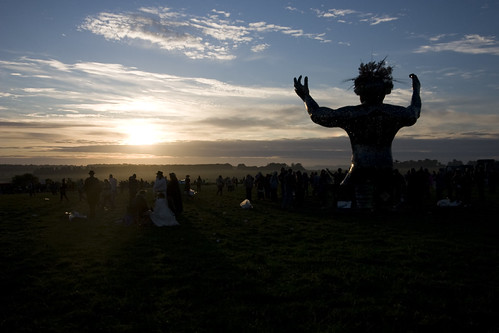
Comparing Stonehenge Summer Solstice 2010 with 2009, it seems that the ‘Ancestor’ really stood out as something different. Each year there are small ‘arts & crafts’ performances (dance, live music, jugglers, …) but this year a massive 20ft steel sculpture was the guest of honour at Stonehenge, marking a significant change – a statement that the future and the now is just as important as the celebration of the summer solstice and the past, the ancient megaliths and the remembering of ancestors. So it seemed appropriate to kick-start this picture report with the statue – appropriately dubbed ‘The Ancestor’ – reaching out…