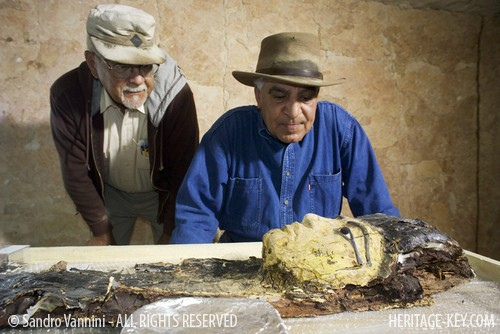
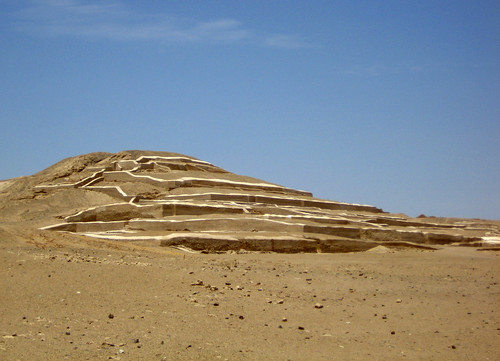
The mummy of a young Nazca priestess has been discovered in the ancient city of Cahuachi, Peru. Italian archaeologist Giuseppe Orefici, director of the Nazca Project, made the startling find in a mini-temple between the mysterious metropolis’ Great and Orange Pyramids. The 300-450 AD woman had been buried beneath ropes and reeds, and covered in finely-woven fabrics with killer whale pattern. Several obsidian arrow heads had also been worked into the weave. The young woman’s face had been painted, and an extra vertebra added to her back. Her arms were also deformed – possibly as a result of having had…
-
-
Heritage Key takes a trip to explore the British spirit of adventure, where we’ll be meeting with Lord and Lady Carnarvon at Highclere Castle . We are shooting some new video that will dig deeper into information about the man who funded Howard Carter’s work as well as the history of the incredible castle itself. We hope to be able to share new images and more insight into the tomb paintings and key artefacts of King Tut. Let us know if you have any questions – You might get them onto the video. You can use the comments box below,…
-
The recent reopening of Berlin’s Neues Museum has brought back into the limelight one of the ancient world’s greatest treasures. Yet as Thutmose’s masterful Bust of Nefertiti takes centre stage in Germany’s latest collection, the woman behind Egypt’s most famous sculpture remains a conundrum. Heresies, lost kingdoms and mysterious kingships have made Nefertiti more than the ‘most beautiful woman in the world’. But who was she, and how did she become one of the greatest leaders in Egypt’s history? Nefertiti’s origins are a mystery. Born some time around 1370 BC, theories abound that she was the daughter of army general…
-
I have been interested in history since I was a child and love to share my interest through my photography. Over the years, I have shot thousands of pictures of historical art and architecture at archaeological sites and in museum galleries around the world and uploaded them to Flickr for other history enthusiasts, teachers, and researchers to enjoy and use in their educational activities. If you would like to do the same, you may find some of the following tips helpful. Photography in Museums and Galleries Many museums allow photography of artwork in their permanent collections. However, few museums permit…
-
The Society for the Study of Egyptian Antiquities, and the Royal Ontario Museum,kicked off a three day symposium in Toronto. Im going to be filing more detailed blogs at the end, once I have the time to do a proper write-up of all the research. For now here are some news-briefs that I want to fill you in on. –The Seila Pyramid is flat! No it is not a step pyramid. It is a true pyramid. Professor Kerry Muhlestein of Brigham Young University, presented the latest research. A team of engineers, using GPS equipment, completed a3D model of the pyramid…
-
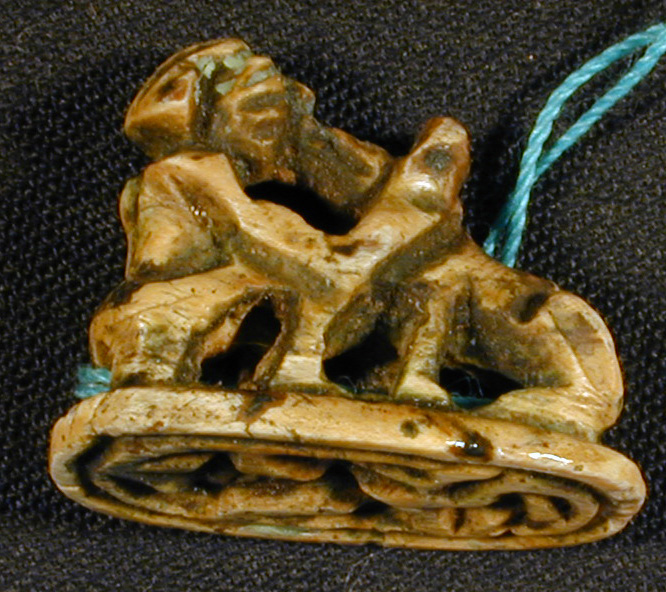
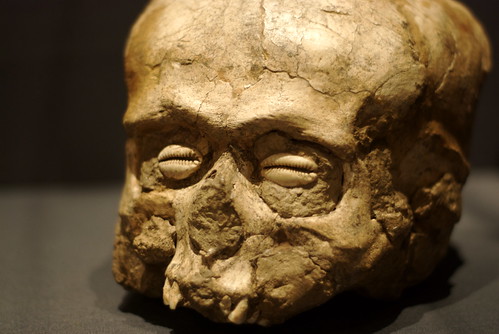
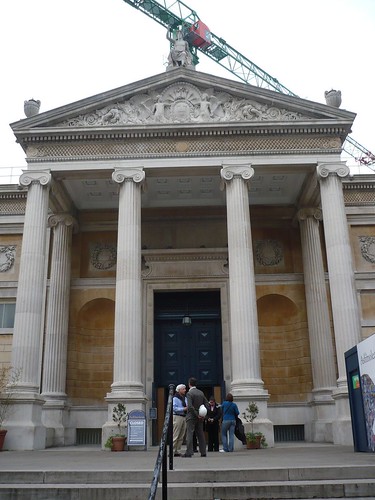
The oldest museum in the world, opens its doors to the public after a mammoth five-year revamp tomorrow. And the curators of Oxford’s famous Ashmolean will be hoping a new 61million building will help visitors enjoy and understand an envious collection of artefacts from the cradle of civilisation onwards. The collection certainly has an esteemed pedigree, having been added to by archaeological greats like Arthur Evans, discoverer of the Palace of Knossos in Crete. So on the eve of one of its biggest days, what are the Ashmolean’s best objects? 1. The Jericho Skull This skull, from 7,000 BC Jericho…
-
The oldest museum in the world reopens its doors tomorrow, after a mammoth five-year revamp. Oxford’s Ashmolean Museum has enjoyed a 61million cash injection into its ageing building, recasting all but its Victorian Cockerell building facade. Rick Mather’s new creation allows the museum’s myriad treasures much more space, adding 39 galleries and 10,000sq metres of exhibition space. The museum, founded in 1683, has been closed to the public since December last year, as the final pieces have been put in place. Funding has come from a number of high-profile sources, including the Heritage Lottery Fund, Linbury Trust (Lord Sainsbury’s charity)…
-
Athree day Egyptian symposium starts, in Toronto,in a matter of hours. The Scholars’ Symposium (or Scholars’ Colloquium) is curated by The Society for the Study of Egyptian Antiquities (SSEA), and brings together a stella lineup of speakers. Todays session will be at the Royal Ontario Museum, and tommorows will focus on Egypt and the Bible and willbe held on the University of Toronto campus. The temperature is hovering at around 0 degrees celcius – not exactly what you would find at Giza! As I talked about in previous posts an update on research in the Sinai desert and at the…
-
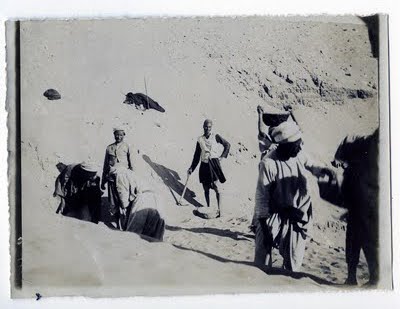
Amidst the charming Victorian cases of jewellery along the walls of the larger room in the Petrie Museum is the Framing the Archaeologist exhibition (follow their blog here); a series of framed photographs from 1880 1900 categorised into excavation sites of Petrie; Giza 1800-1883, Delta sites 1883-86, and Al Arabar Al Madfunda (Abydos) 1899-1900. Each framed image is accompanied by a quote from a contemporary report or letter, giving some insight into the people depicted and their activities. One of the first pictures in the exhibition is the fabulous image of a young Petrie leaning casually against the wall of…
-
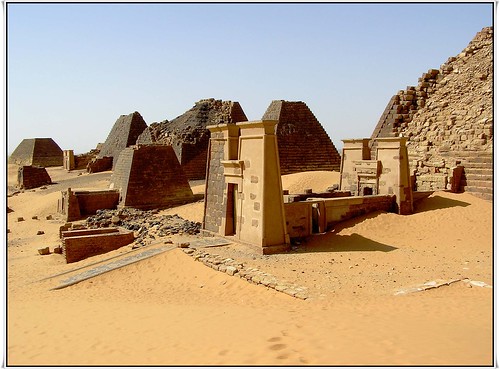
The Nubians get short shrift when it comes to recognition of significant ancient cultures. A new exhibition at the Clay Center in West Virginia, US, hopes to rectify that. It is cleverly entitled: Lost Kingdoms of the Nile, but the artefacts are all Nubian, not Egyptian. (The subtitle is: Nubian Treasures from the Museum of Fine Arts Boston.) The exhibition runs from Sept. 12, 2009 to April 11, 2010. Part of the problem for the Nubians, of course, is the rock-star quality of their neighbors, the Ancient Egyptians, who persistently dominate the imaginative landscape when it comes to ancient things.…