It may not come as much of a relief to the tens of thousands stuck in airports across the world, but Wednesday’s Eyjafjallajkull eruption in Iceland is smallfry compared to some of the ancient world’s most destructive episodes. Women in China’s Yunnan Province are still suffering huge mortality rates from lung cancer today, for example, from coal formed after Siberian eruptions five million years ago. Here are four more ancient eruptions that changed the world. Lake Toba Eruption, c74,000 years ago The Toba Explosion is one of the most mysterious events in human history. Occurring some 69,000 – 77,000 years…
-
-
The Museum of London Docklands (MoLD) is free to visit today, after its admission was dropped to bring it in line with London’s many free museums. The museum, which covers 2000 years of London’s port history, had charged 5 for adults and 3 concessions, but hopes to increase visitor numbers after today’s news. The MoLD will now join the pantheon of London museums with no entry charge, that includes the British Museum, Petrie Museum and the Victoria & Albert Museum. Entry to national museums in Britain was made free in 2001, a move which instantly bumped attendance figures up by…
-
Astronomy rarely leaves today’s headlines, be it the latest shuttle exploring the limits of our galaxy, or feverish paranoia over the Maya Doomsday Prophecy. Man has always been obsessed by the stars, and since our humble beginnings we’ve always gazed up at night, asking the same questions those tens of thousands of years ago have. We caught up with famed astronomer Paul Murdin at a special Ancient World in London event a month back, as he gave a talk about his book Secrets of the Universe. And as Paul describes, astronomical observations have been made for longer than we may…
-
The likes of the British Museum, Louvre and Metropolitan may get the lion’s share of publicity, artefacts and controversy, but small museums are the staple of any dedicated culture lover. And while meandering through the interweb I came across Brooklyn’s Living Torah Museum, one of New York’s quaintest collections. While its illustrious downtown neighbours are afforded giant beaux arts buildings, the Living Torah Museum is in a private home in Borough Park, 1601 41st Street. Its surroundings may not be as epic as most museums, but its collection is not to be sniffed at: since its inception curator Rabbi Shimon…
-
According to Thesaurus.com, ‘moo-juice’ is a valid synonym for milk, a term soon to enter my local pub’s lexicon. I was trying to find something snappy for the title of this blog, on one of the best ancient myths I’ve ever heard. ‘Mad’ will do. Our next Ancient World in London video homes in on ancient astronomy, featuring famed astronomer Paul Murdin. Paul gave a special HKlecture on his book Secrets of the Universe last month, catching up with me afterwards for a chat on camera. And while the 25,000-year-old Ishango Bone might just be my favourite-ever ancient artefact, a…
-
While creating the next instalment of our Ancient World in London video series on ancient astronomy, we came across an odd little artefact called the Ishango Bone. Exotic-sounding, it’s little more than a knobbled baboon’s fibula, but the 25,000-year-old notches along its length are much more than a caveman’s conquests. Discovered in the then-Belgian Congo by Jean Heinzelin de Braucourt in 1960, the bone was first thought to be around 10,000 years old. Yet later tests pushed its date back another 15,000 years, around 20 millennia before the first-ever civilizations sprang from the Middle East. Today it remains on display…
-
London is under attack! But don’t be alarmed, this is no April Fool: London’s always been under attack. For over two thousand years the city has been invaded, burnt, bridged and bombed. But while Boudicca, Caesar, Cnut and Hitler have been some of the city’s biggest enemies, today it’s the turn of climate change to have London scrambling her defences with the impressive Thames Barrier. Today the barrier’s iconic row of ‘sandals’ protect over a million Londoners from the perils of El Nio. But it’s just one of the places we visited as part of our defences tour down the…
-
Each year up to 40,000 pour into Stonehenge for the Summer Solstice, banging drums, singing songs and generally having a wild time (here’s a guide on taking photographs at Stonehenge). But it’s just one of four times each year that the stone circle is open to the public, the other three being Winter Solstice and the Spring and Autumn Equinoxes. While some see it as a chance to get up close and personal to one of the world’s best-known landmarks, or just to have a party, to others Stonehenge is a spiritual centre, an ethereal round table from which to…
-
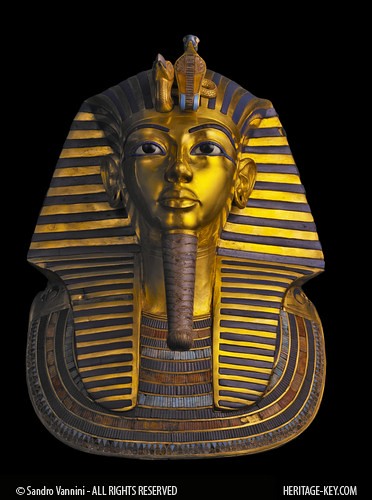
When I’m strolling through the British Museum’s Egyptian Sculpture Gallery taking in its ancient statues, stelae and scriptures, it’s hard not to think something’s missing. For among its rows of exotic artefacts, nothing on display relates to Egypt’s most famous king in modern times, Tutankhamun. And I think Britain deserves to have kept hold of at least some of the ancient world’s greatest pieces. Firstly I think I need to set the record straight: I’m not some postmodern British colonialist, sipping on Pimm’s while the servants polish my Blunderbus. Tutankhamun’s discovery was made by an Englishman, funded by an Englishman…
-
“What’s in a name?” opined a portly Englishman recently, whose entire family had been handed ASBOs for verbally abusing their neighbours. This sort of stoic ignorance blights the English, much like bad hair or David Cameron, and it’s been going on for centuries. Boudicca was a Celtic warrior queen, a bloodthirsty battle-axe who massacred her way through Colchester, London and St Albans in 60AD (see a video on Roman Colchester here). By the time she’d been defeated at the mysterious Battle of Watling Street a year later, all three cities lay in tatters, and 80,000 were dead. Not a forgettable…