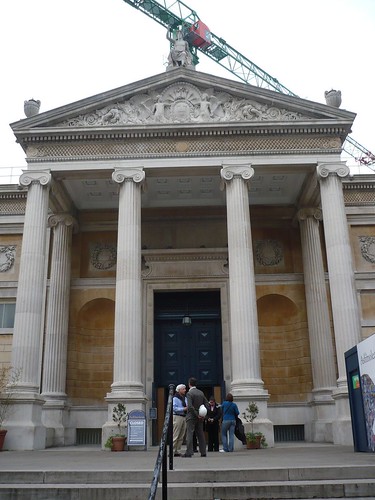
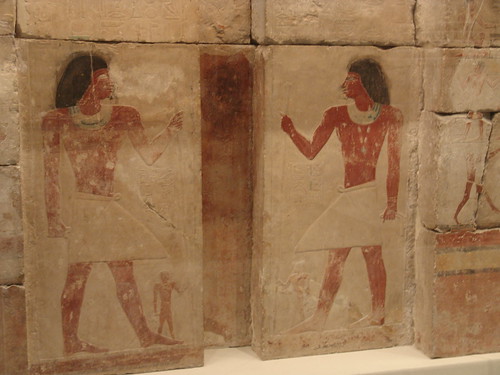
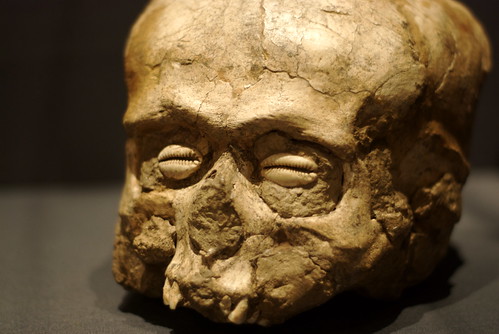
The oldest museum in the world, opens its doors to the public after a mammoth five-year revamp tomorrow. And the curators of Oxford’s famous Ashmolean will be hoping a new 61million building will help visitors enjoy and understand an envious collection of artefacts from the cradle of civilisation onwards. The collection certainly has an esteemed pedigree, having been added to by archaeological greats like Arthur Evans, discoverer of the Palace of Knossos in Crete. So on the eve of one of its biggest days, what are the Ashmolean’s best objects? 1. The Jericho Skull This skull, from 7,000 BC Jericho…
-
-
The oldest museum in the world reopens its doors tomorrow, after a mammoth five-year revamp. Oxford’s Ashmolean Museum has enjoyed a 61million cash injection into its ageing building, recasting all but its Victorian Cockerell building facade. Rick Mather’s new creation allows the museum’s myriad treasures much more space, adding 39 galleries and 10,000sq metres of exhibition space. The museum, founded in 1683, has been closed to the public since December last year, as the final pieces have been put in place. Funding has come from a number of high-profile sources, including the Heritage Lottery Fund, Linbury Trust (Lord Sainsbury’s charity)…
-
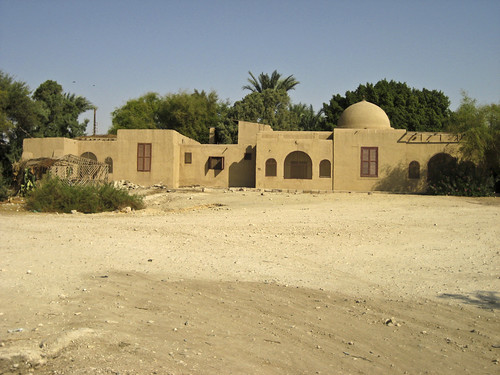
The rest house of Howard Carter, discoverer of King Tutankhamun‘s tomb, has reopened to the public today as a museum. The mud-brick building, near the Valley of the Kings on Luxor‘s West Bank, was one of the projects earmarked by Egypt’s Supreme Council of Antiquities three months ago, as costly facelifts to Luxor were undertaken – including renovations to Luxor Temple and the Deir el-Bahritemple of Queen Hatshepsut. The house, from where Carter made his greatest discovery in 1922 with the backing of Lord Carnarvon, allows visitors to see the office and tools which made Carter an overnight celebrity 87…
-
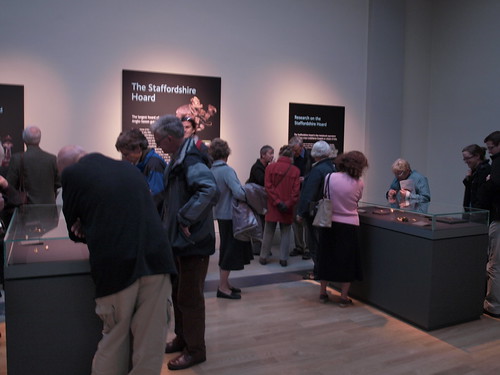
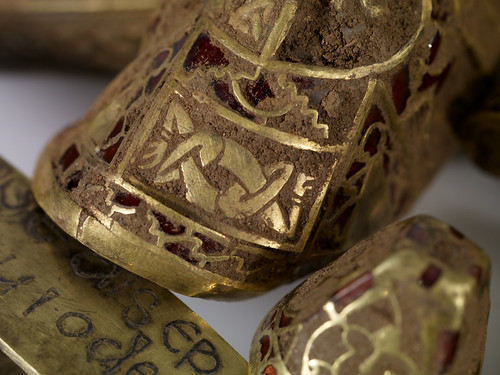
As blogged earlier today, the Staffordshire Hoard made its way to London’s British Museum this week, to feverish public interest. And not wanting to miss out on the party, Heritage Key took a trip to Bloomsbury today, to give you a first-hand look at how it has been laid out for the capital’s history lovers. As you can see, there weren’t queues tailed back hundreds of yards outside the building – as was the case at earlier displays in Birmingham – but interest was high, with HK struggling to burst through the crowd for some decent shots. Only a handful…
-
The Staffordshire Hoard has arrived on display at the British Museum in London, as the farmer on whose land it was found has described his experience as ‘incredible’. Heritage Key will be heading there to see the maginficent treasure today – look out for the pictures right here! The gold pieces, thought to be part of a Saxon war bounty, were found in a field in the midlands county this July. They have since gone on show at Birmingham’sMuseum and Art Gallery, where up to 100,000 people flocked to see them still encrusted with the mud which had hidden them…
-
Archaeologists exploring the lost Maya city of El Mirador claim they’ve found the world’s biggest pyramid. The massive structure, called La Danta (The Tapir), may have its summit hidden beneath Guatemala’s jungle canopy. Yet its volume is reckoned to be larger than that of the Great Pyramid of Khufu in Egypt’s Giza Plateau. The city itself, dubbed the ‘Maya Cradle of Civilization‘, is the size of a modern metropolis; bigger than downtown Los Angeles. And experts believe there are thousands more pyramids yet to be found. Yet there is more to El Mirador, tucked in Guatemala’s northern wilderness just a…
-
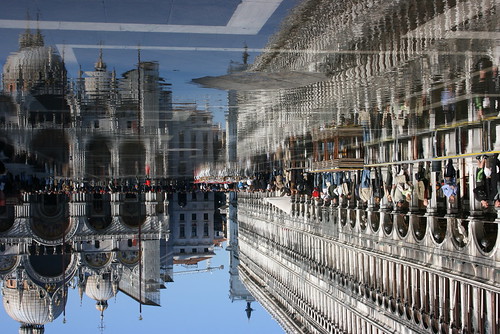
Legendary history writer John Julius Norwich knows Venice better than most, if not all. Having recently edited The Great Cities in History (Thames & Hudson; see more info here), an epic ramble through the pioneering places in human history, he has also penned A History of Venice: The Rise to Empire and Venice: A Traveller’s Companion – and was, until recently, on the board of the Venice in Peril Fund. No surprises, then, that Venice occupies its own page in Great Cities, at the pinnacle of renaissance culture. Yet Lord Norwich, speaking to Heritage Key in this exclusive video, confides…
-
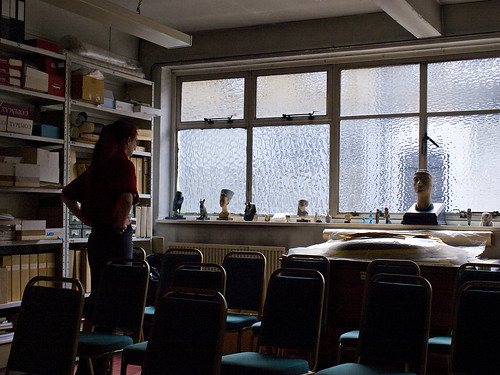
Heritage Key loves the tales woven by the archives of the Egypt Exploration Society, as mentioned at their fundraising afternoon earlier this month. So much were we interested in the project, which aims to preserve and digitise the society’s rich recorded history, that we decided to take a look for ourselves. Spread over three separate mews in a backstreet of central London, the only indicator you’ve reached EES HQ is a tiny plaque on the door and some obscured old relics in the window. Yet the minimal decoration and creeping vines embody an eccentricity of EES’ earliest explorers, looking more…
-
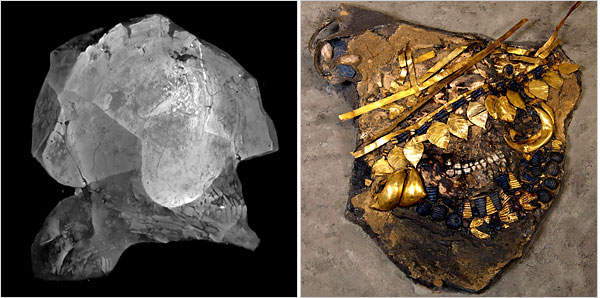
New research from an American university may have blown apart a 90 year-old secret of the Sumerian city of Ur. CT scans of crushed skulls from the 4,500 year-old city-state appear to show that palace attendants met a brutal death at the hands of spiked weapons, rather than the tranquil poisoning previously mooted. Research carried out by British archaeologist Leonard Woolley in 1920 discovered a 2,000 burial-strong cemetery, laden with jewels and gold treasures. Their elaborate attire showed they were various courtiers of the time – warriors, handmaids, etc – and seemed to prove human sacrifice was prevalent in the…
-
A lighter chapter to the ongoing issue of repatriating Egypt’s treasures will close today, as an ancient shrine fragment touches down on Egyptian soil after a year of international co-operation. The red granite chunk, part of a shrine, or ‘naos’, was bought by New York’s Metropolitan Museum of Art from a private collector last October, with the sole intent to send it back to its home nation. Today sees the fragment of the shrine, which commemorates King Amenemhat I, the first pharaoh of the 12th Dynasty (1991 – 1962 BC), finally return to Egypt after a combined effort between the…