‘What killed the forests of Easter Island?’ is a question that has bamboozled experts for years. Outcomes have ranged from natural disasters, to disastrous ecology – but an invasion of rats? It’s the latest posit doing the scholarly rounds, thanks to University of Hawaii professors Terry Hunt and Carl Lipo. But before you’re conjuring hoards of rodent Jack Sparrows patrolling the Pacific, the pair do have hard evidence backing their claim. It’s widely agreed that Europeans are largely to blame for the demise of the Easter Islanders, famous for their eerie megalithic statues, following its European discovery in the mid-18th…
-
-
We’ve already heard Lord Norwich‘s warnings about the perilous future of his beloved Venice (watch this video). But throughout human history, what have been the planet’s greatest cities – and how did they come to be? Lord Norwich’s latest book, The Great Cities in History (see more info here) attempts to explain that over 300 pages of exquisite photography and expert opinion on 70 of man’s greatest settlements. Famed writers such as Simon Schama and Bettany Hughes lend their views on cities from Nineveh to New York, with forewords on the ancient world and beyond by Lord Norwich himself. Primordial…
-
A leading language expert claims man’s first forays into the art world may be nothing more than ‘ancient doodles’. Dr Ekkehart Malotki, a professor at Northern Arizona University, told an audience at Deer Valley Rock Art Centre on Saturday the true meanings behind the world’s earliest images etched onto rocks will remain a mystery forever – and that they may have been spurred by nothing more than an inane desire to create. Malotki has laid out his theory in a book entitled ‘The Rock Art of Arizona: Art for Life’s Sake’. “The act of making the image was more important…
-
An ancient Mesopotamian city discovered recently in Syria could be lost forever, experts fear. The circular city, dating back 4,500 years in the enclave of Tall Qabr, was found using cutting edge geo-lasertechnology. Its location along the Euphrates River means it may hold the key to boundaries between the Mari Kingdom and its southern Babylonian neighbours, in modern Iraq. Yet the city may be lost forever, thanks to flooding from a modern dam. Its Spanish discoverers, from the universities of Coruna and Vigo, have hastily prepared a report for UNESCO in the hope that it can send scores of archaeologists…
-
A pair of Italian brothers believe they have at last discovered the lost army of Persian King Cambyses II in the Egyptian desert, some 2,500 years after they are said to have been swallowed up by a vicious sandstorm. The 50,000-strong army was engulfed as it crossed the Great Sand Sea towards Siwa Oasis, to destroy the oracle at the Temple of Amun. Archaeologists have searched for the legendary lost men for centuries – yet Angelo and Alfredo Castiglioni claim that hundreds of human bones and bronze weapons just outside the oasis are the remains of Cambyses’ fateful crew. Greek…
-
A rich Roman town house discovered beneath Canterbury‘s Marlowe Theatre cannot be preserved in its present location thanks to damage from earlier modern building works. The astonishing house, complete with under-floor heating, was discovered by builders working on the famous theatre’s 26.5million redevelopment. Workers immediately got in touch with archaeologists – and work has been halted until the remains can be fully removed. Yet expert James Holden tells the BBC earlier 20th century projects have left the house in a bad state: “A lot of it has been disturbed by earlier buildings, when they built this theatre in the 30s…
-
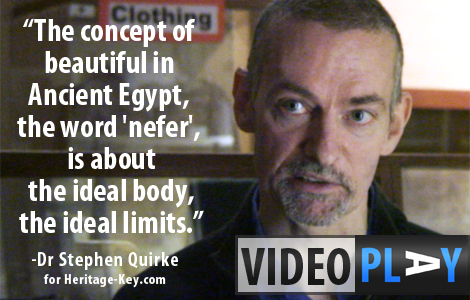
There have been many great women in the times and study of Ancient Egypt – Hatshepsut and Nefertiti are two great examples. Yet in the era of discovery; the time in which great explorers pioneered the excavation of Egypt’s greatest treasures, one woman sticks out louder than Liberace in a dole queue. Cue Amelia Edwards, a Victorian writer and adventurer who bucked the conservative traditions of her time to help found one of London‘s greatest museums. We meet Petrie Museum curator Stephen Quirke at 10am on a bleak British morning, drizzling rain just about getting our umbrellas out in the…
-
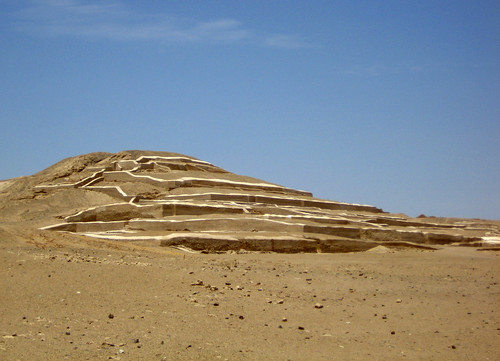
The mummy of a young Nazca priestess has been discovered in the ancient city of Cahuachi, Peru. Italian archaeologist Giuseppe Orefici, director of the Nazca Project, made the startling find in a mini-temple between the mysterious metropolis’ Great and Orange Pyramids. The 300-450 AD woman had been buried beneath ropes and reeds, and covered in finely-woven fabrics with killer whale pattern. Several obsidian arrow heads had also been worked into the weave. The young woman’s face had been painted, and an extra vertebra added to her back. Her arms were also deformed – possibly as a result of having had…
-
An Italian duo have revealed what they claim is the ‘real’ face of Queen Nefertiti. Ethnologist Franco Crevatin, from the University of Trieste, and cosmetics expert Stefano Anselmo, started with a recent CAT scan of the famous queen’s bust, held in Berlin’s newly-reopened Neues Museum. The scan of ‘Nonofret‘ as she’s known in Germany, appeared to show a second face, made of stone, buried beneath the stucco top layer the world has come to adore. Using computer imaging, Crevatin and Anselmo have made what they feel is a faithful reproduction of the hidden face. And though differences are subtle –…
-
Heritage Key takes a trip to explore the British spirit of adventure, where we’ll be meeting with Lord and Lady Carnarvon at Highclere Castle . We are shooting some new video that will dig deeper into information about the man who funded Howard Carter’s work as well as the history of the incredible castle itself. We hope to be able to share new images and more insight into the tomb paintings and key artefacts of King Tut. Let us know if you have any questions – You might get them onto the video. You can use the comments box below,…