• Ann

    The Acropolis Theatre of Dionysus to be Restored

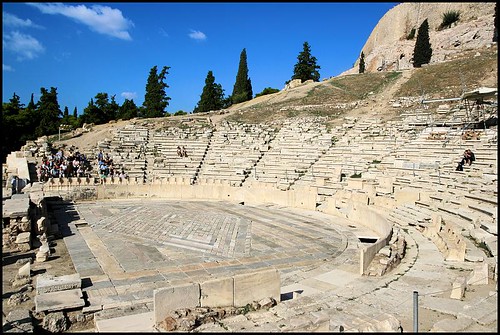
    The ‘birthplace of drama’ – the Theatre of Dionysus, located on the south slope of the Acropolis – is to be partially restored in a 6 million project that is set for completion in 2015. The ancient open-air theatre in Athens saw the premire of many of the great dramatic works written during the ‘golden age’ of Greek Tragedy. Famous ancient playwrights – such as Aeschylus, Euripides, Sophocles and Aristophanes – took part in competitions staged twice yearly at the Dionysus theatre; the City Dionysia festival during the spring and the Lenaia in wintertime. The limestone and marble version of…

  • Ann

    Do the King Tut – The AGO’s ‘Tutting’ Dance Class

    Get up from your chair, take a step back and watch this video by the AGO attentively, as you’re going to learn how to ‘tut’. Inspired by ancient Egyptian art work ‘tutting’ isn’t that far off from walking like an Egyptian, but on a different tune. In a video posted to their website to promote the ‘King Tut:The Golden King and the Great Pharaohs‘ exhibition, the the Art Gallery of Ontario is teaching the internet crowd how to dance like an Egyptian. The instructional clip features Mark Cabuena demonstrating a basic ‘tutting’ routine that is easy – yeah, right –…

  • Ann

    Thanksgiving’s ‘Horn of Plenty’ – Thank the Greeks

    Thanksgiving is one of the most ‘famous’ American holidays known to us in Europe, and when it’s mentioned a turkey instantly springs to mind. The turkeys sacrificed to the stomach-gods during this ‘harvest festival’ might be native, but many of the other habits were brought over from the Continent. Take the cornucopia – the ‘horn of plenty’ – for example, a common symbol food and abundance all over the world, dating back to the 5th Century BC and for which we need to thank the Greeks. The cornucopia is one of the typical symbols for a harvest festival. A horn…

  • Ann

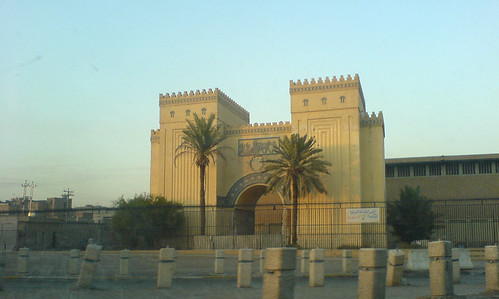
    Google To Digitise Iraq’s National Museum Archives

    Google will soon begin digitising artefacts and documents at Iraq’s National Museum, chief executive Eric Schmidt said on a visit to Baghdad. Some 14,000 digital images taken from the museum will be freely available online from the beginning of next year. The NationalMuseum of Iraq – opened in 1924 with a focus on objects from the Ur excavations and home to an extraordinary collection of Babylonian, Sumerian and Assyrian artefacts as well as rare Islamic texts – suffered damage and looting caused by the Iraqi war and only reopened to visitors February this year. Some 6,000 artefacts were recovered, but…

  • Ann

    The Archaeological Landscape of the Southern Levant Mapped

    Archaeologists from USC, UCLA and the Middle East have developed a searchable online map that details 7,000 archeological sites on the West Bank and Jerusalem – many of them never publicy disclosed. The map – an effort to identify Israeli archaeological activity since 1967, when Israel took over the West Bank and East Jerusalem – is freely accesibly online at the USC’s Digital Library. Built over several years through hundreds of hours of research, bolstered by freedom of information requests and, when necessary, a lawsuit in Israeli courts, the Web site provides interactive satellite maps showing locations of about 7,000…

  • Ann

    A Secret Voyage? Zahi Hawass at the British Museum, London in December

    Have you always wished to meet Dr. Hawass in person? Now is your chance!The world-famous archaeologist comes to London in December and Heritage World Press invites you to a special lecture by the Egyptologist – and maybe even dinner. Zahi Hawass will also introduce his two new books: Inside the Egyptian Museum and A Secret Voyage. Reception &Lecture at the British Museum Tuesday, 8th of December Dr. Zahi Hawass – probably the world’s most famous Egyptologist – will speak at a special lecture in the British Museum’s lecture theatre, after a reception in the Egyptian Sculpture Gallery. The lecture –…

  • Ann

    Hieroglyphs on your iPhone: Aaou Dictionary Application

    Jean-Franois Dumon and Alamanga have developed ‘Aaou’, an application for iPhone and iPodTouch which allows a quick translation of hieroglyphs. The iPhone app over 10,000 words or symbols to – depending on your iPhone settings – French or English. the translation in French / English of more than 10200 words and symbols and offers the possiblity of transliteration. ‘Aaou’ also allows you access through an index, to the uni/bi/triliterals as well as to an aide memory on the common hieroglyphs. The Aaou Hieroglyph Dictionary is priced at 4.99 euro and – of course – available via the iTunes app store.…

  • Ann

    Virtual Roman Leicester: A Digital Recreation of ‘Ratae Corieltauvorum’ 210AD

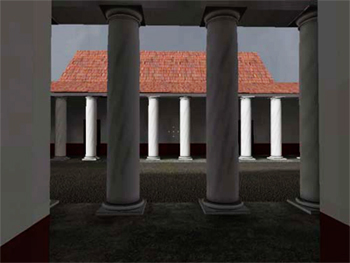
    A pioneering research project to recreate Roman Leicester with an interactive virtual world is unveiled today at the official launch of Phoenix Square film and digital media centre in the city’s emerging cultural quarter. Members of the public will see a showcase of a range of IOCT – Institute of Creative Technologies – projects including taking an interactive on-screen tour round Roman Leicester 210AD; which takes them inside some of the 3D buildings including the Merlin Works Baths, Mithraum, the Temple of Jupiter and the Basilica and Forum. Using a skill known as architectural forensics, and working with archaeologists from…

  • Ann

    Mummy CSI: Ancient Egyptians suffered from ‘modern day’ heart diseases too

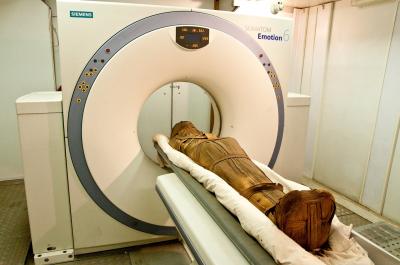
    Scientists discoveredthat the ancient Egyptians suffered from – what we often consider to be modern day – heart diseases too. Hardening of the arteries has been detected in Egyptian mummies, some as old as 3,500 years, suggesting that the factors causing heart attack and stroke are not only modern ones; they afflicted ancient people, too. “Atherosclerosis is ubiquitous among modern day humans and, despite differences in ancient and modern lifestyles, we found that it was rather common in ancient Egyptians of high socio-economic status living as much as three millennia ago,” says professor of cardiology Dr. Gregory Thomas. The nameplate…

  • Ann

    Western Wall Heritage Center a threat to Jerusalem’s Roman History?

    One of Israel’s leading archaeologists has publicly condemned the Israel Antiquities Authority’s failure to object to a plan to construct a part of the Western Wall Heritage Center over a site where a well-preserved ancient Roman road was recently excavated. The construction area has been designated for religious purposes since Israel took control of the Western Wall in 1967. The building would include a 4,800-square meter, three-story museum and educational institute that would display the Roman road on the ground floor, but Yoram Tsafir told Haaretz.com even the most amazing architect will not be able to avoid damaging the find…